
- 0
- 944 words
A small ceiling stain or a few missing shingles can quickly turn into a bigger headache if a roof problem is misdiagnosed or delayed. For Longview homeowners, the fastest route to a durable fix is a simple, methodical check that links each symptom to likely causes and then ranks repairs by urgency. This article lays out a practical diagnostic path you can use to talk clearly with a roofer, decide between a patch, a section repair, or a replacement, and time the work around weather. You will see where flashing, underlayment, vents, and valleys fit into the picture, and how a few stopgaps protect interiors until a permanent repair is made.
- Start With Symptoms: Stains, Drips, and Missing Shingles
Match what you see to typical sources. A brown ring around a bathroom fan often traces back to a cracked pipe boot on the vent stack, not the fan itself. A drip in a hallway after a windy rain can point to lifted ridge caps or missing shingles, while a stain near a chimney suggests failed step or counter flashing. Homeowners planning repairs often review resources like roofing services for homeowners by Langford Roofing to understand how pros scope exterior and interior work, which helps set expectations before anyone climbs a ladder.
Do not paint over a fresh stain without confirming the leak is stopped. Photograph problem areas, note which direction the roof slopes above them, and check again during the next steady rain. Consistent timing or wind direction offers clues about where water actually enters the assembly.
- Trace the Leak Path: Attic First, Then the Roof
Start in the attic with a flashlight. Look for dark tracks on the underside of the decking (OSB or plywood), damp insulation, rusty nail tips, or daylight around penetrations. Pay particular attention to areas below plumbing stacks, bath fan ducts, skylight curbs, and chimneys. Persistent moisture here can also flag weak ventilation. If ridge vents and soffit vents are blocked, heat and humidity build up and shorten shingle life, making repairs less durable than they should be.
Move outside only when it is safe and dry. From the ground or a stable vantage, scan for curled tabs, exposed nail heads, popped fasteners, cracked ridge caps, and debris caught in valleys. Water rarely drops straight down from the visible stain; it often travels along rafters or underlayment and enters several feet upslope, especially near valleys or sidewalls where step flashing should shed water.
- Flashing, Boots, and Valleys: Small Parts That Cause Big Leaks
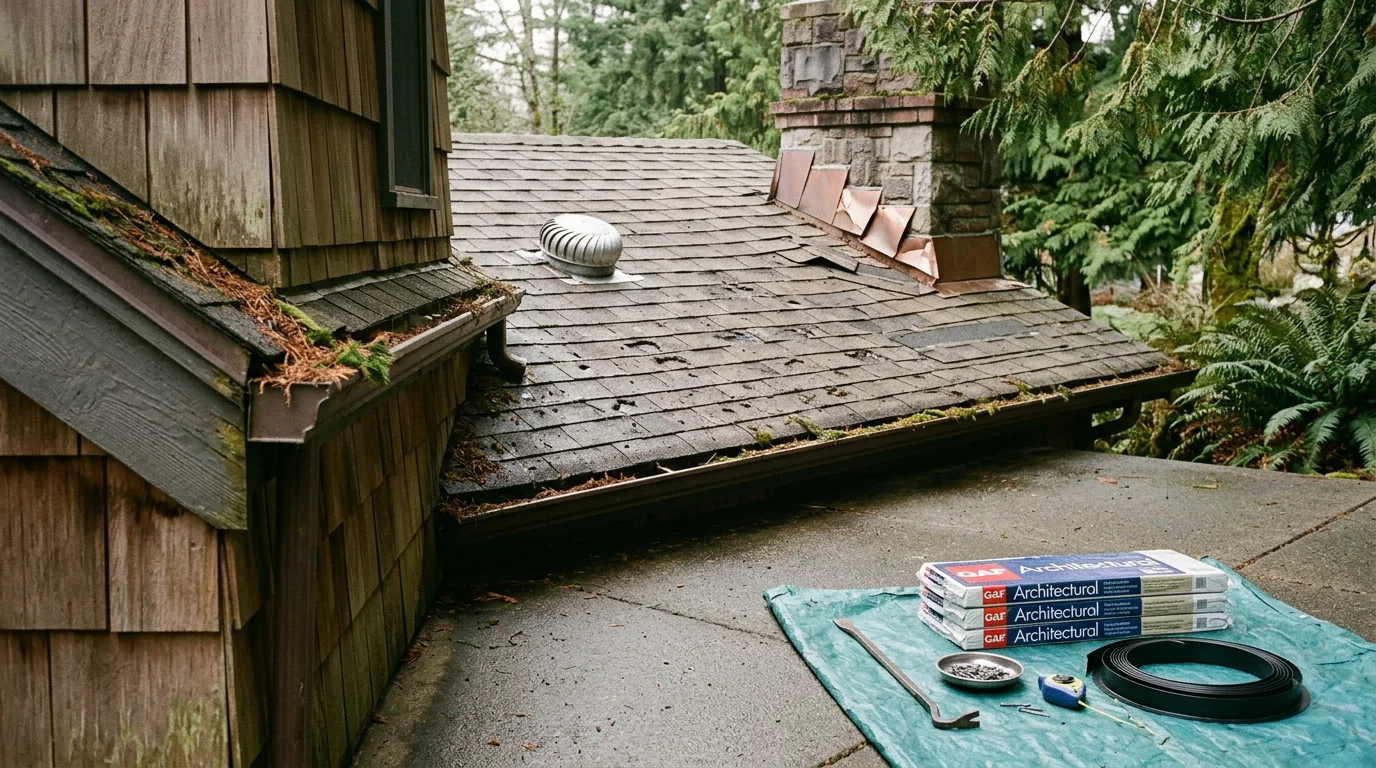
Most stubborn leaks involve metal details rather than the field of shingles. Step flashing should overlap with each shingle course at sidewalls, and counter flashing must be cut into masonry at chimneys so water cannot creep behind it. Headwall flashing where a roof meets a vertical wall is another frequent weak point. If these parts were reused during a past roof replacement or smeared with roof cement instead of properly lapped, expect recurring leaks when wind-driven rain hits.
Pipe boots are another prime suspect. Neoprene boots can split where the rubber meets the vent, while silicone or metal boots resist UV better. In valleys, missing granules and scuffed shingles expose underlayment; if the ice and water membrane or valley metal beneath is torn or corroded, water will find the gap. Also check drip edge alignment at eaves, ridge vent end caps, and skylight corners. A bead of caulk can buy time, but it should never replace correctly lapped metal and sound underlayment.
- Repair Patch, Section Replacement, or Full Roof Replacement?
When damage is isolated, a targeted repair often makes sense. Replacing a few shingles and reworking a short run of step flashing may solve a local leak, especially on a relatively young roof with intact granules and flat, flexible tabs. Expect some color mismatch because new shingles come from a different batch and the existing roof has weathered. If multiple slopes show curling, frequent nail pops, or widespread granule loss, a larger section replacement or full roof replacement will outlast serial patches and reduce future callbacks.
Decide early between an overlay and a complete roof removal. An overlay puts new shingles over old ones, which may cut disruption but adds weight and can trap irregularities and heat. A full roof removal exposes the decking so soft spots can be replaced, then rebuilt with fresh underlayment, starter strips, and properly integrated drip edge and flashing. Complete roof removals take more labor up front but let you correct hidden issues that would undermine any surface repair.
Timing, Weather Windows, and Temporary Protection
Roof work depends on a dry window. If a storm is due before repairs can start, request temporary protection such as professionally installed tarps, plastic sheeting at a skylight curb, or reinforced patches over cracked pipe boots. Avoid walking on wet or very hot shingles, which scuff easily. After a permanent fix, keep valleys clear of leaves, clean gutters so water does not back up at eaves, trim overhanging limbs that scrape granules, and scan flashing and sealant lines every season. A quick attic check after major rains confirms that the repair is holding.
A clear, step-by-step diagnosis does more than stop a single drip. It helps you describe the problem precisely, compare repair scopes, and schedule work in the right order: stop active water entry, restore flashing and underlayment where needed, then address concerns related to aging, like ventilation and widespread wear. Document what you see, ask how each proposed fix manages water, and choose the option that protects decking and walls for the long term. When questions arise, a conversation grounded in these specifics leads to cleaner proposals and fewer surprises on repair day.
Author

linguaezone.com@gmail.com
Related Posts

Why Chicago Businesses Are Pairing Mobile Apps With Generative AI
- 0
- 448 words
Chicago’s economy is one of the most diverse in the country, spanning finance, manufacturing, logistics, healthcare, and a growing startup scene. Across...
Read out all
How to Build a Mobile App: A Step-by-Step Guide for Beginners
- 0
- 1,700 word
You have an app idea. Maybe it solves a problem you face every day, or maybe you have spotted a gap in...
Read out all
How Compact Mechanical Systems Work In Automotive Accessories
- 0
- 739 words
Modern vehicles contain small assemblies that perform useful tasks within limited space. Hinges, brackets, and actuators help accessories move or stay aligned....
Read out all
Dulcoglide: Everything You Need to Know About Its Uses, Features, Benefits, and Safety
- 0
- 2,005 words
Healthcare products often have specific purposes that are not immediately obvious from their names or packaging. Dulcoglide is one such product that...
Read out all
Is Web Scraping Primary or Secondary Data? A Guide to Using Web Data in Market Research
- 0
- 1,628 word
Is web scraping primary or secondary data? In most market research it is secondary. Web scraping is a collection method, not a...
Read out all
Choosing Non Profit Software For Mission-Driven Teams
- 0
- 557 words
Nonprofit organizations often operate with limited budgets, small teams, and ambitious goals that demand careful coordination. From volunteer schedules to fundraising campaigns,...
Read out all