
- 0
- 1,249 word
When a single sink clogs, it is annoying. When a basement floor drain overflows and toilets gurgle in different rooms, there is usually a deeper problem in the main sewer. Recurring backups follow patterns that point to specific causes, from grease coated kitchen lines to clay laterals obstructed by tree roots. Understanding those clues, gathering the right evidence, and matching cleaning or repair methods to the actual condition of the pipe can stop the cycle of emergency calls. This article lays out a practical way to read symptoms, plan a camera inspection, compare clearing methods such as cable snaking and hydro jetting, and recognize when a structural defect calls for repair rather than another cleaning.
- What a Backup Is Telling You: Patterns Matter
Start with where the wastewater shows up and when. If the lowest fixture in the home, often a basement floor drain or a first-floor shower, overflows when a toilet is flushed or a washing machine discharges, the restriction is likely in the mainline downstream of those fixtures. If only the kitchen sink repeatedly slows and burps air while the rest of the house drains, you may be dealing with grease and biofilm buildup in the kitchen branch rather than a problem in the main sewer lateral.
Pay attention to triggers. A home that backs up only during heavy rain may have groundwater infiltrating through cracked clay joints or a separated coupling. Gurgling at a tub when a nearby toilet is flushed can also point to venting issues that slow drainage, but paired with sewer odors and multiple slow fixtures it more often signals a mainline obstruction. Resources like the Quality Pro Services LLC Middlesex sewer repair service overview outline cleaning approaches and when they apply, but your notes on symptoms and timing will make any service visit more efficient.
- Access and Evidence: Cleanouts, Traps, and Camera Inspections
Effective diagnosis depends on access. A properly placed cleanout at the base of the main stack or just outside the foundation allows a technician to feed a cable or hydro jetter in the correct direction. Homes with an old house trap can complicate access because the trap blocks modern camera heads and jetter nozzles; removing or bypassing it safely is often step one. In homes without a usable cleanout, pulling a toilet may be the only route, which raises the risk of mess and adds time. Installing a code-compliant cleanout during a planned visit can prevent future guesswork during a midnight backup.
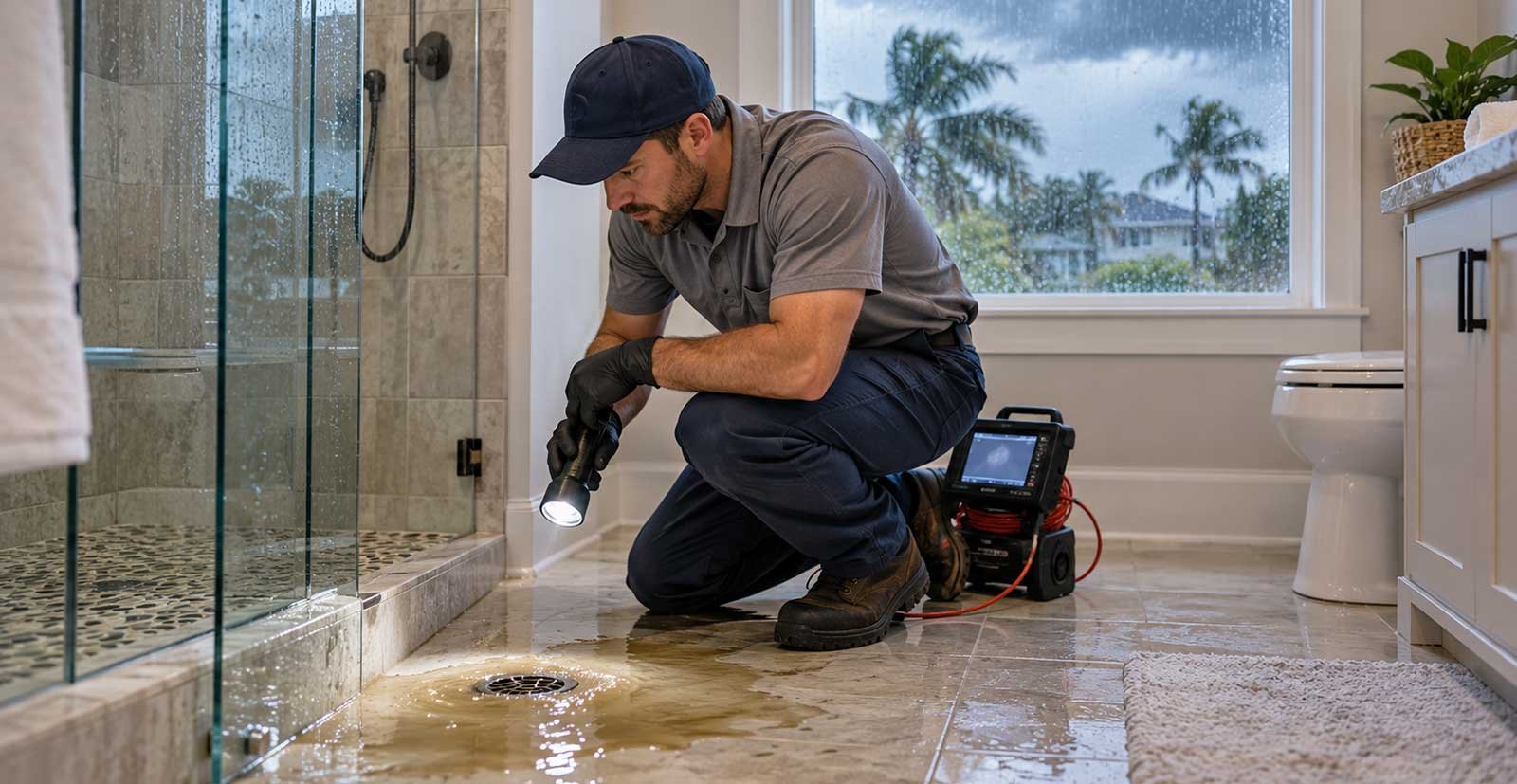
After establishing access, a camera inspection is the single most useful piece of evidence. A color video scope with a self-leveling head and a sonde (locator beacon) can reveal cracked hubs in clay, a bellied pipe holding standing water, heavy scale in old cast iron, or fibrous root masses at joints. Knowing whether you see soft sludge, fatbergs, or an offset joint changes the plan: hydro jetting excels at flushing grease and scale, but no amount of water pressure will fix a sheared or collapsed section. Skipping the camera and repeatedly snaking the line is a common mistake that treats symptoms while structural damage worsens out of sight.
- Clearing Methods Compared: Cable Snaking vs. Hydro Jetting
Cable snaking (also called augering) uses a rotating steel cable with cutting heads sized to the pipe. It is fast to deploy, strong against root strands intruding through clay joints, and can punch through compacted wipes or paper jams. It is less effective against grease-coated walls or heavy mineral scale because it tends to ream a hole rather than clean the full pipe circumference. In a scenario where the kitchen line repeatedly slows after holiday cooking, a cable may restore flow but leave the grease coating in place to catch debris again.
Hydro jetting uses high-pressure water delivered through appropriate nozzles. A penetrating nozzle opens a path through soft obstructions; a rotating or descaling nozzle can strip grease, biofilm, and even brittle tuberculation from cast iron when paired with the right flow and pressure. For restaurant laterals or homes with long kitchen runs, jetting followed by another camera inspection can return the pipe closer to its original diameter. The tradeoff is that fragile pipe materials, such as deteriorated Orangeburg or severely thinned cast iron, may not tolerate aggressive jetting. In those cases, a gentler clean combined with spot repair planning is safer. Jetting also requires adequate water supply, a suitable cleanout, and containment of the flushed debris, which adds setup time compared with a quick auger job.
- When Cleaning Is Not Enough: Roots, Bellies, and Collapses
Some conditions cannot be solved with tools alone. A bellied section, where the pipe sags and holds water, will continue to trap solids after cleaning. Offset joints in old clay lines can snag wipes and create repeated hangups. Cracked or collapsed segments invite soil and roots, eventually blocking the line again. Here, the camera video drives the repair choice. Options include a spot repair by excavation to replace a short failed segment, cured-in-place pipe (CIPP) lining to create a new inner wall, or pipe bursting to replace the entire lateral with minimal trenching.
Each option carries tradeoffs. A spot repair is less disruptive but only as good as the adjacent pipe; fixing one failed joint does not prevent the next weak joint from opening. CIPP lining smooths joints and blocks future root intrusion without digging the entire yard, but it reduces internal diameter slightly and may not be suitable for heavily deformed or actively collapsing sections. Pipe bursting replaces the whole lateral and restores full diameter, yet it requires sufficient access pits and careful utility locating. The most expensive mistake is committing to a method before confirming the pipe’s condition and layout with proper locating, depth measurements, and a camera inspection after cleaning.
Prevention and Upgrades: Keeping a Clean Line Clean
Once clear and structurally sound, a sewer stays that way with a few habits and targeted upgrades. Collect cooking grease in a container instead of rinsing it down the sink. Choose toilet paper that breaks down quickly and keep wipes that do not disintegrate and hygiene products out of the system entirely. Install hair catchers in showers and consider a lint filter for a laundry standpipe to reduce fiber entering the line. After major meals or heavy laundry days, run hot water for several minutes to help move remaining soft fats through the interior of the pipe.
For homes repeatedly affected by city main surcharges during storms, a code-approved backwater valve can prevent sewage from flowing backward into the building. Properties with mature trees near a clay or concrete lateral may benefit from planned maintenance, such as annual camera checks and appropriate root control treatments that inhibit regrowth at joints. If roots return aggressively, budgeting for a permanent fix is smarter than scheduling endless cleanings. Finally, if you lack a usable cleanout, installing one when ground conditions and schedules are favorable will save time, money, and mess during the next urgent call.
Recurring sewer backups are problems with patterns. By documenting where and when they appear, ensuring proper access, and insisting on a camera inspection, you can match the solution to the cause. Choose cable snaking for localized paper or root cuts, hydro jetting for grease and scale, and move to repair when the video confirms structural failure. A few preventive choices at home, paired with a strategic upgrade like a cleanout or backwater valve, often mean the difference between another weekend spent mopping and a mainline that runs quietly in the background.
Author

linguaezone.com@gmail.com
Related Posts

Why Chicago Businesses Are Pairing Mobile Apps With Generative AI
- 0
- 448 words
Chicago’s economy is one of the most diverse in the country, spanning finance, manufacturing, logistics, healthcare, and a growing startup scene. Across...
Read out all
How to Build a Mobile App: A Step-by-Step Guide for Beginners
- 0
- 1,700 word
You have an app idea. Maybe it solves a problem you face every day, or maybe you have spotted a gap in...
Read out all
How Compact Mechanical Systems Work In Automotive Accessories
- 0
- 739 words
Modern vehicles contain small assemblies that perform useful tasks within limited space. Hinges, brackets, and actuators help accessories move or stay aligned....
Read out all
Dulcoglide: Everything You Need to Know About Its Uses, Features, Benefits, and Safety
- 0
- 2,005 words
Healthcare products often have specific purposes that are not immediately obvious from their names or packaging. Dulcoglide is one such product that...
Read out all
Is Web Scraping Primary or Secondary Data? A Guide to Using Web Data in Market Research
- 0
- 1,628 word
Is web scraping primary or secondary data? In most market research it is secondary. Web scraping is a collection method, not a...
Read out all
Choosing Non Profit Software For Mission-Driven Teams
- 0
- 557 words
Nonprofit organizations often operate with limited budgets, small teams, and ambitious goals that demand careful coordination. From volunteer schedules to fundraising campaigns,...
Read out all