
- 0
- 1,206 word
Most of us cut it off, which is fair enough, because that narrow woven tag down in the side seam scratches the hip and nobody enjoys it. Then four months go by and somebody’s standing in front of the dryer wondering whether the fleece can go in there, and the only thing that knew the answer went in the bin back in week one. I’d keep it, or photograph it, or at least look at it once. The care label sewn into an Essentials Hoodie is the one bit of paperwork the garment came with, and it was written by people who knew what the fabric was.
Three things on one strip of polyester
There’s a size letter, a fibre composition, and a row of little symbols, and the composition line is the bit I’d actually read first. A mostly-cotton French terry doesn’t behave anything like a cotton-polyester fleece once it’s wet and warm, so that one line is already telling you how the next few years are going to go. Cotton moves around. Polyester mostly sits still.
Which means a tag that reads heavy on cotton is quietly admitting there’s shrinking still left in the thing, while a blend carrying a reasonable share of synthetic will hang on to its measurements rather more stubbornly — even through a hot cycle it was never meant to see. Two hoodies can hang side by side looking identical and still have pretty different futures in the laundry room, and the whole difference sits there in four-point type somewhere near your ribs.
So what do the little tubs and triangles mean?
They’re standardized, happily, so the same drawing means the same thing on an Essentials Hoodie bought in Toronto as it does on a short set bought in Vancouver. The tub shape is the washing one — a number inside it is the warmest water in Celsius that the fabric should ever meet, a hand inside it means the machine is out altogether, and a cross through the tub means no water at all. Lines underneath the tub are asking for a gentler cycle, less thrashing about and a slower spin.
The triangle is about bleach, and crossed out it means none. The square with a circle in the middle is the dryer, and the dots inside set how much heat it’ll tolerate, with one dot being the low setting. A square with a plain line in it wants the garment dried flat, while a curved line means hang it up. And the iron is, well, the iron, with the same dot logic for heat. Simple enough once you look.
Why does wash number one matter so much?
Knitted cotton turns up at your door under tension, which sounds strange until you picture how it got there — yarn pulled tight on the knitting machine, fabric stretched flat for cutting and sewing, and all that strain still sitting in the loops waiting for an excuse. Water hands it one. Heat hands it a far better one.
So wash one tends to do more to a hoodie than the twenty washes after it put together. Most of the shrinking a cotton garment will ever do happens the first time it’s properly wet and then dried, and it turns up in length before width, so the body goes shorter and the sleeves creep up your wrist while the chest stays more or less where it was. An oversized cut hides that better than a trim one, for what it’s worth.
There’s a reason laundry advice leans towards a cold wash and air dry, and it isn’t fussiness — cool water and a lazy spin give the fibres less reason to pull in on themselves, and a drying rack takes the heat out of the equation completely. The garment’s own care label is the authority on how cool is cool enough, and I wouldn’t guess a number when the number is sewn into the seam. Turning the hoodie inside out, while we’re here, costs about a second and spares the face of the fleece some rubbing.
When the hoodie came with a matching half
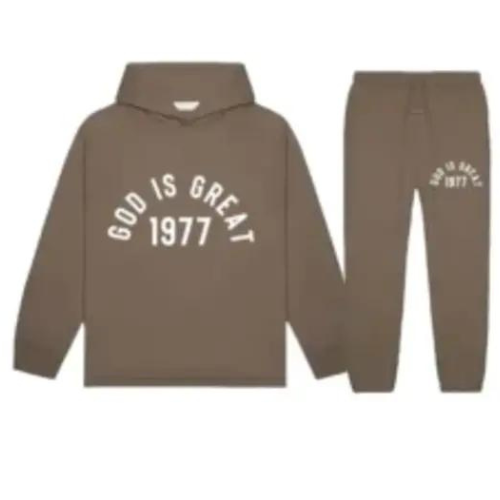
Sets are where this gets annoying. If the top arrived as one half of an Essentials Tracksuit, the two pieces have been identical their whole life so far, and wash one is the moment that can quietly stop being true. Cold for the hoodie, warm tumble for the joggers, and now you’ve got two garments disagreeing with each other about shade and about length.
The label you can read before you’ve paid
Hardly anyone uses the tag this way, which seems like a waste, because in a shop it’s sitting there in the side seam or behind the collar where anybody can read it for free. It’ll tell you whether the thing in your hands wants a gentle cycle and a drying rack, which is worth knowing before the money leaves your account rather than after. Online you lose that, so the product description has to stand in for it — and for an Essentials Hoodie in the C$114 to C$130 range, a couple of minutes reading the care notes is hardly a hardship.
| Pro Tip: A photo of the care tag, taken the day something arrives and left in an album on your phone, outlives the tag itself being snipped out, washed into illegibility, or just vanishing. Mine has saved me from guessing more than once. |
A few things people ask
Does a cold wash really get a hoodie clean?
For ordinary wear, yes, pretty much — a few days at home, a commute, a cool shoulder season afternoon outside. Detergents these days handle low temperatures anyway, and most of what a sweatshirt picks up is light soil and body oils rather than anything that needs heat behind it. Heavy stains are a different conversation, and usually a spot-treatment one.
What if the label has already been cut out?
Cold water, gentle cycle, air dry. That’s the conservative default, and it’s safe for basically every fleece and French terry construction I can think of, which means you might be treating the garment more kindly than it strictly needed. Much better error than the other one, honestly.
Can a hoodie that shrank be stretched back?
Partly, sometimes, depending on how hot things got. Damp fabric eased gently back towards its old shape and dried flat will give you a little length back, and a ribbed cuff responds reasonably well to that sort of handling. Anything that’s been through a genuinely hot dryer, though, has usually made up its mind, and I’d rather say that than pretend otherwise.
Where that leaves you
None of this is hard, which is sort of the point. One tag, read before the first cycle instead of after it, quietly decides how a sweatshirt fits for the next few years, and reading it costs less effort than choosing the colour did. If a new hoodie or a matching set is on its way to you this season, those few seconds spent on the symbols near your ribs are probably the best value in the whole purchase.
Author

gp.hdbacklinks@gmail.com
Related Posts
Two Tracksuits, Twenty Dollars Apart: What the Price Gap Buys
- 0
- 1,142 word
Scroll the tracksuit grid for half a minute and the math starts bothering you before the clothes do. One set sits at...
Read out all
Civil Regime: What Makes a Streetwear Outfit Feel Complete?
- 0
- 1,527 word
A streetwear outfit does not need multiple statement pieces to stand out. A graphic T-shirt, well-chosen pants, and sneakers can create a...
Read out all
How to Compare Raspberry Hills Clothing Measurements With Your Own
- 0
- 1,510 word
Knowing which measurements are the best fit for your body makes it easy to buy garments online. A proper fit should be...
Read out all
How to Check Essential Hoodie Sleeve Length Without Trying It On
- 0
- 1,309 word
It is so easy to order a hoodie online, but then you have to start to worry. Will the sleeves be too...
Read out all
Elegant Sterling Silver Bracelets for Women Who Love Minimalist Jewelry
- 0
- 1,077 word
Choosing the right accessories can completely transform an outfit and elevate your everyday style. Jewelry carries a unique personal touch, allowing individuals...
Read out all
The Advent Calendar Takes Center Stage While Holiday Pajamas Handle the Waiting
- 0
- 1,526 word
December has a strange way of making children both patient and impatient at the same time. An advent calendar gives them something...
Read out all