
- 0
- 683 words
In news headlines, social media debates, and academic writing, you may often come across the terms protestors or protesters. Both words look almost identical, yet people frequently wonder which spelling is correct—and whether there is any difference at all.
In simple terms, this article will clear up the confusion around protestors or protesters, explain why both forms exist, and show you how to use them correctly in real-life writing. By the end, you’ll feel confident choosing the right version without second-guessing yourself.
Meaning of Protestors or Protesters in Modern Usage
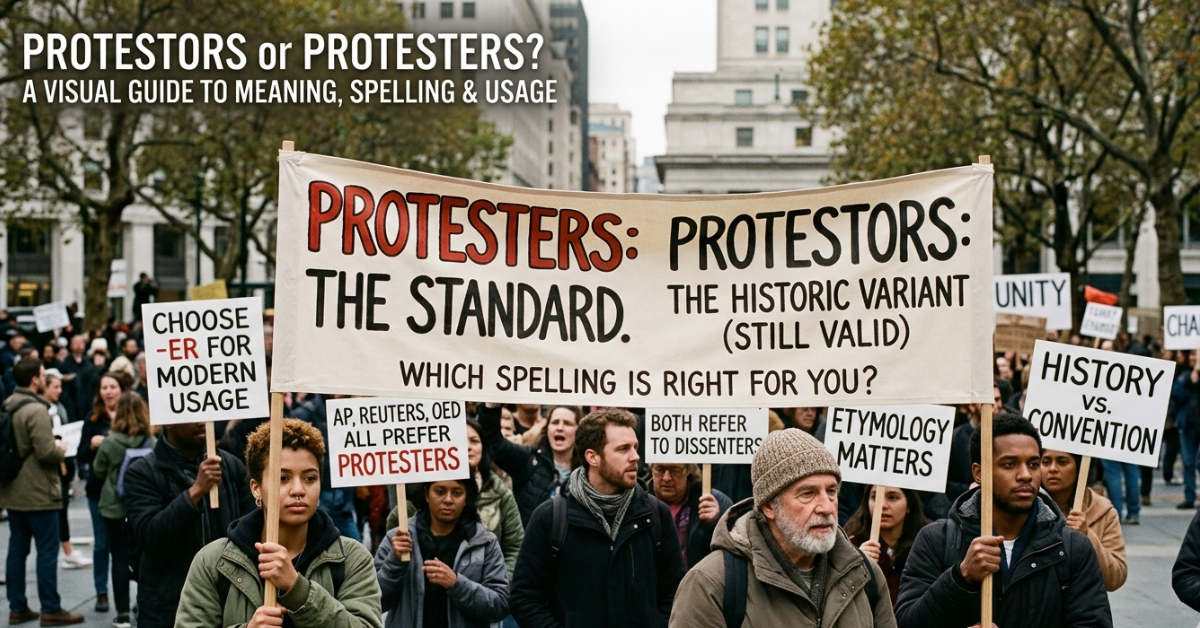
The phrase protestors or protesters refers to individuals who take part in public demonstrations to express disagreement with policies, decisions, or social issues.
Although both spellings are widely used, “protesters” is more commonly accepted in modern English, especially in formal writing.
When people search for protestors or protesters, they are usually trying to understand:
- Which spelling is grammatically correct
- Whether both are acceptable
- Why newspapers use different forms
In reality, both versions are understood globally, but consistency matters more than choice.
Why Are There Two Spellings?
English is a flexible language, and spelling variations often exist due to regional preferences.
Here’s why protestors or protesters both appear in writing:
1. American vs British English Influence
- American English generally prefers protesters
- Some informal or older British usage may show protestors
2. Language Evolution
Over time, “-er” endings have become the standard in modern English grammar, making “protesters” more widely accepted.
3. Editorial Style Choices
News agencies, bloggers, and institutions sometimes choose one spelling for consistency rather than correctness differences.
Grammar and Correct Usage in Sentences
When using protestors or protesters, context matters more than spelling variation.
Examples:
- Protesters gathered outside the parliament building.
- The protesters demanded immediate action on climate change.
- Police monitored the crowd of demonstrators peacefully.
Even though both forms are understood, “protesters” is preferred in formal writing such as:
- Academic essays
- News reports
- Official documents
Regional Differences in Usage
The discussion around protestors or protesters is often influenced by geography.
United States:
- “Protesters” is the standard spelling
- Used in journalism and education
United Kingdom:
- “Protesters” is also dominant today
- “Protestors” may appear occasionally in informal contexts
South Asia:
- Both spellings are seen, especially in online content
- English learners may use either interchangeably
Common Mistakes Writers Make
When using protestors or protesters, writers sometimes make avoidable errors:
- Mixing both spellings in the same article
- Using “protestors” in formal academic writing
- Confusing “protester” with unrelated terms
- Overthinking spelling instead of focusing on clarity
The key rule is simple: choose one spelling and stay consistent throughout your writing.
Which One Should You Use?
If you are unsure between protestors or protesters, here is a practical guide:
Use “protesters” when:
- Writing essays or reports
- Publishing professional content
- Following modern English standards
“Protestors” may appear in:
- Informal writing
- Older publications
- Some regional variations
In most cases today, “protesters” is the safer and more accepted choice.
Quick Comparison
- Protesters → Modern, widely accepted, formal usage
- Protestors → Less common, informal or regional usage
Both are understood, but one is clearly more standard in global English.
FAQs About Protestors or Protesters
1. What is the correct spelling: protestors or protesters?
Both are understood, but “protesters” is the preferred modern spelling in most formal writing.
2. Is there any difference in meaning?
No, protestors or protesters mean the same thing—people who take part in protests.
3. Why do some people still use “protestors”?
It often comes from regional preference, habit, or informal writing styles.
4. Can I use both spellings in one article?
It is not recommended. Choose one and stay consistent for clarity and professionalism.
5. Which spelling is better for exams or academic writing?
“Protesters” is the safer and more widely accepted option.
Conclusion
Understanding protestors or protesters is less about strict grammar rules and more about consistency and modern usage. While both spellings exist and are widely understood, “protesters” has become the dominant form in contemporary English writing.
If you’re writing professionally, academically, or for digital content, sticking with “protesters” will keep your work clean, modern, and widely acceptable.
In the end, language evolves—and clarity always matters more than variation.
Author

linguaezone.com@gmail.com
Related Posts

Kill Two Birds With One Stone Alternative: 50 Better Options
- 0
- 1,569 word
Have you ever paused before saying “kill two birds with one stone” because it sounded too violent or simply didn’t fit the...
Read out all
Happy Sabbath Meaning: A Complete Guide to Its Significance
- 0
- 1,632 word
Have you ever received the message “Happy Sabbath” and wondered what it truly means? Is it simply another way of saying “have...
Read out all
I’m So Proud of You in Other Words: 120+ Heartfelt Alternatives
- 0
- 1,562 word
Have you ever wanted to tell someone you’re proud of them but felt like saying “I’m so proud of you” sounded repetitive?...
Read out all
How Do You Spell Happy Anniversary? Correct Spelling Guide
- 0
- 1,221 word
Have you ever paused before writing an anniversary card and wondered, “How do you spell happy anniversary?” You’re not alone. Whether you’re...
Read out all
Waiting for Your Response Email: Best Examples & Tips
- 0
- 1,483 word
Have you ever sent an important email and found yourself wondering whether you should follow up or simply wait? Whether you’re communicating...
Read out all
Great Asset to the Team: Meaning, Examples & Tips
- 0
- 1,494 word
Have you ever wanted to compliment a coworker but struggled to find words that sound professional and sincere? One of the most...
Read out all