

- 0
- 1,472 word
Have you ever heard someone say, “Well, that’s another one in the books,” after finishing a project or winning a game? If you’ve wondered what they meant, you’re not alone. The phrase is common in everyday conversations, sports, business, and social media, yet many English learners and even native speakers aren’t entirely sure of its exact meaning.
This guide explains the in the books meaning, explores another one in the books meaning, answers the question is in the books meaning the same in different contexts, and shows you how to use the expression naturally in real life. By the end, you’ll know when the phrase fits—and when it doesn’t.
What Does “In the Books” Mean?
The in the books meaning is simple:
“In the books” means something has been completed, officially finished, recorded, or finalized.
It suggests that an event, task, achievement, or experience is now part of the record and no longer needs attention.
Simple definition
In the books = Completed and officially done.
People often use the phrase after accomplishing something important or finishing a milestone.
Examples
- The meeting is finally in the books.
- Our first product launch is in the books.
- Another successful event is in the books.
- The school year is in the books.
- The tournament is officially in the books.
Is “In the Books” an Idiom?
Yes.
The phrase is an English idiom because its meaning goes beyond the literal words.
Historically, businesses, accountants, and organizations recorded completed transactions in official books or ledgers. Once something was entered into those books, it became part of the permanent record. Over time, this idea evolved into the modern expression.
Today, you don’t need actual books or ledgers—the phrase simply means something has been completed and recorded.
Is In the Books Meaning Different in Various Situations?
Many people search for is in the books meaning because they’re unsure whether the phrase changes depending on the context.
The core meaning remains the same:
- Completed
- Finished
- Officially recorded
- Successfully accomplished
However, the feeling behind it can vary.
In sports
After a match ends:
“Game one is in the books.”
Meaning: The game has finished.
At work
After completing a project:
“That’s in the books.”
Meaning: The project is officially completed.
In school
After exams:
“Another semester is in the books.”
Meaning: The semester has ended.
In personal life
After finishing a goal:
“My first marathon is in the books.”
Meaning: The achievement has been accomplished.
Another One in the Books Meaning
The phrase another one in the books meaning is a slight variation with a more celebratory tone.
It means:
Another task, event, success, or milestone has been completed.
People often say it after repeating an achievement or finishing something they regularly do.
Examples
- Another workweek in the books.
- Another successful client meeting in the books.
- Another birthday celebration in the books.
- Another workout in the books.
- Another travel adventure in the books.
It emphasizes progress and consistency rather than just completion.
Common Situations Where People Use “In the Books”
The phrase appears in many everyday situations.
Sports
Athletes and commentators frequently use it.
Examples:
- The championship is in the books.
- Game five is in the books.
- Another win is in the books.
Business
Professionals use it after completing major work.
Examples:
- The quarterly report is in the books.
- Our presentation is finally in the books.
- Another successful launch is in the books.
Education
Students and teachers often use the expression.
Examples:
- Final exams are in the books.
- The school year is in the books.
- Another assignment is in the books.
Personal Goals
Many people use it to celebrate progress.
Examples:
- Day 30 of my fitness challenge is in the books.
- My first book is in the books.
- Another volunteer event is in the books.
Example Sentences in Everyday English
Here are natural examples that native speakers commonly use.
- Our vacation is finally in the books.
- That’s another one in the books.
- The wedding planning is officially in the books.
- Another successful month is in the books.
- Our interview is now in the books.
- The conference is in the books, and everything went smoothly.
- The renovation project is finally in the books.
- Another productive Monday is in the books.
Why the Phrase Is So Popular
There are several reasons why people continue using this expression.
It celebrates completion
The phrase gives a satisfying feeling that something has been accomplished.
It’s short and memorable
Instead of saying:
“The project has been completed successfully.”
People simply say:
“It’s in the books.”
It works in many situations
Unlike some idioms, this one fits professional, casual, educational, and sports conversations.
Similar Expressions
If you like using idioms, these phrases carry a similar meaning.
| Expression | Meaning |
| Done and dusted | Completely finished |
| Mission accomplished | Goal achieved |
| Wrapped up | Finished |
| Checked off the list | Completed a task |
| Finished and finalized | Officially complete |
| Behind us | No longer needs attention |
Each phrase has a slightly different tone, but all relate to completion.
When You Should Avoid Using It
Although common, “in the books” doesn’t fit every situation.
Avoid using it when:
- A task is only partially complete.
- Results are still uncertain.
- A decision hasn’t been finalized.
- You’re discussing something still in progress.
For example:
The project is in the books, but we’re still editing it.
Better:
The project is almost complete.
Common Mistakes
Confusing it with “on the books”
These phrases are different.
On the books
Means officially scheduled, registered, or employed.
Example:
- The meeting is on the books.
Meaning:
The meeting has been scheduled.
In the books
Means completed.
Example:
- The meeting is in the books.
Meaning:
The meeting has already happened.
Using it too early
Don’t say:
The exam is in the books.
If the exam hasn’t finished yet.
Wait until it has officially ended.
Why Native Speakers Love This Expression
Native speakers appreciate phrases that communicate a complete idea in just a few words.
“In the books” instantly tells listeners:
- It’s finished.
- It’s official.
- It’s time to move forward.
That’s why you’ll hear it in podcasts, interviews, sports broadcasts, workplace conversations, and even social media captions.
Practical Tips for Using “In the Books”
To sound natural, keep these tips in mind:
- Use it after something has genuinely finished.
- Pair it with achievements and milestones.
- It works well in casual conversations and workplace settings.
- Use “another one in the books” when talking about repeated accomplishments.
- Avoid using it for future plans or unfinished tasks.
Key Takeaways
- In the books means completed, finalized, or officially recorded.
- The phrase originated from keeping official records in books or ledgers.
- Another one in the books meaning refers to completing yet another task, event, or achievement.
- The expression is common in sports, business, education, and everyday conversations.
- Don’t confuse “in the books” with “on the books,” which has a different meaning.
Frequently Asked Questions
What is the in the books meaning?
The in the books meaning is that something has been completed, finalized, or officially recorded. It usually refers to an event, project, or achievement that has successfully come to an end.
What does another one in the books meaning refer to?
Another one in the books meaning refers to completing one more task, event, or accomplishment. People often use it to celebrate steady progress or repeated success.
Is in the books meaning positive?
Most of the time, yes. It usually carries a positive or satisfying feeling because it marks the successful completion of something. However, it can also simply indicate that an event has ended without implying success or failure.
Is “in the books” formal or informal?
The phrase is generally informal but widely accepted in professional settings. You’ll hear it in workplaces, sports commentary, classrooms, and casual conversations.
What is the difference between “on the books” and “in the books”?
“On the books” means something is officially scheduled, registered, or recorded for the future or current status. “In the books” means the event or task has already been completed.
Can I use “in the books” in business emails?
Yes, especially in friendly professional communication. For example: “The client presentation is officially in the books, and we appreciate everyone’s hard work.”
Conclusion
Understanding the in the books meaning helps you sound more natural in English conversations and writing. Whether you’re celebrating a completed project, wrapping up a successful event, or reflecting on personal achievements, this versatile idiom clearly communicates that something is finished and officially behind you.
Likewise, knowing another one in the books meaning allows you to express ongoing progress and celebrate milestones in a concise, engaging way. The next time you finish a task, complete a workout, or close an important chapter, you’ll know exactly when to say, “It’s in the books.”
Author

linguaezone.com@gmail.com
Related Posts
I’m Patient: Understanding the Meaning, Mindset, and Power of Patience
- 0
- 1,816 word
I’m Patient: What Does It Really Mean? Have you ever found yourself waiting for something important and realized that getting frustrated will...
Read out all
Do and Not: Understanding the Difference and Using Both Correctly
- 0
- 2,303 words
Introduction: Why “Do and Not” Matters in Everyday Communication Have you ever written a sentence and wondered whether you should use “do,”...
Read out all
Proscribed: Meaning, Definition, Examples, and Correct Usage
- 0
- 2,338 words
Introduction: What Does “Proscribed” Mean? Have you ever come across the word proscribed and wondered what it actually means? It is one...
Read out all
Imput: Meaning, Common Usage, and Why People Often Use It Instead of Input
- 0
- 1,592 word
What Does Imput Mean? Have you ever typed “imput” instead of “input” and wondered whether you made a mistake? You are certainly...
Read out all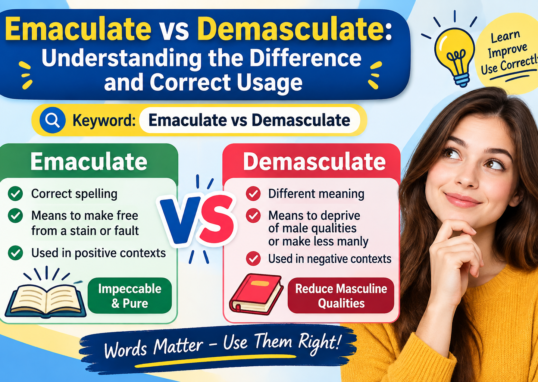
Emaculate vs Demasculate: Understanding the Difference and Correct Usage
- 0
- 2,156 words
Introduction: Emaculate vs Demasculate Have you ever come across the words emasculate and demasculate and wondered whether they mean the same thing?...
Read out all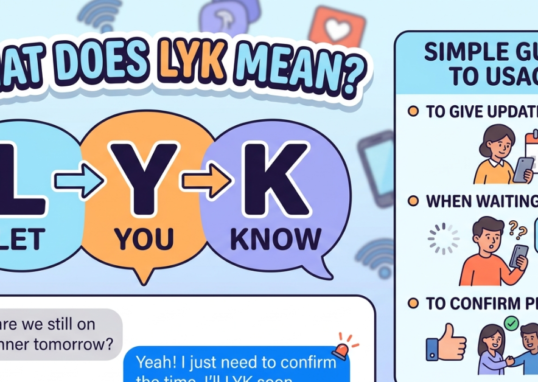
What Does LYK Mean in Text? Simple Guide
- 0
- 1,029 word
Ever received a message that says “LYK” and paused for a second? You are not alone. If you have been wondering what...
Read out all