×
Fiance vs Fiancee: Meaning, Pronunciation & Usage
In

Have you ever paused while writing an invitation or social media post because you couldn’t remember whether to write fiance or fiancee? You’re not alone. Many English speakers—and even native writers—mix up these two words because they look almost identical.

Understanding fiance vs fiancee is easier than you might think. The difference comes down to gender, language origin, and proper spelling. In this guide, you’ll learn the fiancé vs fiancée meaning, correct pronunciation, common mistakes, grammar rules, and practical examples so you’ll never confuse them again.

What Is the Difference Between Fiance and Fiancee?

The simplest difference is gender.

Word Refers To Traditional Usage
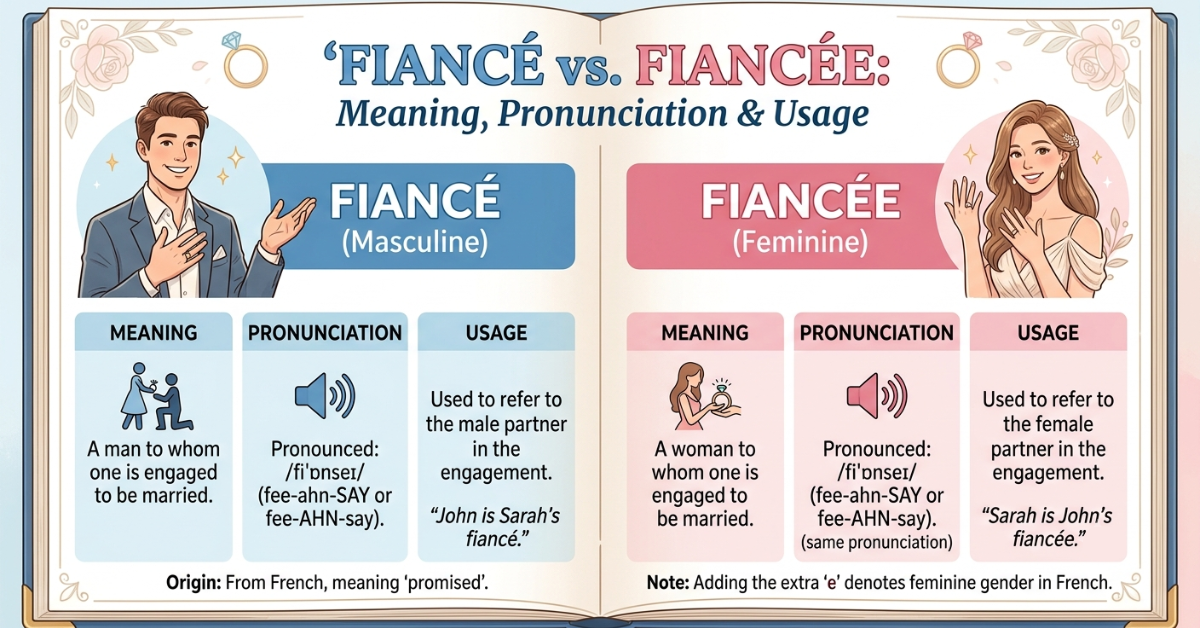
Fiancé A man engaged to be married Masculine
Fiancée A woman engaged to be married Feminine

Both words come directly from French, where nouns have masculine and feminine forms.

  • Fiancé = engaged man
  • Fiancée = engaged woman

The extra “e” at the end changes the word from masculine to feminine.

Fiance vs Fiancee Meaning

When people search for fiance vs fiancee meaning, they usually want to know whether the words mean different relationship stages.

They don’t.

Both words describe someone who is engaged to marry another person. The only traditional distinction is gender.

For example:

  • Sarah is John’s fiancée.
  • John is Sarah’s fiancé.

Both individuals are equally engaged—the spelling simply identifies whether the person is male or female.

The French Origin of the Words

English borrowed these words from French during the 19th century.

The French verb fiancer means “to betroth” or “to promise in marriage.”

In French:

  • Fiancé = masculine
  • Fiancée = feminine

The accent mark (é) is also inherited from French.

Although English adopted these words, many English speakers omit the accent in everyday typing because standard keyboards don’t always include accented characters.

Fiancé vs Fiancée Pronunciation

Many people also wonder about fiancé vs fiancée pronunciation.

The good news is that both words are pronounced almost exactly the same.

Common English pronunciation:

fee-ahn-SAY

IPA pronunciation:

  • Fiancé: /fiˈɑːnseɪ/
  • Fiancée: /fiˈɑːnseɪ/

The additional “e” is silent.

Whether you’re referring to a man or a woman, you pronounce both words identically.

Fiance vs Fiancee Pronunciation: Why They Sound the Same

Although the spellings differ, English pronunciation does not distinguish between them.

That’s because the final silent “e” only marks grammatical gender in French rather than changing pronunciation.

So these are all pronounced the same:

  • fiancé
  • fiancée
  • fiance
  • fiancee

Only the spelling changes.

Should You Use the Accent Mark?

One common question involves the accent.

Correct French spellings:

  • fiancé
  • fiancée

Common English spellings:

  • fiance
  • fiancee

Both versions are widely accepted in English writing.

Use accented versions when:

  • Writing formally
  • Publishing books or articles
  • Wedding invitations
  • Academic writing

Use unaccented versions when:

  • Text messages
  • Emails
  • Social media
  • Casual conversations

Most style guides accept either, as long as you’re consistent.

Fiancé vs Fiancee: Which Spelling Is Correct?

Technically, all four spellings are acceptable depending on formatting.

Spelling Accepted?
fiancé Yes
fiancée Yes
fiance Yes
fiancee Yes

If your keyboard doesn’t support accents, using fiance and fiancee is perfectly understandable.

Easy Trick to Remember the Difference

A simple memory trick can prevent mistakes.

Think about the extra “e.”

  • Fiancé → one “e” → man
  • Fiancée → two “e”s → woman

Many learners remember it this way:

Extra “e” = extra feminine ending.

It’s not a grammar rule, but it’s an easy reminder.

Examples in Everyday Sentences

Using Fiancé

  • My fiancé proposed during our vacation.
  • Her fiancé surprised everyone with a heartfelt speech.
  • Emily introduced her fiancé to the family.

Using Fiancée

  • His fiancée planned the engagement party.
  • My fiancée loves destination weddings.
  • Mark bought his fiancée a beautiful ring.

Common Mistakes People Make

Using Fiancée for Everyone

Many writers automatically choose fiancée, even when referring to a man.

Incorrect:

My fiancée is waiting outside. (when referring to a man)

Correct:

My fiancé is waiting outside.

Forgetting the Accent

Leaving out the accent isn’t considered a serious mistake in modern English.

Most readers will still understand:

  • fiance
  • fiancee

Confusing Spouse with Fiancé

A fiancé or fiancée is not a husband or wife.

Relationship timeline:

Dating → Engaged (fiancé/fiancée) → Married (husband/wife)

Gender-Neutral Usage Today

Modern English is becoming more flexible.

Some couples, especially in LGBTQ+ communities or informal settings, may simply use:

  • partner
  • future spouse
  • engaged partner

Others choose fiancé regardless of gender, while some continue using the traditional masculine and feminine forms.

The best choice depends on personal preference and context.

When Should You Use Each Word?

Use fiancé if you’re referring to:

  • An engaged man
  • Your future husband

Use fiancée if you’re referring to:

  • An engaged woman
  • Your future wife

If you’re unsure which spelling someone prefers, it’s perfectly acceptable to ask.

Fiance vs Fiancée in Wedding Invitations

Formal wedding materials often follow traditional spelling.

Examples:

  • Jane Smith and her fiancé, Michael Carter
  • David Brown and his fiancée, Olivia Green

This small detail gives invitations a polished, professional appearance.

Comparison Table

Feature Fiancé Fiancée
Gender Male Female
Meaning Engaged man Engaged woman
Pronunciation fee-ahn-SAY fee-ahn-SAY
French Origin Masculine Feminine
Accent Optional in English Yes Yes

Tips for Remembering the Correct Word

  • Remember the extra “e” belongs to the feminine form.
  • Both words sound exactly alike.
  • Accents are preferred but optional in everyday English.
  • Choose the traditional spelling unless someone expresses a different preference.
  • Stay consistent throughout your writing.

Key Takeaways

  • Fiancé refers to an engaged man.
  • Fiancée refers to an engaged woman.
  • Both words share the same pronunciation.
  • The accent mark is recommended but optional in many English contexts.
  • The only traditional difference is grammatical gender.

Frequently Asked Questions

Is fiancé the same as fiancée?

No. The traditional fiancé vs fiancée distinction is based on gender. Fiancé refers to a man, while fiancée refers to a woman.

What is the correct fiancé vs fiancée pronunciation?

Both words are pronounced fee-ahn-SAY. The extra “e” in fiancée is silent and does not change pronunciation.

Can I write fiance instead of fiancé?

Yes. English commonly accepts fiance without the accent, especially in casual writing. Formal documents often retain the accent.

Is fiancee spelled with one or two e’s?

The feminine form is fiancée, which ends with two “e”s before the accent. Without accents, it is written as fiancee.

Why do English speakers confuse fiancé and fiancée?

Because they are pronounced the same and differ by only one silent letter, many people accidentally use the wrong spelling.

Is it wrong to call someone my partner instead of fiancé or fiancée?

Not at all. Many people prefer gender-neutral terms like “partner,” especially in modern or inclusive contexts. It’s a matter of personal preference.

Conclusion

Knowing the difference between fiance vs fiancee is a small detail that can make your writing more accurate and polished. While both words describe someone you’re engaged to marry, the traditional distinction is simple: fiancé refers to a man, and fiancée refers to a woman. They share the same pronunciation, originate from French, and can be written with or without accent marks in English.

Whether you’re writing wedding invitations, updating your social media profile, or simply improving your English, using the correct term demonstrates attention to detail and respect for language. Keep this guide in mind the next time you need to choose between the two, and you’ll use the right word with confidence.

Leave a Reply

Your email address will not be published. Required fields are marked *

Author

britsx85@gmail.com

Related Posts

Cleverer or More Clever: Which One Is Correct?
In

Cleverer or More Clever: Which One Is Correct?

Have you ever paused while writing and wondered whether you should say cleverer or more clever? You’re not alone. Many English learners...

Read out all
Diddo or Ditto Meaning: Which Spelling Is Correct?
In

Diddo or Ditto Meaning: Which Spelling Is Correct?

Have you ever received a text saying “Diddo!” after wishing someone good luck or saying “I miss you”? If you paused and...

Read out all
In Summer or On Summer? The Correct Grammar Explained
In

In Summer or On Summer? The Correct Grammar Explained

Have you ever paused while writing and wondered whether you should say “in summer” or “on summer”? You’re not alone. Many English...

Read out all
Thumb In or Thumb Out Meaning Explained Clearly
In

Thumb In or Thumb Out Meaning Explained Clearly

Have you ever heard someone ask, “thumb in or thumb out?” and wondered what on earth they meant? In the simplest sense,...

Read out all
Okay Thank You in Spanish: Meaning, Usage & Examples
In

Okay Thank You in Spanish: Meaning, Usage & Examples

Have you ever wanted to reply politely in Spanish but felt unsure about the right phrase? That is exactly where okay thank...

Read out all
To Many or Too Many: What's the Correct Usage?
In

To Many or Too Many: What’s the Correct Usage?

Have you ever paused while writing and wondered whether it should be to many or too many? You’re not alone. This is...

Read out all