
- 0
- 1,358 word
Have you ever heard someone mention a funeral gathering and wondered whether it’s repass or repast? You’re not alone. Many people encounter both terms when discussing funeral traditions and are unsure which one is correct.
The confusion is understandable because the words sound similar and are often used interchangeably in conversation. However, their meanings and origins are slightly different. Understanding the distinction can help you communicate respectfully and accurately during sensitive occasions.
In this guide, you’ll learn the difference between repass or repast, their historical meanings, how they relate to funeral customs, and which term is generally considered correct in modern usage.
What Is the Difference Between Repass and Repast?
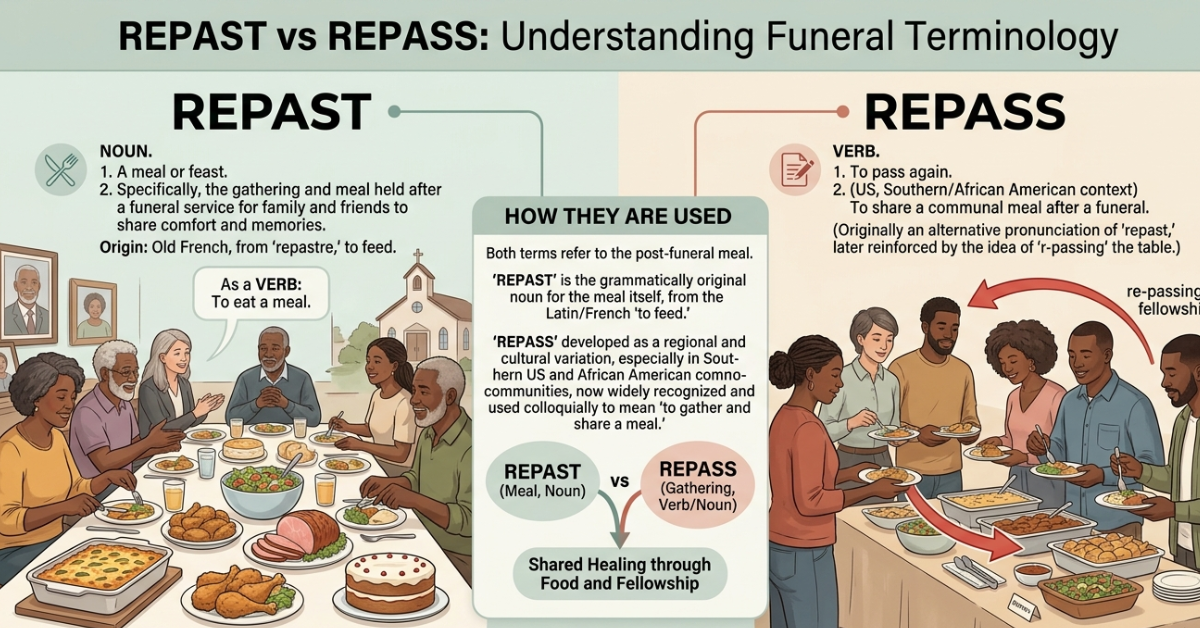
The simplest answer is that repast is the traditional dictionary term for a meal, while repass is commonly used in some communities to describe the gathering or meal that follows a funeral.
Although both words appear in funeral-related discussions, they developed from different linguistic backgrounds.
Repast Meaning
The word repast has been part of the English language for centuries. It refers to:
- A meal
- Food served at a gathering
- An occasion where people eat together
Historically, repast was used in formal writing and literature to describe breakfast, lunch, dinner, or any communal meal.
For example:
- “The family shared a repast after the ceremony.”
- “Guests were invited to a repast following the memorial service.”
In funeral contexts, a repast is the meal served to family members, friends, and mourners after burial or memorial services.
Repass Meaning
The term repass traditionally has different dictionary meanings, such as:
- To pass again
- To travel over the same route
- To return through a place
However, in many communities—particularly within African American funeral traditions—the word repass has evolved to refer specifically to the gathering held after a funeral service.
Today, many funeral homes, churches, and families use the term repass when describing the social gathering where mourners come together to eat, share memories, and support one another.
Is It Repass or Repast for Funeral Gatherings?
One of the most common questions people ask is: is it repass or repast for funeral events?
The answer depends largely on context and regional usage.
When “Repast” Is Correct
Repast is technically the traditional English word for the meal itself.
If you’re referring specifically to food served after a funeral, repast is usually considered the more formally correct term.
Examples:
- The family hosted a funeral repast after the burial.
- Guests attended the repast in the church fellowship hall.
When “Repass” Is Commonly Used
Repass is widely accepted in many communities as the name of the entire post-funeral gathering.
Examples:
- The repass will begin immediately after the cemetery service.
- Family members are invited to attend the repass.
In modern funeral language, both terms may appear, even though repast remains the historically traditional word.
Funeral Repass or Repast: Why the Confusion Exists
The debate around funeral repass or repast exists because language changes over time.
Several factors contributed to the overlap:
- Similar pronunciation
- Shared association with funeral meals
- Regional cultural traditions
- Generational differences in terminology
- Informal usage becoming widely accepted
Over decades, many people began using repass when discussing funeral gatherings. Eventually, the term became deeply rooted in certain communities and is now recognized as part of funeral culture.
As a result, both words continue to appear in funeral programs, obituaries, church announcements, and conversations.
The Purpose of a Repass or Repast After a Funeral
Whether you call it a repass or a repast, the purpose remains the same.
After a funeral, families often gather to:
- Honor the deceased
- Share memories and stories
- Offer emotional support
- Strengthen community bonds
- Provide comfort to grieving relatives
- Continue cultural and religious traditions
These gatherings serve as an important transition between formal funeral services and the family’s ongoing grieving process.
Emotional Benefits
A post-funeral gathering helps mourners:
- Feel less isolated
- Connect with loved ones
- Celebrate the person’s life
- Process grief in a supportive environment
For many families, this event becomes one of the most meaningful parts of the funeral experience.
Repass or Repast Funeral Traditions Across Cultures
Funeral meals are not unique to one culture.
Throughout history, communities worldwide have gathered after funerals to eat together and support grieving families.
Christian Traditions
Many churches host fellowship meals after funeral services. These meals often include contributions from congregation members and close relatives.
African American Funeral Traditions
In many African American communities, the term repass is especially common. The gathering often takes place in a church hall, family home, or community center.
The event focuses on:
- Sharing memories
- Offering condolences
- Celebrating the deceased’s legacy
- Providing practical support for the family
Irish Traditions
Irish funeral customs often include a wake followed by food, drinks, and storytelling among family and friends.
Asian Traditions
Various Asian cultures host memorial meals that bring relatives together after funeral ceremonies.
Despite differences in customs, the underlying goal remains similar: honoring the deceased while supporting the living.
Repass or Repast After Funeral: Which Should You Use?
If you’re wondering about repass or repast after funeral services, consider your audience.
Use “Repast” When:
- Writing formal documents
- Creating funeral programs
- Preparing professional communications
- Following traditional English usage
Use “Repass” When:
- Referring to cultural traditions that commonly use the term
- Following the family’s preferred wording
- Describing a community gathering known as a repass
The most respectful approach is often to use the terminology preferred by the family hosting the event.
Common Examples of Funeral Announcements
Here are examples showing how both terms may be used.
Using Repast
“The family invites all guests to a repast immediately following the burial service.”
Using Repass
“Please join us for the repass at the church fellowship hall after the funeral.”
Both statements are widely understood and accepted depending on the community and setting.
Key Differences at a Glance
| Feature | Repast | Repass |
| Traditional English word | Yes | No |
| Means meal or food gathering | Yes | Not originally |
| Commonly used after funerals | Yes | Yes |
| Formal usage | More common | Less common |
| Community-specific funeral term | Sometimes | Often |
| Widely recognized today | Yes | Yes |
Practical Tips for Choosing the Right Term
If you’re preparing funeral-related materials, keep these guidelines in mind:
- Ask family members which term they prefer.
- Use repast in formal or traditional writing.
- Respect cultural preferences regarding repass.
- Stay consistent throughout announcements and programs.
- Focus on clarity and sensitivity rather than strict language rules.
Ultimately, compassion and respect matter more than choosing one word over the other.
Frequently Asked Questions
Is it repass or repast after a funeral?
Both terms are used today. Repast traditionally refers to the meal itself, while repass is commonly used in many communities to describe the gathering that follows a funeral.
What does repast mean at a funeral?
A repast is the meal shared by family, friends, and mourners after funeral services. It provides an opportunity for comfort, remembrance, and community support.
Why do some people say repass instead of repast?
The term repass became widely adopted in certain cultural traditions, particularly within African American communities, where it refers to the post-funeral gathering.
Is repass a real word?
Yes. Repass is a legitimate English word, although its original meanings differ from funeral usage. Over time, it gained a specialized meaning in funeral traditions.
Which term is more formal: repass or repast?
Repast is generally considered the more formal and historically accurate term for a funeral meal.
Can I use either repass or repast in a funeral program?
Yes. Both are commonly understood. However, it is best to follow the preference of the family, church, or community involved.
Conclusion
The discussion around repass or repast comes down to tradition, culture, and language evolution. Historically, repast refers to a meal and is the more formal English term. However, repass has become widely accepted in many communities as the name of the gathering held after a funeral.
When deciding between funeral repass or repast, the most important consideration is respecting family preferences and cultural traditions. Both terms are commonly understood, and both describe an important event that brings people together during a difficult time.
By understanding the distinction, you can communicate more confidently and respectfully when discussing funeral customs and post-service gatherings.
Author

linguaezone.com@gmail.com
Related Posts
Kill Two Birds With One Stone Alternative: 50 Better Options
- 0
- 1,569 word
Have you ever paused before saying “kill two birds with one stone” because it sounded too violent or simply didn’t fit the...
Read out all
Happy Sabbath Meaning: A Complete Guide to Its Significance
- 0
- 1,632 word
Have you ever received the message “Happy Sabbath” and wondered what it truly means? Is it simply another way of saying “have...
Read out all
I’m So Proud of You in Other Words: 120+ Heartfelt Alternatives
- 0
- 1,562 word
Have you ever wanted to tell someone you’re proud of them but felt like saying “I’m so proud of you” sounded repetitive?...
Read out all
How Do You Spell Happy Anniversary? Correct Spelling Guide
- 0
- 1,221 word
Have you ever paused before writing an anniversary card and wondered, “How do you spell happy anniversary?” You’re not alone. Whether you’re...
Read out all
Waiting for Your Response Email: Best Examples & Tips
- 0
- 1,483 word
Have you ever sent an important email and found yourself wondering whether you should follow up or simply wait? Whether you’re communicating...
Read out all
Great Asset to the Team: Meaning, Examples & Tips
- 0
- 1,494 word
Have you ever wanted to compliment a coworker but struggled to find words that sound professional and sincere? One of the most...
Read out all