
×
I Regret to Inform You Meaning and Usage Guide
In

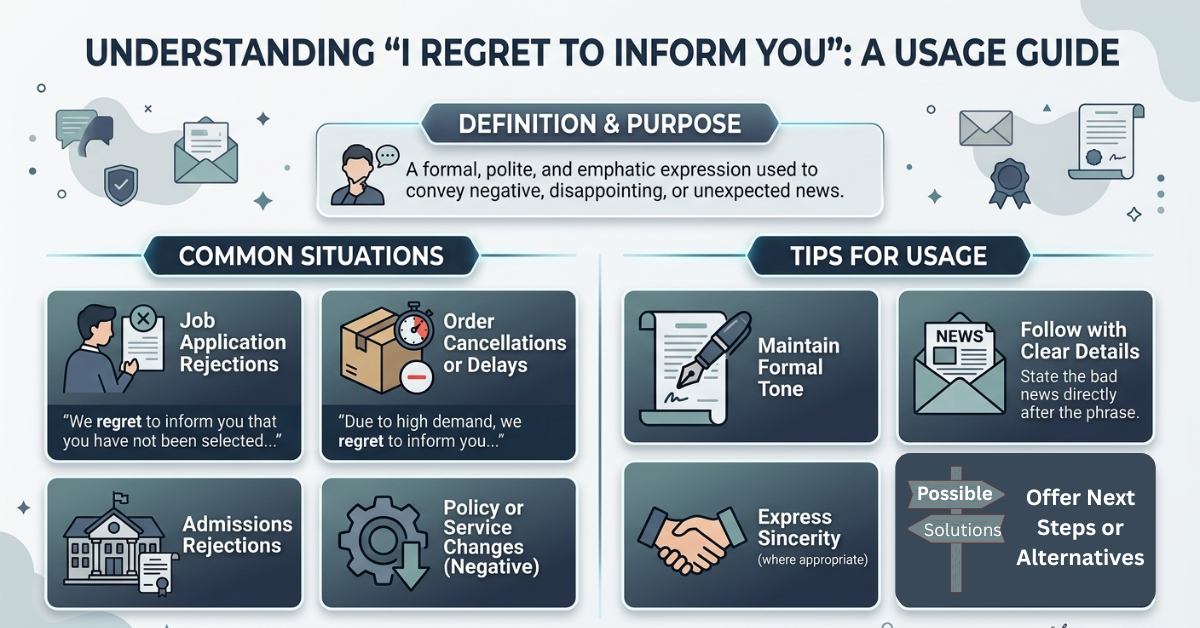
Have you ever received a message that starts with “i regret to inform you” and instantly felt anxious? This phrase is widely used in formal communication, and it usually respectfully introduces disappointing news.

In simple terms, the meaning refers to a polite expression used to deliver bad or negative information while maintaining professionalism. Moreover, it is commonly found in emails, letters, and official notices.

In this article, we will explain its meaning, usage, alternatives, and practical examples so you can fully understand how and when to use it correctly.

What Does “I Regret to Inform You” Mean?

The phrase is used when someone needs to deliver unfortunate news in a formal and respectful tone. Instead of sounding harsh, it softens the message.

In other words, it means:

  • “I am sorry to tell you this”
  • “Unfortunately, I must share bad news”

Additionally, this phrase helps maintain professionalism in sensitive situations.

When to Use “I Regret to Inform You”

You will often see the phrase in formal and official communication. For example, organizations and institutions use it regularly.

1. Job Application Rejections

Companies use it when they cannot offer a position.
For instance, they write:
“I regret to inform you that you have not been selected.”

2. Academic Results

Similarly, universities use it for admission or exam outcomes.

3. Official Notices

Government offices and organizations also rely on it for announcements.

Furthermore, it ensures that negative news is delivered politely and professionally.

Why This Phrase Is Common in Formal Communication

The phrase is popular because it serves multiple purposes. First, it shows respect toward the reader. Second, it reduces emotional impact. Third, it maintains a professional tone.

In addition, it allows the sender to communicate difficult news without sounding rude or direct.

Synonyms and Alternatives

If you want a synonym, you can use several alternatives depending on tone and situation.

Here are some commonly used options:

  • “I am sorry to inform you”
  • “We regret to advise you”
  • “Unfortunately, we must inform you”
  • “It is with regret that we inform you”
  • “We regret to notify you”

Moreover, each synonym slightly changes the tone while keeping the message formal.

Real-Life Examples

To understand better, let’s look at practical examples:

Job Email Example

“I regret to inform you that your application was not successful.”

Academic Example

“I regret to inform you that you did not meet the required score.”

Service Update

“I regret to inform you that the event has been postponed.”

In all these cases, the phrase helps soften disappointing news.

Common Mistakes to Avoid

Although the phrase is simple, people often misuse it. Therefore, avoid the following mistakes:

  • Using it in casual conversations
  • Writing vague messages after it
  • Overusing it in informal emails
  • Ignoring clarity after the phrase

Instead, always ensure your message is clear and complete.

FAQs

1. What is the meaning of “i regret to inform you”?

It is a formal expression used to deliver disappointing or negative news politely.

2. Is it always used for bad news?

Yes, it is mainly used for unfortunate or negative information.

3. What is another word for “i regret to inform you”?

You can use phrases like “I am sorry to inform you” or “We regret to advise you.”

4. Can I use it in emails?

Yes, it is commonly used in professional and official emails.

5. Is it suitable for casual speech?

No, it is too formal for everyday conversations.

Conclusion

To sum up, i regret to inform you is a formal phrase used to deliver unpleasant news in a polite and professional manner. As we explored the i regret to inform you meaning, we also saw how it helps maintain respect and soften negative communication.

Furthermore, learning its synonyms and proper usage improves your writing skills in emails and official communication. So, next time you face a formal situation, you can confidently choose the right wording and communicate more effectively.

Leave a Reply

Your email address will not be published. Required fields are marked *

Author

britsx85@gmail.com

Related Posts

Congratulations for New Beginning Messages and Wishes
In

Congratulations for New Beginning Messages and Wishes

Starting something new is one of the most exciting moments in life. Whether it’s a new job, marriage, business, home, relationship, or...

Read out all
Looking Forward to Working With You: Meaning & Examples
In

Looking Forward to Working With You: Meaning & Examples

A simple phrase can do a lot of heavy lifting in professional communication. Looking forward to working with you is one of...

Read out all
Happy Early Birthday Wishes, GIFs, Images & Memes
In

Happy Early Birthday Wishes, GIFs, Images & Memes

Birthdays are exciting, but sometimes waiting for the actual day feels impossible. That’s exactly why saying happy early birthday has become so...

Read out all
Blue in Different Languages: A Simple Guide
In

Blue in Different Languages: A Simple Guide

Color words seem easy until you start comparing them across cultures. Blue in different languages is a great example: in some places,...

Read out all
Best Synonyms for “This Shows” in Essays
In

Best Synonyms for “This Shows” in Essays

When writing academic essays, students often rely on the phrase “this shows” to explain evidence. However, repeated use can make writing feel...

Read out all
Thank You for Your Attention: Meaning & Proper Use
In

Thank You for Your Attention: Meaning & Proper Use

In professional communication, even small phrases can make a strong impression. One of the most commonly used expressions is thank you for...

Read out all