
- 0
- 993 words
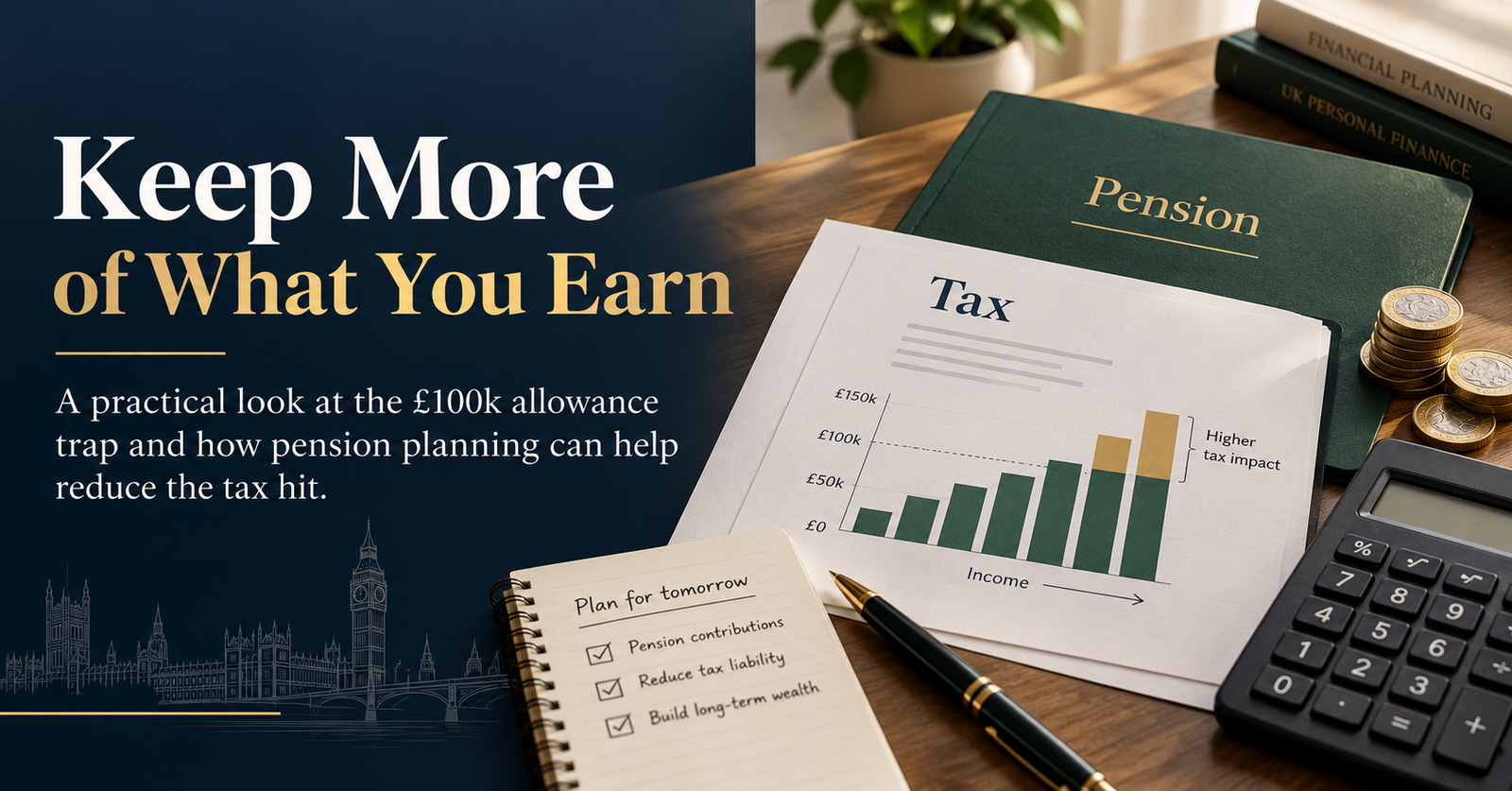
Earning more should leave you better off. Once your income passes £100k, that logic breaks down. A hidden rule pushes your tax rate far higher than the headline figures suggest. Many high earners never notice until the bill arrives.
This guide explains the trap and shows how pension contributions can switch it off. It also covers why Scottish taxpayers face an even steeper climb. Many people speak with a financial advisor, and Glasgow professionals recommend it before they act.
Quick Answer
The £100k tax trap is the loss of your personal allowance as income rises. For every £2 you earn above £100k, you lose £1 of tax-free allowance. By £125140 the allowance is gone entirely. The result is a sharply higher tax rate on that slice of income. Pension contributions can reduce your adjusted net income and bring the allowance back.
How Does the Trap Work?
Everyone starts with a personal allowance of £12570. This is the amount you earn before paying any income tax. HMRC measures it against your adjusted net income. That figure is your total taxable income minus certain reliefs such as pension contributions.
Once adjusted net income passes £100k, the allowance starts to shrink. A person earning £110k keeps only £7570. A person earning £125140 keeps nothing. The lost allowance is then taxed at your top rate.
Why Is the Effective Rate So High?
Think of it as two costs at once. You pay the normal rate on each extra pound. You also lose an allowance that was previously tax-free. In England, Wales and Northern Ireland, this creates an effective rate of 60%.
Why Scotland Faces a Bigger Bill
Scottish taxpayers use different income tax bands. The advanced rate of 45% applies from £75001 to £125140. The taper still works the same way. The two effects combine to create an effective rate of 67.5% on income between £100k and £125140.
That makes Scotland home to the steepest marginal rate in the UK. Anyone searching for financial planning in Glasgow should know this gap exists. National Insurance sits on top of these figures for employees.
The Hidden Costs Beyond Income Tax
Tax rates are only part of the story. Passing £100k brings other losses too. Parents lose access to 30 hours of free childcare. They also lose Tax-Free Childcare. For a family with young children, the combined cost can be thousands of pounds.
These cliff edges make planning around £100k especially valuable. A small reduction in income can protect a large amount of value.
How Pension Contributions Help
A pension contribution reduces your adjusted net income pound for pound. Bring that figure back to £100k and the allowance returns in full. You also build retirement savings along the way.
Here is a simple Scottish example for 2026/27. A person earns £110k. They pay £10k gross into a pension.
| Key Factors | Without pension | With pension |
| Adjusted net income | £110k | £100k |
| Personal allowance | £7570 | £12570 |
| Extra tax saved | None | About £6750 |
| Net cost of £10k contribution | £10k | About £3250 |
The saving comes from two places. You gain relief on the contribution itself. You also restore £5k of allowance that would have been taxed at 45%. In effect, a pension pot of £10k costs roughly £3250.
Ways to Make Contributions
Several routes can work. The right choice depends on your employer and scheme.
Salary Sacrifice
You agree to give up part of your salary. Your employer pays the amount into your pension instead. Both income tax and National Insurance fall. Salary sacrifice often gives the strongest result.
Personal Contributions
You pay into a personal pension from your net income. The provider adds basic rate relief automatically. Higher and advanced rate taxpayers claim the extra relief through self-assessment. Keep careful records so you do not miss it.
Employer Contributions
Employer payments reduce your taxable income without touching your take-home pay. Some employers also match increases in your own contributions. Check your scheme rules.
Carry Forward
You can use unused annual allowance from the previous three tax years. This helps if your income spiked in one year. It also suits those receiving a bonus or business sale proceeds.
Know the Limits
The standard annual allowance is £60k. It can be lower for very high earners or those who have already accessed their pension flexibly. Contributions above your allowance may attract a tax charge. You also cannot access your pension until the minimum age. That age is currently 55 and will rise to 57 in 2028.
Pensions are not suitable for every situation. Your wider goals and cash flow matter. Advice is worth taking before you commit.
Why Professional Advice Matters
The £100k trap interacts with bonuses and childcare. It also touches pension limits and your retirement plans. One misstep can erode the benefit. A financial adviser Glasgow families rely on will model the numbers before you act.
Independent financial advisers in Glasgow can compare options without product bias. A skilled financial planner in Glasgow will also connect the pension decision to your long-term goals.
How Humboldt Financial Can Help
Humboldt Financial is an FCA-regulated firm. Its reference number is 826457. The advisers cover pension and retirement planning plus tax efficiency. They also support clients with later life drawdown and estate planning.
The firm holds more than 240 Google reviews and a five-star rating. Clients praise clear explanations and transparent charges. Anyone searching for an IFA Glasgow can book a no-obligation consultation online. Humboldt advisers meet clients by video. You can also call 020 3031 9187.
Frequently Asked Questions
What is the £100k tax trap?
It is the gradual loss of your personal allowance when adjusted net income exceeds £100k. The allowance disappears fully at £125140.
How much is the effective tax rate in the trap?
It is about 60% in England. It reaches 67.5% for Scottish taxpayers on income between £100k and £125140.
Can pension contributions avoid the trap?
Yes. They lower your adjusted net income. Bringing it to £100k or below restores your full personal allowance.
Does salary sacrifice help more than personal contributions?
Often it does. It can reduce National Insurance as well as income tax.
Who can advise me?
Look for an FCA-authorised firm. Check clear fees and genuine client reviews.
Author

khizarnisar367@gmail.com
Related Posts

How Regional Labor and Material Prices Affect Construction Bid Accuracy
- 0
- 1,538 word
A production bid can look precise on paper, and no matter the truth that be incorrect if the underlying fees no longer...
Read out all
Diagnosing Home Cooling Problems in Flower Mound’s Heat: What to Check Before You Call
- 0
- 1,093 word
North Texas summers put air conditioners to the test. When temperatures climb and humidity hangs in the air, even a small issue...
Read out all
Why Your Home Feels Clammy Despite Cooling in Palm Bay: A Practical Guide to AC Dehumidification
- 0
- 1,044 word
Summer on Florida’s Space Coast brings ocean air, daily downpours, and long stretches of high humidity. Even when the thermostat says you...
Read out all
What a Skilled HVAC Contractor Checks Before Recommending New Equipment
- 0
- 1,178 word
Replacing an air conditioner, heat pump, or furnace can feel like a quick swap, but comfort and efficiency depend on steps taken...
Read out all
Why Oversized Air Conditioners Leave Homes Clammy and How to Fix It
- 0
- 1,181 word
On a hot, sticky day, it is tempting to think a bigger air conditioner will cool the house faster and feel better....
Read out all
How to Choose the Best Physiotherapy in Dee Why for Your Recovery
- 0
- 883 words
Choosing physiotherapy for recovery involves more than finding the closest clinic or booking the first available appointment. The right care should help...
Read out all