
- 0
- 751 words
A stainless steel enclosure can leave the welding bench looking complete and still need substantial work before it is ready to ship. Raised beads may need blending, heat tint may require treatment, and a distorted flange can make the next assembly difficult. For a fabrication shop, those operations belong in the welding cost even when another department carries them out.
Choosing a laser welder for sheet metal work therefore involves more than comparing weld speed. The useful question is how much finishing remains after a sound joint has been made. Laser welding can reduce heat input and produce a narrow weld, but the outcome still depends on joint preparation, settings, and the finish the customer actually requires.
Finish Requirements
Different products need different surfaces. A visible cabinet corner may need a smooth, uniform appearance, while an internal bracket may be acceptable with the weld left intact. A hygienic assembly may have requirements for surface condition that go beyond appearance. Treating every weld as a cosmetic seam adds work; treating every smooth seam as acceptable can overlook the drawing or service requirements.
The comparison should start with the same acceptance criteria for the existing process and the proposed laser process. Record what must be removed, what may remain, and which dimensions need checking after welding. That establishes whether a smaller bead actually saves time on this particular part.
Heat Input and Panel Movement
Laser welding concentrates energy in a small region. TWI describes lower heat input than gas metal arc welding as one reason the process can suit applications that require limited thermal distortion. Thin panels and formed components can benefit when the qualified laser procedure introduces less overall heat than the existing procedure.
This does not make distortion disappear. A long seam can still pull a panel out of shape, especially when restraint or welding sequence is unsuitable. Excessive heat input can also undermine the benefit of the process. Clamping, seam sequence, and the actual welding settings remain part of the result.
A useful trial measures the part after it has cooled and been released from the fixture. Measuring it while the clamps still hold it flat can conceal movement that appears later.
Bead Size and Joint Quality
A narrow weld is useful only if it provides the required fusion. Gaps, edge mismatch, and inconsistent tacks can make bead shape change along the seam. Where filler wire is needed, its delivery has to match the joint and welding conditions. Adding extra filler merely to make a bead look fuller can create more blending work.
Surface preparation matters as well. Oil, coatings, and contamination can affect weld quality. On stainless steel, the specified cleaning and surface treatment may still be necessary after welding; a neat appearance does not establish corrosion performance or internal soundness.
The Cost of Finishing
For a trial batch, record welding and finishing separately. Include handling between stations, abrasive use, dimensional correction, inspection, and any rework. Comparing only time under the welding head can miss the larger saving—or the larger cost.
| Operation | What to record | What it reveals |
| Welding | Setup and seam time | Time needed to make the joint |
| Blending | Minutes and abrasive use | Work needed to meet appearance requirements |
| Surface treatment | Cleaning or treatment time | Finishing that remains necessary |
| Dimensional correction | Adjustment time and rejected parts | Effect of movement after cooling |
| Inspection | Acceptance and rework | Whether the apparent saving holds up |
From Trial Samples to Routine Production
Once a trial meets the drawing and finish requirements, the approved setup needs a written record. Material, thickness, joint type, fixture arrangement, power, travel conditions, shielding, and filler details belong together. A photograph of an acceptable seam is helpful, but it cannot replace the process record.
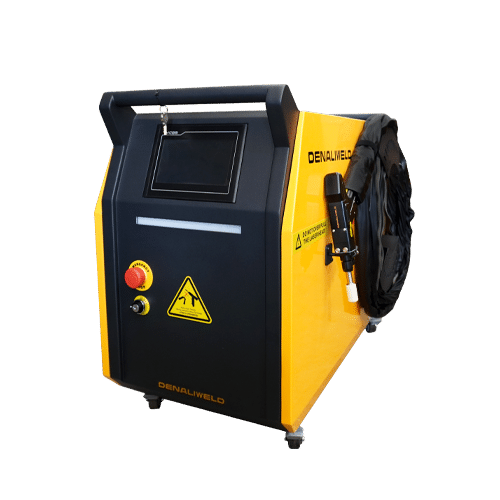
The JET 3000 product page describes an air-cooled 3 kW system with adjustable controls and an automation interface. Those features provide equipment context; they do not establish a finishing saving for every application. DenaliWeld is one supplier a shop can approach with its own parts and acceptance requirements for a practical trial.
The strongest reason to change processes is a repeatable reduction in work on accepted parts. If the weld meets its requirements, the panel stays within tolerance, and fewer finishing operations remain, the benefit reaches the shipping bench rather than stopping at the welding station.
Conclusion
Finishing savings need to be measured on parts that meet the drawing, dimensional tolerances, and surface requirements. A laser welding trial is useful when it shows which operations can be reduced and which remain necessary. That evidence gives a shop a realistic basis for comparing the complete cost of its current process with the proposed one.
Author

Ibukdkhan@gmail.com
Related Posts

Nionenad.com: A Complete Guide to Its Website, Features, Content, and Online Presence
- 0
- 3,162 words
The internet offers countless websites where people can discover information, explore new ideas, and learn about technology and everyday topics. However, understanding...
Read out all
The Art of Handmade Knives: Materials, Design, and Traditional Craftsmanship
- 0
- 845 words
Handmade knives represent a meeting point between practical design and traditional craftsmanship. Although modern manufacturing can produce knives efficiently and consistently, handcrafted...
Read out all
How to Tell if a Goldfish Is Male or Female: A Complete Guide for Every Goldfish Tank Owner
- 0
- 1,899 word
The graceful movements, bright colors and unique personalities of the goldfish make them one of the world’s most adored aquarium pets. Regardless...
Read out all
Trallehylde: A Complete Guide to Stylish, Practical, and Space-Saving Shelving
- 0
- 2,891 words
Introduction to Trallehylde A well-organized home or workspace can make everyday life easier, more comfortable, and more enjoyable. Storage solutions play an...
Read out all
Jernsenger: Understanding Its Meaning, Uses, Features, and Growing Interest
- 0
- 2,615 words
The word jernsenger may look unfamiliar to many people, yet unusual terms often attract attention because of their distinctive spelling, possible cultural...
Read out all
MMSBRE: Understanding Its Meaning, Features, Uses, and Growing Online Interest
- 0
- 2,625 words
Introduction to MMSBRE The internet constantly introduces new terms, platforms, abbreviations, and digital concepts that attract people’s attention. One term that may...
Read out all