
Sauce vs Source: Meaning, Differences & Easy Guide
- 0
- 637 words
Ever been typing a message and paused, wondering whether it’s “sauce” or “source”? You’re not alone. The confusion around Sauce vs Source is surprisingly common, especially in casual writing, social media captions, and even student assignments.
While they may sound slightly similar, their meanings are completely different. In this guide, we’ll break down Sauce vs Source, explain where the confusion comes from, and show you how to use each word correctly in real-life contexts.
What Does “Sauce” Mean?
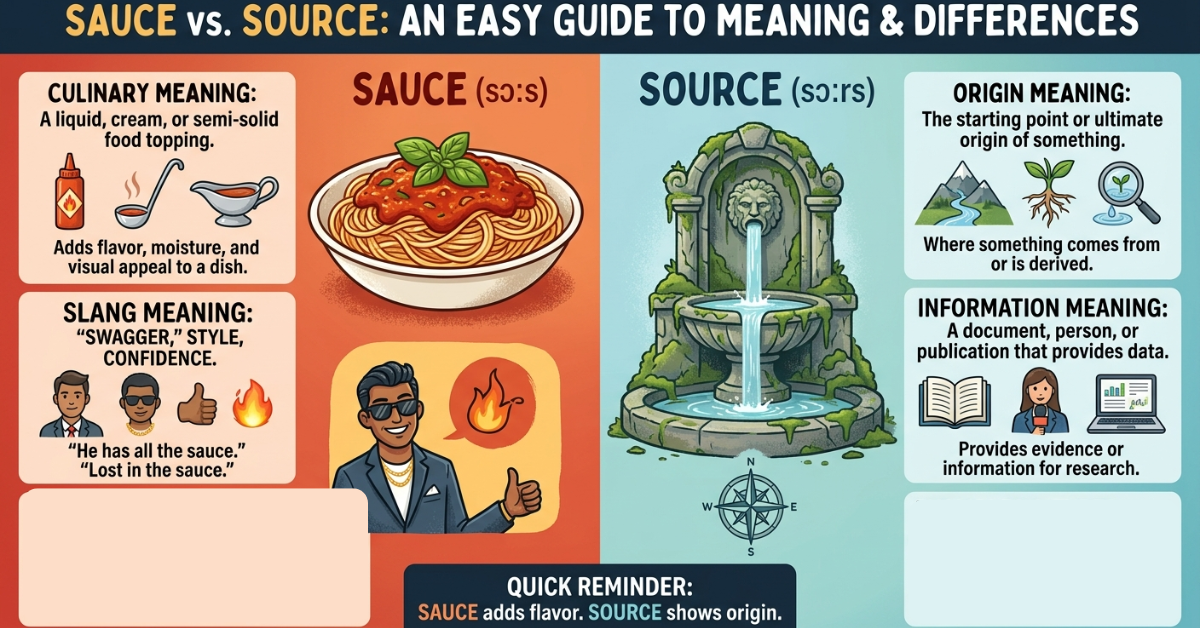
The word sauce is most commonly used in food-related contexts. It refers to a liquid, creamy, or semi-liquid condiment added to food to enhance flavor.
Common Examples of Sauce:
- Tomato sauce on pasta
- Chili sauce with snacks
- Soy sauce in Asian cuisine
- Barbecue sauce on grilled food
But in modern slang, “sauce” can also mean something extra or special—like confidence or style.
Slang Example:
- “He’s got the sauce” (meaning he has charm or unique style)
So, sauce is mostly about food or informal expressive language.
What Does “Source” Mean?
On the other hand, source refers to the origin or point where something comes from. It is widely used in education, journalism, research, and daily communication.
Common Uses of Source:
- The source of information (books, websites, experts)
- Water source (river, spring, groundwater)
- News source (journalist, agency)
- Energy source (solar, wind, electricity)
Example:
- “Always check the source of information before sharing it.”
So, source is about origin, reliability, and reference.
Sauce vs Source: Key Differences Explained
The confusion between Sauce vs Source usually happens because they sound similar when spoken quickly. However, their meanings are unrelated.
Quick Comparison:
- Sauce → Food condiment or slang expression
- Source → Origin or reference point of something
Easy Way to Remember:
- Sauce = Something you eat or style you show off
- Source = Where something comes from
Why People Confuse Sauce vs Source
There are a few reasons why this mix-up happens:
- Similar pronunciation in fast speech
- Typing errors on mobile keyboards
- Social media slang influencing language
- Lack of awareness of spelling differences
In most cases, it’s just a simple spelling mistake, but understanding Sauce vs Source helps improve writing accuracy.
How to Use Sauce and Source in Sentences
Correct Usage of “Sauce”:
- “I love extra sauce on my burger.”
- “This recipe needs more soy sauce.”
Correct Usage of “Source”:
- “What is your source for this news?”
- “The river is the main water source for the village.”
Once you see them in context, the difference becomes much clearer.
Common Mistakes to Avoid
Here are some frequent errors people make:
- Writing “sauce of information” instead of “source of information”
- Using “source” when talking about food
- Mixing both words in informal writing
- Assuming they are interchangeable
Avoiding these mistakes will make your writing more professional and accurate.
FAQs about Sauce vs Source
1. What is the main difference between sauce and source?
The main difference is meaning: sauce is food-related, while source refers to origin or reference.
2. Why do people confuse Sauce vs Source?
Because both words sound similar when spoken quickly and are often misspelled in casual writing.
3. Is “source” only used in academic writing?
No, it is used in everyday language too, such as water source, energy source, or news source.
4. Can “sauce” be used in slang?
Yes, “sauce” can mean style, confidence, or attractiveness in informal slang.
5. How can I remember the difference easily?
Think: sauce = food, source = origin. This simple trick helps avoid confusion.
Conclusion
Understanding Sauce vs Source is all about recognizing context. One belongs to the kitchen and casual slang, while the other belongs to information, origins, and references. Once you learn the difference, you’ll avoid one of the most common spelling and meaning mix-ups in English.
If you found this helpful, keep exploring more grammar comparisons to sharpen your writing skills and boost your confidence in everyday communication.
Author
britsx85@gmail.com
Related Posts
Leak vs Leek: Meaning, Difference & Easy Guide
- 0
- 607 words
Have you ever seen the words leak and leek and wondered why they look almost identical but mean completely different things? This...
Read out all
Knead vs Need: Meaning, Difference & Usage Guide
- 0
- 731 words
English can be tricky, especially when two words sound the same but mean completely different things. One such confusing pair is Knead...
Read out all
Jam vs Jamb: Meaning, Difference & Usage Explained
- 0
- 653 words
The confusion around jam vs jamb is more common than you might think, especially among English learners and even native speakers. At...
Read out all
Incite vs Insight: Meaning, Difference & Usage Explained
- 0
- 744 words
Have you ever stumbled while writing and wondered whether to use incite vs insight? You’re not alone. These two words sound similar...
Read out all
Idle vs Idol: Meaning, Difference & Usage Guide
- 0
- 656 words
The confusion between idle vs idol is more common than you might think, especially in spoken and written English where both words...
Read out all
Hanged vs Hung: Meaning, Grammar & Usage Explained
- 0
- 731 words
The confusion between hanged vs hung often troubles English learners and even native speakers. Many people mix them up because both forms...
Read out all