
- 0
- 1,258 word
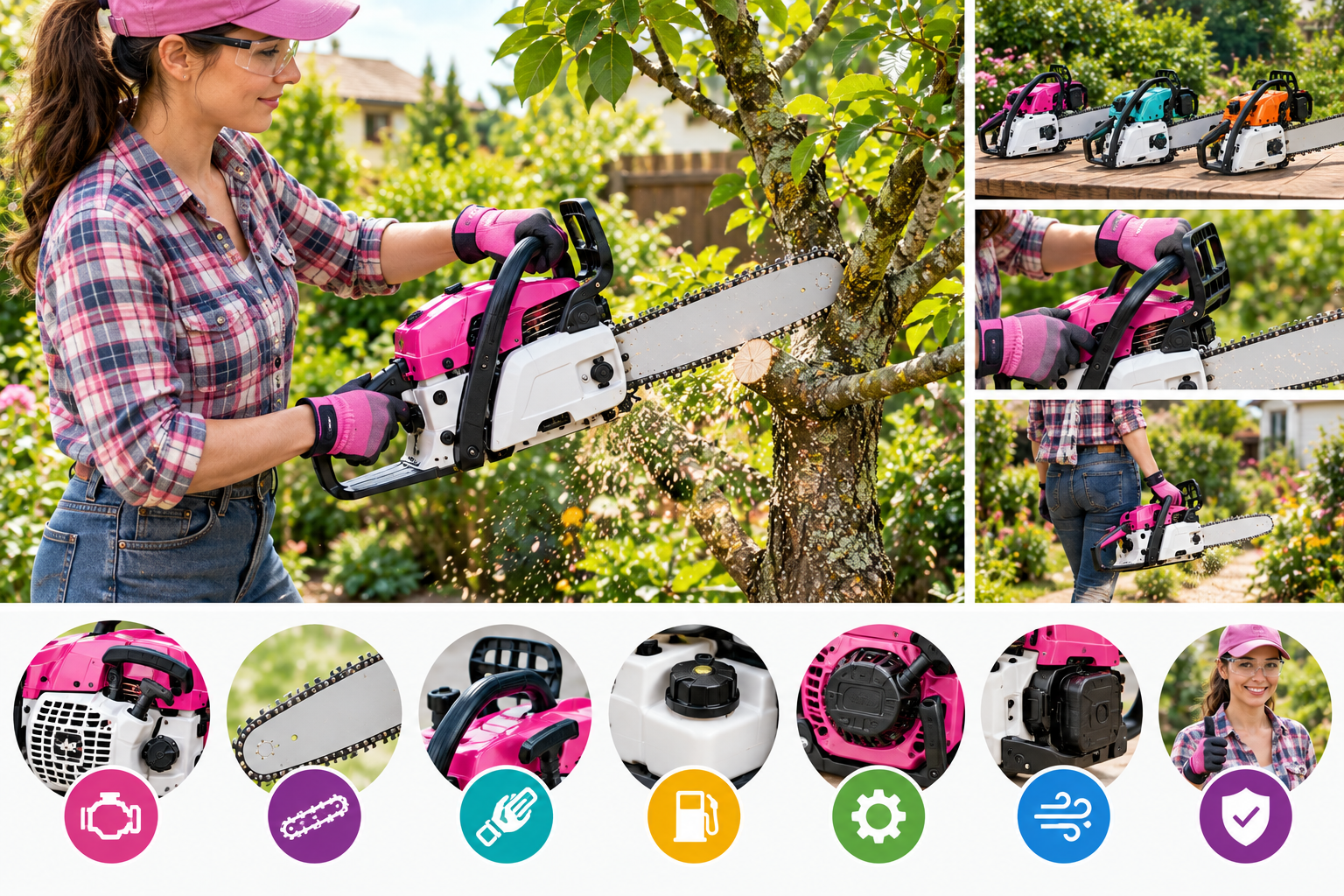
Most gardens have at least a few trees that need attention from time to time. A crabapple that’s grown too dense, a row of overgrown conifers along the fence, a young birch planted in the wrong spot, or a fruit tree that’s past its prime. These aren’t towering oaks that require a professional crew, but they’re too thick for loppers and too much work for a handsaw.
For jobs like these, a gas chainsaw is often the most practical tool. It has enough power to cut through trunks and thick limbs quickly, it doesn’t need an outlet, and it can handle a full afternoon of work on a single tank. But not every saw is suited to smaller trees. A machine that’s too large will be heavy, tiring and harder to control, while one that’s too small will struggle with dense wood. Here’s how to find the right balance.
Define What “Small Trees” Means for You
Before looking at models, it helps to be specific. For most homeowners, “small trees” means trunks up to around 8 to 12 inches in diameter, along with limbs and branches of various sizes. This includes ornamental trees, young shade trees, fruit trees, hedging conifers and saplings that have sprouted where they shouldn’t.
Measure the thickest trunks you expect to cut. This single number will guide most of your decisions, especially when it comes to bar length and engine size.
Also consider the type of wood. Softwoods like pine, spruce and willow cut easily. Hardwoods like oak, maple, cherry or apple are denser and need more power and a sharper chain.
Engine Size: Light but Capable
For small garden trees, you don’t need a heavy-duty engine. Saws in the 30 to 45cc range are usually ideal.
- 30 to 38cc: light, easy to handle and perfect for pruning, limbing and cutting trunks up to around 8 inches. Great for occasional use and smaller gardens.
- 38 to 45cc: a bit more power for hardwood and trunks up to 10 to 12 inches, while staying manageable in weight.
Going larger rarely makes sense for small trees. A 55cc saw will cut faster, but its extra weight becomes a burden when you’re limbing, bending, reaching and maneuvering around branches for an hour or more.
Bar Length: Short Is Your Friend
A shorter bar is lighter, easier to control and less prone to kickback. For small trees, bars between 12 and 16 inches cover nearly everything.
- 12 to 14 inches: excellent for pruning, limbing and trunks up to about 10 inches.
- 16 inches: a versatile size that handles slightly larger trunks while remaining easy to maneuver.
A good rule of thumb is to choose a bar a couple of inches longer than the thickest wood you’ll regularly cut. With proper technique, you can cut wood larger than the bar length by making cuts from both sides, though this requires more skill.
Weight and Handling
When cutting small trees, you’ll make a lot of short cuts at different angles: removing low branches, notching, felling, limbing and bucking. A light, well-balanced saw makes all of this far easier and safer.
Look at the powerhead weight on the spec sheet, but remember that the bar, chain, fuel and oil add more. Ideally, hold the saw in a store, grip both handles and raise it to cutting height. A good saw feels balanced, not nose-heavy, and doesn’t strain your wrists.
Rear-Handle vs. Top-Handle
You’ll see two main designs on the market. Rear-handle saws have the rear grip behind the engine and are the standard choice for homeowners. They’re more stable and safer for ground-based work.
Top-handle saws are compact and designed for professional arborists working in trees with ropes and harnesses. They can be used one-handed, which makes them more dangerous for inexperienced users. For garden work from the ground, a rear-handle saw is the right choice.
Features That Matter for a Garden Chainsaw
When you’re comparing models, focus on features that make a garden chainsaw safer and more pleasant to use, rather than raw power.
Safety features
- Chain brake, both manual and inertia-activated, to stop the chain during kickback.
- Low-kickback chain and reduced-kickback bar, strongly recommended for home use.
- Chain catcher to stop a broken chain from flying back.
- Throttle lockout to prevent accidental acceleration.
- Hand guards front and rear.
Comfort features
- Anti-vibration system to reduce fatigue and protect your hands.
- Easy-start system with a primer bulb and decompression valve, especially helpful if you use the saw only occasionally.
- Tool-free chain tensioning for quick adjustments.
- Adjustable automatic oiler to keep the chain properly lubricated.
Chain type
Many saws designed for light work use a low-profile chain, often 3/8-inch low-profile pitch. These chains cut smoothly, produce less vibration and are less aggressive, which suits smaller saws and home users well.
Gas or Battery?
It’s worth asking whether you need gas at all. Battery chainsaws have become very capable and are quieter, lighter and require less maintenance. For a small garden with a few trees and light pruning, they may be perfectly adequate.
Gas saws still win when you need longer runtime, more power for hardwood or the freedom to work far from a charger. If you have a larger property, several trees to manage each year, or you also plan to cut firewood, a gas model is often the better long-term choice.
Typical Jobs and What to Expect
A well-chosen saw for small trees will help with:
- Felling small trees under 10 to 12 inches, with proper notch and back cuts.
- Pruning thick branches beyond the reach of loppers.
- Limbing fallen or felled trees.
- Bucking trunks into firewood or manageable sections.
- Lowering stumps close to ground level, while avoiding contact with soil and stones.
Larger trees, trees near buildings or power lines, or anything that requires climbing should always be left to a certified arborist.
Brand, Service and Parts
Choose a brand with a good reputation and local support. Chainsaws need regular replacement parts: chains, bars, air filters, spark plugs. A nearby dealer can also provide servicing, sharpening and advice. A cheap saw from an unknown brand may seem appealing, but finding parts later can be a real headache.
Budget for the Essentials
The saw itself is only part of the investment. Plan for:
- Chainsaw chaps or protective trousers.
- A helmet with face shield and ear protection.
- Cut-resistant gloves and sturdy boots.
- A sharpening kit and a spare chain.
- Bar and chain oil, two-stroke oil and a proper fuel can.
These items are essential for safe use, and good protective gear can prevent serious injuries.
Try Before You Buy
If possible, visit a dealer and ask to handle a few models. Some even let you test-start a saw. Pay attention to how the saw feels, how easy it is to reach the controls and how comfortable the grip is. Don’t hesitate to ask questions about maintenance, warranty and service.
Final Thoughts
Choosing the right saw for small trees comes down to finding a tool that’s powerful enough to cut cleanly but light enough to handle comfortably and safely. For most homeowners, that means an engine of 30 to 45cc, a bar of 12 to 16 inches, solid safety features and a brand with good local support.
A well-matched gas chainsaw for small trees will make pruning, felling and cleanup faster and easier, without the fatigue and risk that come with an oversized machine. Pair it with good protective gear, keep the chain sharp and respect your limits, and it’ll become one of the most useful tools in your garden shed.
Author

linguaezone.com@gmail.com
Related Posts
A Comprehensive Guide to Concrete Installation for Durable, Reliable, and Long-Lasting Surfaces
- 0
- 2,776 words
Concrete is one of the most widely used materials in modern construction because of its strength, versatility, and ability to withstand everyday...
Read out all
Remote Workers Type All Day: How to Win Back the Hours Lost to Messages and Docs
- 0
- 1,398 word
Remote work was supposed to free up time. No commute, fewer hallway interruptions, more room for deep work. Instead, a lot of...
Read out all
Tips for a Smooth Window Installation Process
- 0
- 709 words
Installing new windows in a home helps enhance the exterior appearance, and it’s a practical upgrade. Modernizing your windows can also improve...
Read out all
Turning a Spare Room Into a Useful Space Starts With the Window
- 0
- 694 words
A spare room can become the most neglected space in a home. Furniture arrives without a clear purpose, boxes accumulate, and the...
Read out all
How Digital Marketing Can Help Colleges Reach More Prospective Students
- 0
- 834 words
For colleges and universities, getting students isnt just about decent courses, and modern facilities, etc. Applicants really want to know what the...
Read out all
How Food Businesses Can Reduce Risk When Sourcing Garlic Internationally:
- 0
- 807 words
For food manufacturers, wholesale distributors, and commercial supermarket buyers, international produce procurement offers substantial economic advantages. Sourcing agricultural commodities across borders allows...
Read out all