
- 0
- 1,307 word
Data has become an important part of how modern organisations operate. Companies collect information from websites, mobile applications, customer interactions, financial transactions, supply chains, healthcare systems, and many other sources. However, collecting information alone has limited value. Organisations need professionals who can organise, analyse, interpret, and turn that information into useful insights.
This growing reliance on data has created opportunities for people with advanced analytical and technical skills. For graduates and working professionals interested in developing deeper expertise, studying a Master of Science Data Science can provide structured training across several areas of modern data analysis.
What Does Data Science Actually Involve?
Data science combines several disciplines rather than focusing on a single technical skill. Statistics, computing, mathematics, data management, visualisation, and machine learning can all form part of the field.
A data professional may be asked to identify patterns in a large dataset, build a predictive model, create a visual dashboard, evaluate business performance, or develop a system capable of processing large volumes of information.
The exact responsibilities depend on the industry and role. A financial organisation may use data analysis to study risk and market behaviour, while a healthcare organisation may analyse patient information to improve operational or treatment decisions. Retail businesses can examine purchasing behaviour, while logistics companies may use data to improve routes and supply chains.
This variety is one reason postgraduate data science education usually covers both analytical theory and practical problem-solving.
Skills Developed Through Postgraduate Data Science Study
One major benefit of postgraduate study is the opportunity to develop several related skills within a structured curriculum.
Statistical Analysis
Statistics provides an important foundation for data science. Professionals need to understand what information represents before making conclusions from it.
Students may study techniques involving correlation, regression, probability, data distributions, and other analytical methods. These skills can help them determine whether patterns in a dataset are meaningful and how confidently conclusions can be drawn.
Machine Learning
Machine learning allows computer systems to recognise patterns and make predictions using existing data.
Instead of manually defining every possible outcome, data professionals can develop models that learn from examples. These techniques have applications in areas such as fraud detection, customer behaviour analysis, recommendation systems, forecasting, and pattern recognition.
Understanding machine learning involves more than running algorithms. Students also need to learn how to prepare data, choose suitable approaches, evaluate model performance, and recognise limitations.
Big Data and Business Intelligence
Modern organisations can generate enormous quantities of information. Traditional approaches may not always be sufficient for storing, processing, and analysing these datasets efficiently.
Big data and business intelligence skills help professionals understand how information can be organised and transformed into useful business insights.
For example, management teams may use analytical systems to identify sales trends, measure performance, understand customer behaviour, or detect operational problems.
Data Visualisation
A technically correct analysis is only useful when its findings can be understood.
Data visualisation helps transform complicated information into charts, graphs, dashboards, and other visual formats. Effective visualisation can make trends and relationships easier to identify while helping decision-makers understand important findings without examining thousands of individual data points.
Interactive visualisation can take this further by allowing users to explore information dynamically.
Learning Through Practical Projects
Data science is a practical discipline. Knowing statistical concepts or machine learning theory is useful, but professionals must also understand how these concepts apply to real problems.
Projects give students opportunities to work through the complete analytical process. This may involve identifying a problem, collecting or preparing data, selecting an analytical method, testing different approaches, evaluating results, and presenting conclusions.
Independent projects are particularly valuable because they require students to combine several skills rather than studying each subject separately.
For someone considering a postgraduate programme, it is worth reviewing how much emphasis the curriculum places on applied work, research, and independent problem-solving.
Studying Data Science in Singapore
Singapore provides an interesting environment for studying technology-related disciplines because data is used across many parts of its economy.
Finance, logistics, healthcare, technology, e-commerce, professional services, and other sectors increasingly depend on analytics and digital systems. This means data science skills can potentially be applied across different industries rather than limiting graduates to traditional technology companies.
Students should still evaluate postgraduate programmes carefully. Course structure, awarding institution, modules, study mode, admission requirements, and personal career goals should all be considered before making a decision.
For example, Amity Global Institute in Singapore offers a postgraduate data science programme awarded by Teesside University, UK. Its current curriculum includes areas such as Big Data and Business Intelligence, Data Visualisation, Interactive Visualisation, Statistical Methods for Data Analytics, Research Methods, Machine Learning, and a Computing Masters Project.
Who Can Consider a Master’s in Data Science?
Postgraduate data science study can appeal to people from different academic and professional backgrounds.
Some applicants already work in technology and want to specialise further. Others may have experience in analytics, mathematics, engineering, finance, business intelligence, or related areas and want to strengthen their technical knowledge.
Working professionals may also consider postgraduate study when they want to move toward roles involving analytics and data-driven decision-making.
However, prospective students should review the entry requirements of individual programmes rather than assuming every course accepts the same academic background.
Career Paths After Postgraduate Data Science Study
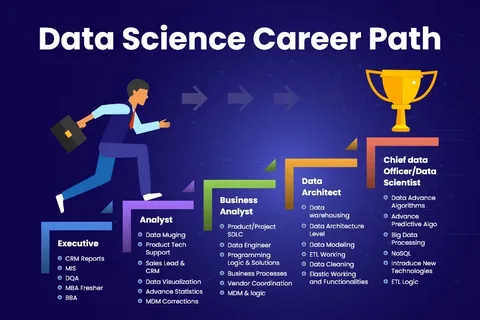
Data science skills can support several career directions depending on a graduate’s previous experience and technical strengths.
Common roles include data scientist, data analyst, business intelligence analyst, financial analyst, operations analyst, supply chain analyst, and analytics consultant.
Some professionals may focus heavily on technical modelling and machine learning, while others work closer to business teams and translate analytical findings into practical recommendations.
The right direction often depends on the combination of technical ability, industry knowledge, communication skills, and professional experience.
What to Check Before Choosing a Programme
Choosing a master’s programme requires more than comparing course titles.
Start by examining the actual modules. A strong curriculum should help students understand how data is collected, managed, analysed, visualised, and interpreted.
It is also useful to examine the balance between theoretical study and practical application. Look for opportunities to complete projects, work with realistic datasets, develop analytical models, and communicate findings.
Study format matters as well. Professionals who are already employed may prefer a part-time option, while others may choose full-time study to concentrate on completing their qualification.
Amity Global Institute currently lists both full-time and part-time routes for its Master of Science Data Science, allowing prospective students to compare the available format with their personal and professional commitments.
Building Skills Beyond the Degree
A master’s qualification can provide structured knowledge, but developing as a data professional requires continued practice.
Students can strengthen their abilities by working on personal projects, experimenting with public datasets, improving programming skills, studying new analytical techniques, and building a portfolio of practical work.
Communication is equally important. Data professionals often need to explain complicated findings to people without technical backgrounds. Being able to present an analysis clearly can be just as valuable as producing it.
The field also changes as new analytical methods and technologies emerge. Continuous learning therefore remains an important part of a long-term career in data science.
Final Thoughts
Data science sits at the intersection of technology, statistics, research, and business decision-making. As organisations collect larger volumes of information, they need people who can determine what that information means and how it can be used responsibly.
Postgraduate study can help learners develop knowledge in areas such as machine learning, statistical analysis, big data, business intelligence, research, and data visualisation. Practical projects can then provide opportunities to bring these individual skills together.
Anyone considering this path should compare curricula, entry requirements, study formats, project opportunities, and career objectives carefully. Choosing a programme that matches both existing experience and future goals can make postgraduate study a useful foundation for developing deeper expertise in the data-driven economy.
Author

fraz.ashraf@gmail.com
Related Posts
5 Effective Study Strategies Using AEIS Preparation Books
- 0
- 2,076 words
Preparing for an admission test requires more than simply answering question after question. Students need to understand what they know, recognise where...
Read out all
IB Essay Writing Challenges Faced by International Students
- 0
- 769 words
The International Baccalaureate program is known for its rigor, broad scope, and complexity. It challenges students to think critically, write clearly and...
Read out all