
- 0
- 1,024 word
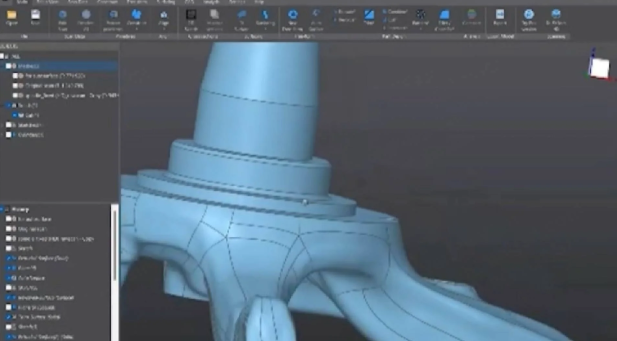
Scan to cad: Many designs start as a physical object and end as a digital design. The use of a 3D scanner can make that process much easier. 3D scanning technology has become much more convenient and allows for 3D objects to be scanned, resulting in digital data. This is extremely useful when the original CAD files are not available and the part needs to be redrawn.
Constructing a Complete Digital Shape
It is important to understand that a single scan may not capture all of the object. Back surfaces, edges, and small components can be outside the scanner’s field of view. Hence, multiple scans are required.
The software allows outline views and end views to be collated in a more complete digital model. When individual scans are accurately aligned, the result can be a comprehensive representation of the actual physical part. This digital shape is a basis for further defining and elaborating the model.
Cleaning of Scan Data
Scan data is not always ready for use. Such data may contain redundant points, irregular structures, noise, and data from the surrounding environment. Cleaning of the data facilitates the generation of a useful digital description.
The operator can eliminate unnecessary portions, align different scans, and finish the surface. This step is very important because higher quality input decreases the complexity of subsequent CAD work.
The Role of Reverse Engineering
Reverse engineering is perhaps the most common example of using 3D scanning. This technique is viable when a product or part and the details surrounding it are known, but the technical information does not exist. In this case, 3D scanning can save a lot of time in the engineering process because, unlike measuring each feature manually, it can supply the detail needed to begin the design process.
Recreating Older Components
Many industries rely on older components designed years ago. In some cases, the original design files no longer exist. In other cases, the manufacturer that made the component no longer exists. Recreating those components manually is very time consuming.
A scanner captures the shape of the component that is physically available. This shape serves as a starting point to reconstruct the component using CAD software. This approach is very helpful for machinery and equipment service and repair.
Useful for Product Development
Product designers can also use scanning when improving a product. Instead of designing a product from scratch, the shape of the physical prototype is captured in a digital format to aid the design process.
This facilitates the manipulation of a digital version of a physical object on the computer to study the overall structure of its shape and design modifications. The modified version can then be physically tested as part of a prototype.
Working With Intricate Shapes
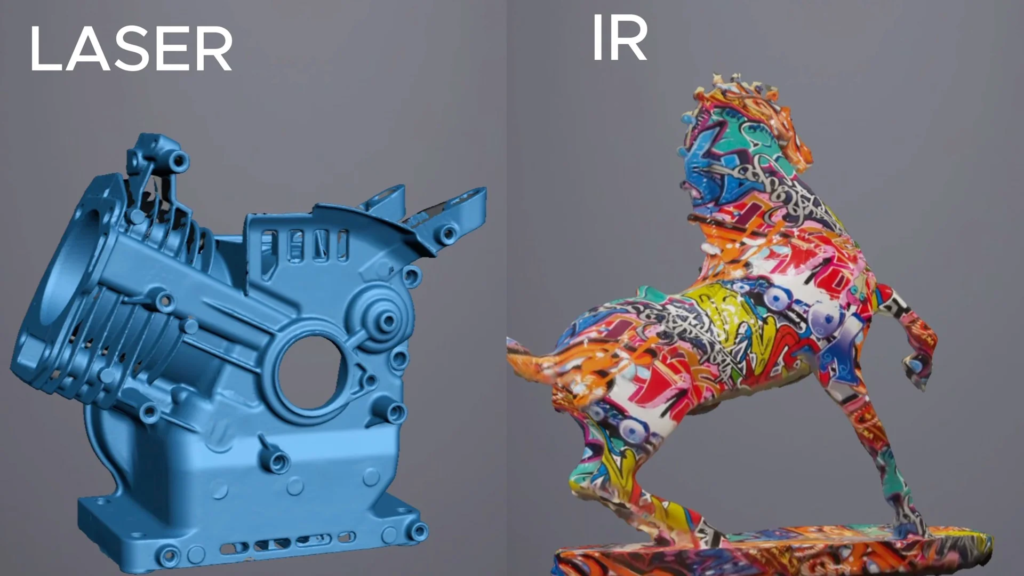
3d scanner for printer: Measuring some objects that are designed with a surface that is curved and/or that can contain a significant number of angles is especially challenging. In the field of automotive design as well as in the manufacture of ergonomic and artistic objects and in the processing of custom products, a high number of angles and curves is common.
For such objects, 3D scanning offers the solution. Instead of capturing a large number of measurements, an operator can scan the entire surface and work with the captured digital information.
Importance Of Precision
Many factors, rather than just a scanner, affect the quality of the result. These factors include the preparation of the object, the scanning technique, the characteristics of the surface, the lighting and its orientation, and the software processing of the data
When the goal is a highly accurate capture of a surface, the operator must select the appropriate method of scanning. The final model must be verified prior to being used for a manufacturing or an engineering function.
Picking The Correct Scanner
Different scanning tasks require different equipment. A highly detailed object of a small size may require a different methodology than scanning a large and simple mechanical component.
In order to determine which scanner is appropriate, users must consider what objects they wish to capture, how detailed they wish/need the capture to be, the surface types, the post capture data usage, and even if the scanner will integrate with the design and manufacturing software.
The Role of Software
While hardware is used to scan and collect data, software does the formatting and the data conversion to a usable format. Scanning software has the capability to match multiple views, remove excess data, fill gaps, and prepare data for further work.
CAD software adds another dimension of control. Designers can rebuild lost geometry from scanned data, add necessary dimensions, implement design modifications, and utilize the data for various purposes.
Final Thoughts
Scan to CAD is made possible through 3D scanning, which digitizes a three-dimensional physical object, and provides the user with a workable model through CAD (Computer Aided Design) software. With Scan to CAD technology, objects can easily be scanned and digitized, and designers can study and modify the scanned models, as well as output the models to be manufactured.
3D scanners now offer a new step in the prototyping process, whereoff-the-shelf physical objects can be scanned and used as references to print new designed parts. Whether the goal is rapid prototyping, reverse engineering, replacement parts, product inspection, development, or even manufacturing, the flexibility and efficiency of the process is enhanced by 3D scanning.
FAQs
What is a 3D scanner for printer applications?
A 3D scanner in this context, captures an object, and digitizes the shape of the object for use in the 3D printing workflow, where the new physical object is printed by a 3D printer.
Is scanned data the same as a CAD model?
Scanned data can represent a physical object’s surface, but CAD models have a lot more structure and are editable. Editable models allow design engineers to work with and adjust dimensions, surfaces, and features in design.
Can 3D scanning make replacement parts?
Yes. 3D scanning can make a good asset of captured data. That data can help with the CAD construction and can be used to manufacture the replacement part by 3D printing or other means.
Author

apexbacklinksagency@gmail.com
Related Posts

FindTechGroup.com Review: What the Platform’s Core Philosophy Reveals About Its Long-Term Credibility
- 0
- 1,258 word
A platform’s stated philosophy only carries weight when its operational decisions reflect the same priorities. The gap between what a platform says...
Read out all
Data Science Course in Hyderabad: Why Boston Institute of Analytics Is India’s #1 Ranked Institute for Placement Support
- 0
- 3,103 words
Hyderabad has now become one of the most prominent places for hiring data scientists with a number of vacancies in the field...
Read out all
iBoomto AI Table Extractor: A Smarter Way to Handle PDF Data
- 0
- 1,116 word
PDFs are very good at keeping documents neat and consistent, but the problem of extracting information from them is quite different. I...
Read out all
Tozymagazine.com USA: A Complete Guide to This Growing Digital Magazine
- 0
- 1,242 word
The digital publishing world continues to evolve, and new online magazines are gaining attention from readers across the United States. One name...
Read out all
Top 10 SEO Companies in Lahore, Pakistan
- 0
- 1,441 word
Introduction Lahore has long been one of Pakistan’s biggest hubs for IT and digital business, and that growth has fueled a competitive...
Read out all
Material Handling Equipment Solutions: Types, Applications, Selection Tips, Safety, and Maintenance
- 0
- 2,612 words
Material movement is an essential part of many business operations, including warehousing, construction, manufacturing, distribution, logistics, and industrial work. Companies need reliable...
Read out all