
- 0
- 948 words
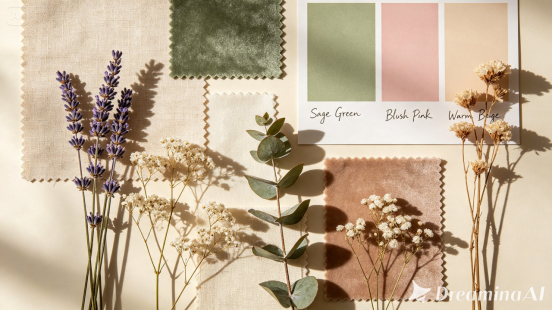
A moodboard has always relied on suggestion — a grid of images, textures, and colors meant to spark a feeling rather than spell it out directly. It works, but it asks viewers to do some interpretive work, connecting scattered visuals into a single cohesive impression.
With image to video technology, that interpretive gap can shrink considerably. A single moodboard image can become a short animated sequence that conveys tone and atmosphere far more directly than a static grid ever could. Dreamina, powered by its latest video-generation model, Seedance 2.5, gives designers a way to let their moodboards breathe.
A moodboard was always trying to suggest a feeling
Designers build moodboards precisely because words fall short of communicating tone — “warm and organic” means something different to everyone until it’s shown visually. But even a well-arranged static board still asks a viewer to imagine texture, light, and movement from flat images alone. Animation removes that imaginative step, letting the board itself demonstrate the mood rather than simply gesture toward it.
Why motion communicates tone faster than a static grid
A moving moodboard adds a few things a still collage can’t manage on its own:
- Texture becomes tangible, as fabric, light, or material actually shifts and reacts
- Pacing itself communicates mood, whether calm and slow or vibrant and energetic
- A stronger emotional first impression, useful for client presentations and pitches
Inside Seedance 2.5: translating texture and tone accurately
Realistic texture over the “AI look”
Moodboards live or die on material accuracy — fabric weave, paper grain, natural light on organic elements — and Seedance 2.5 has significantly reduced the artificial “AI look” in favor of more physically believable texture and lighting behavior, which matters when the entire purpose is showing how materials genuinely feel.
Style-aware creativity transfer
Rather than applying generic motion, Seedance 2.5 is capable of creativity transfer, picking up on the emotional tone of a reference so a moodboard’s intended mood — cozy, minimalist, vibrant — carries through accurately once it’s animated.
Longer clips for a fuller mood reveal
Native generation supports clips up to 30 seconds, with the “Ultra-long Video Generation (beta)” mode extending that range up to 180 seconds — enough time to let a viewer’s eye move calmly across an entire board rather than rushing through it.
Precise local editing
Local editing allows specific elements — a stray object, a detail that doesn’t read well in motion — to be adjusted or removed without regenerating the entire animated board.
Bringing your moodboard to life with Dreamina
Step 1: Upload your moodboard image and describe the atmosphere
Sign in to Dreamina and open the “AI Video” section. Click “Add reference image” to upload your moodboard, then write a prompt describing the motion and mood you want.
For a 30-second clip, try: Using the fabric swatches and dried flowers from the reference image, generate a 30-second animated video: soft natural light shifting gently across the fabric textures, dried flower petals lightly trembling as if in a breeze, subtle shadows moving across the color palette card, camera slowly panning across the full board in the final seconds.
Step 2: Generate the sequence with Seedance 2.5
Select the Seedance 2.5 model, choose your video length, then pick an aspect ratio suited to how you’ll present it — 16:9 for a client presentation or portfolio site, 9:16 for social sharing. Click Dreamina’s generate icon and let the board come to life.
Step 3: Refine and share your animated moodboard
Use Dreamina’s editing tools to finish the piece — Upscale for cleaner detail across fine textures and materials, Generate a soundtrack for ambient music that reinforces the intended mood — then export and share it with clients or collaborators.
Testing a mood before committing to a full concept
An animated moodboard makes it easier to sense-check a direction before investing further time into a design. If a moving version of a board doesn’t evoke the intended feeling — if “warm and inviting” ends up reading as flat or lifeless once shown in motion — that’s often a clearer signal to rework the direction than a static board alone would have revealed, catching a mismatch earlier in the process rather than after significant work has already gone in.
Choosing which elements deserve subtle motion
Not every item on a moodboard needs to move. The strongest results usually come from animating just a few key elements — fabric texture, natural light, a single organic detail — rather than setting the entire board in motion at once, which can undercut the calm, curated feeling most moodboards are meant to convey.
Matching motion to the intended mood
A soft, romantic moodboard calls for slow, gentle movement — light drifting, petals trembling — while a bold, modern board suits cleaner, more structured motion, like light sweeping cleanly across a surface. Naming that intended tone directly in your prompt helps Seedance 2.5 shape the pacing to match the mood being pitched, rather than defaulting to one generic style of movement.
Using animated moodboards in client presentations
A moving moodboard tends to land more effectively in early client meetings than a static one, since it gives stakeholders a stronger emotional sense of a design direction before any real work has begun. That earlier alignment can save significant revision time later in a project.
Where animated moodboards get the most use
This format fits naturally into interior design pitches, fashion collection previews, branding presentations, and creative portfolio sites, where communicating tone convincingly and quickly often matters just as much as the individual visuals themselves.
Final thought
A moodboard was always meant to be felt, not just looked at. With Dreamina and the tone-aware precision behind Seedance 2.5, that feeling can finally move, turning a static collage of references into a scene that captures a design direction the moment someone presses play.
Author

Bloggerexpert07@gmail.com
Related Posts
Indoor Air Quality Testing: Creating Healthier and More Comfortable Indoor Environments
- 0
- 2,600 words
Understanding the Importance of Indoor Air Quality The quality of the air inside a building can have a significant impact on comfort,...
Read out all
Restore Home Comfort with Reliable Furnace Repair Solutions
- 0
- 2,331 words
Introduction A properly functioning furnace is essential for maintaining a warm, comfortable indoor environment when temperatures drop. Whether a heating system serves...
Read out all
Home Security: Smart Ways to Protect Your Property and Family
- 0
- 2,217 words
Understanding the Importance of Home Security Creating a safe living environment is a priority for homeowners who want to protect their families,...
Read out all
Hotel Parking Lots: Essential Features, Smart Design, Safety, and Guest Convenience
- 0
- 3,078 words
A comfortable hotel experience begins long before guests enter the reception area or check into their rooms. For many travelers, the first...
Read out all
HVAC Repair: A Complete Guide to Maintaining Efficient Heating and Cooling Systems
- 0
- 3,085 words
A comfortable indoor environment depends heavily on a properly functioning heating, ventilation, and air conditioning system. Whether it is maintaining cool temperatures...
Read out all
Fence Installation: Improving Property Security, Privacy, and Outdoor Appeal
- 0
- 3,492 words
A well-designed fence is an important addition to any residential or commercial property because it provides security, privacy, and a clearly defined...
Read out all