
- 0
- 1,012 word
Oriental fragrances are known for their warm, rich and often sweet scent profiles. They commonly combine amber, vanilla, musk, woods, resins and spices to create perfumes with depth and character.
Some smell soft and comforting, while others are smoky, floral or intensely woody. The best oriental fragrances in the UK come in a variety of compositions, making it easier to find a scent that suits your preferences, lifestyle and occasion.
What Are Oriental Fragrances?
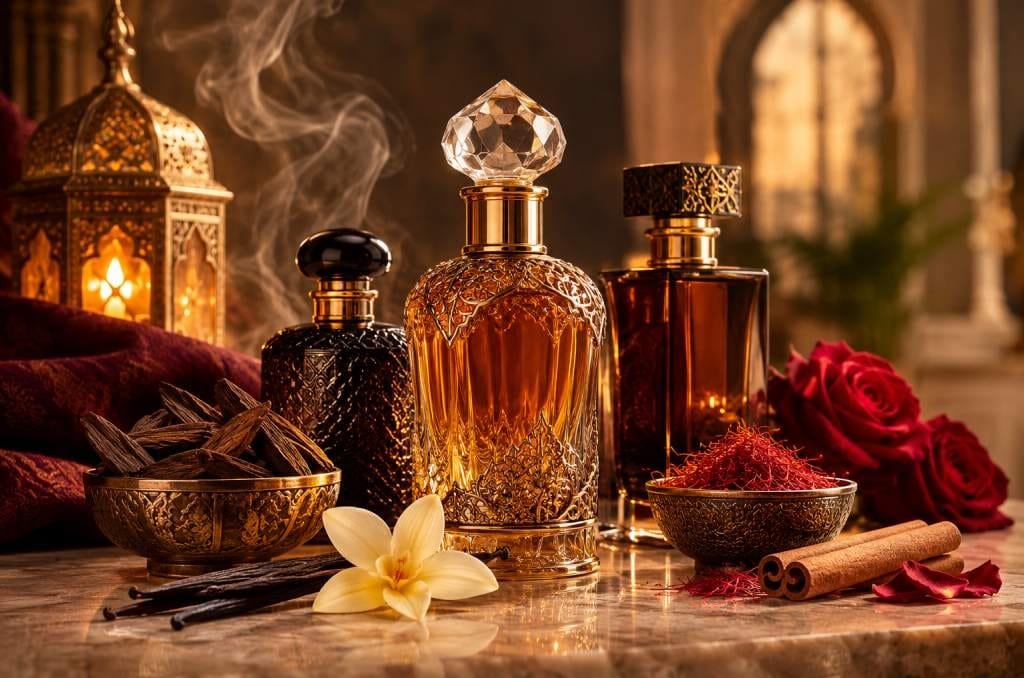
Oriental fragrances are a traditional perfumery family characterised by warm, rich and often resinous notes. Common ingredients and accords include amber, vanilla, musk, cinnamon, saffron, sandalwood, incense and oud.
The term describes a fragrance style, not where a perfume is made. A fragrance produced in Britain, France or the Middle East can all have an oriental scent profile if its composition features these characteristics.
You may also see the terms amber or ambery used in modern fragrance descriptions. These often refer to warm, resinous compositions associated with traditional oriental perfumes, though the terms aren’t always interchangeable.
What Do Oriental Perfumes Smell Like?
Oriental perfumes typically smell warm, deep and full-bodied, with combinations of sweet, spicy, woody and balsamic notes. Their exact character depends on the ingredients and how the perfumer balances them.
A typical composition may develop through three stages:
- Top notes: The first scents you notice after application. Bergamot, saffron, cardamom and other fresh or aromatic notes can create the opening.
- Heart notes: The central character that develops as the top notes fade. Rose, jasmine, cinnamon and other spices often appear here.
- Base notes: The deeper materials that give a fragrance its lasting character. Common examples include amber accords, vanilla, musk, sandalwood, oud, and resins.
Not every oriental perfume follows this structure or uses all these notes. Some are predominantly sweet and creamy, while others are dry, smoky, floral or spicy. This variety is one reason the fragrance family appeals to people with different scent preferences.
What Are the Different Types of Oriental Fragrances?
Oriental fragrances fall into several broad styles. These descriptions help when comparing perfumes, though many fragrances combine more than one style.
Soft Amber Oriental Fragrances
Soft amber oriental fragrances focus on warm, smooth and often sweet accords. They may feature vanilla, benzoin, labdanum, tonka bean and musk.
In perfumery, amber is generally an accord rather than a single natural ingredient. Perfumers combine different materials to create its characteristic warm, balsamic impression.
These compositions are often approachable and comfortable for everyday wear. They are a good starting point if you enjoy gentle sweetness without an especially smoky or spicy scent.
Spicy and Woody Oriental Fragrances
Spicy and woody oriental perfumes have a deeper, more pronounced character. Common notes include cinnamon, saffron, cardamom, clove, cedarwood and sandalwood.
Oud is another prominent material in this style. Derived from agarwood, it can smell woody, smoky, earthy, sweet or animalic depending on its source and treatment. Some fragrances use natural oud materials, while others use synthetic accords to create an oud-like impression.
These perfumes often suit cooler weather, evening occasions and people who enjoy distinctive, layered scents.
Floral and Gourmand Oriental Fragrances
Floral oriental fragrances pair warm base notes with flowers like rose and jasmine. The result can feel rich and romantic without losing the depth the family is known for.
Gourmand oriental perfumes introduce sweet, food-inspired notes such as vanilla, caramel, chocolate and tonka bean. They can smell creamy, sugary, or dessert-like, especially when paired with amber and musk.
Both styles offer alternatives to heavily spicy or smoky compositions.
How Do You Choose the Best Oriental Fragrance?
Start by identifying the scent characteristics you enjoy most. Your preferred notes are usually a better guide than the fragrance category or marketing description alone.
- For a sweet, comfortable scent: Look for vanilla, soft amber, benzoin and tonka bean.
- For a spicy fragrance: Consider saffron, cinnamon, cardamom and clove.
- For a woody scent: Look for oud, sandalwood, cedarwood and other dry woods.
- For a floral character: Rose and jasmine can balance warm, resinous base notes.
- For a richer gourmand scent: Vanilla, caramel and chocolate accords provide a sweeter impression.
Consider fragrance concentration as well. Eau de Parfum (EDP) generally contains a higher proportion of fragrance concentrate than Eau de Toilette (EDT), although exact concentrations vary by manufacturer.
This can affect intensity and longevity, but it doesn’t guarantee how long a perfume will last on your skin.
Whenever possible, test a fragrance on your skin and let it develop. A perfume can smell different after the opening notes fade, so the first few minutes don’t always reveal its full character.
When Should You Wear Oriental Perfumes?
Many oriental fragrances are popular during autumn and winter because their warm, rich profiles can feel especially comfortable in cooler weather.
Spicy, woody and resinous compositions also suit evening events, celebrations and special occasions.
However, oriental perfumes are not limited to cold weather or nighttime use. Softer amber and floral compositions can work during the day, at work or for casual occasions.
In warmer weather or enclosed spaces, a lighter application can make a rich fragrance more comfortable for you and those around you.
The best time to wear one depends on its composition, intensity, and your personal preference, not a strict seasonal rule.
Are Oriental Fragrances Suitable for Everyone?
Yes. Oriental fragrances are not restricted to one gender or age group. Many are marketed as unisex, while others are positioned as men’s or women’s perfumes.
Instead of choosing based only on a gender label, consider the scent itself. Someone who enjoys vanilla and amber may prefer a soft oriental composition, while someone who likes smoky woods and spices may favour an oud-led fragrance.
Final Thoughts
Oriental fragrances offer a broad range of scent profiles, from soft amber and sweet vanilla to floral, spicy and smoky oud compositions.
Understanding their notes and different styles makes it easier to compare perfumes and choose one that suits your taste.
Whether you prefer a subtle everyday scent or a richer fragrance for special occasions, the best choice is the composition you enjoy wearing.
Author

linguaezone.com@gmail.com
Related Posts

Why Chicago Businesses Are Pairing Mobile Apps With Generative AI
- 0
- 448 words
Chicago’s economy is one of the most diverse in the country, spanning finance, manufacturing, logistics, healthcare, and a growing startup scene. Across...
Read out all
How to Build a Mobile App: A Step-by-Step Guide for Beginners
- 0
- 1,700 word
You have an app idea. Maybe it solves a problem you face every day, or maybe you have spotted a gap in...
Read out all
How Compact Mechanical Systems Work In Automotive Accessories
- 0
- 739 words
Modern vehicles contain small assemblies that perform useful tasks within limited space. Hinges, brackets, and actuators help accessories move or stay aligned....
Read out all
Dulcoglide: Everything You Need to Know About Its Uses, Features, Benefits, and Safety
- 0
- 2,005 words
Healthcare products often have specific purposes that are not immediately obvious from their names or packaging. Dulcoglide is one such product that...
Read out all
Is Web Scraping Primary or Secondary Data? A Guide to Using Web Data in Market Research
- 0
- 1,628 word
Is web scraping primary or secondary data? In most market research it is secondary. Web scraping is a collection method, not a...
Read out all
Choosing Non Profit Software For Mission-Driven Teams
- 0
- 557 words
Nonprofit organizations often operate with limited budgets, small teams, and ambitious goals that demand careful coordination. From volunteer schedules to fundraising campaigns,...
Read out all