
- 0
- 1,093 word
Some words carry a sense of importance the moment you hear them. One such word is momentous. Whether you’re reading a news article about a historic event, listening to a graduation speech, or describing a life-changing decision, this term often appears when something significant is taking place.
Understanding the momentous meaning can help you communicate more effectively and add depth to your writing and conversations. In this article, we’ll explore what the word means, where it comes from, how to use it correctly, common synonyms, examples, and frequently asked questions.
What Is the Meaning of Momentous?
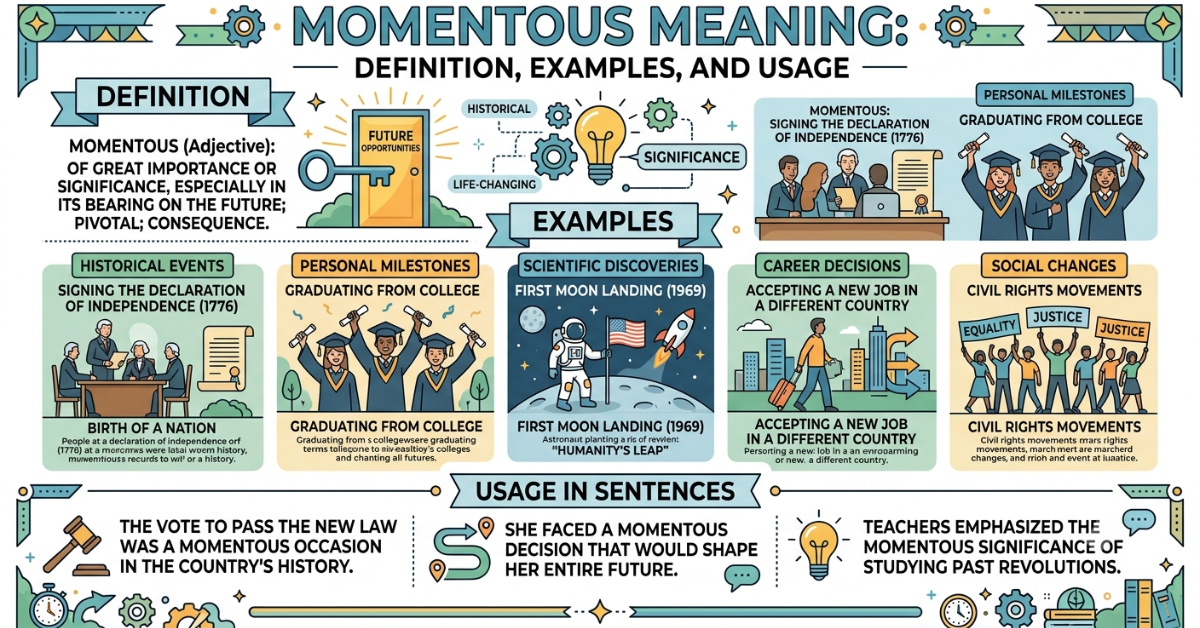
The word momentous is an adjective used to describe something that is extremely important, significant, or likely to have major consequences.
Simple Definition
Momentous refers to an event, decision, occasion, or change that has great importance and can significantly affect the future.
Dictionary-Style Definition
Momentous: Of great significance or importance, especially because of its impact on future events.
In simple terms, if something is momentous, it is not ordinary—it matters in a big way.
Understanding the Word in Everyday Language
Many people hear this word in formal contexts and assume it’s difficult to use. However, the concept is quite simple.
Think about events such as:
- Graduating from university
- Getting married
- Starting a new career
- Winning an election
- Signing a major peace agreement
These are examples of occasions that can be described as momentous because they mark important turning points.
Origin and History of the Word
The term comes from the Latin word momentum, meaning “movement,” “influence,” or “importance.”
Over time, the English language adopted the word to describe events or actions carrying substantial weight and significance.
Today, it is commonly used in:
- Journalism
- Literature
- Academic writing
- Business communications
- Political discussions
How to Use Momentous in a Sentence
Learning through examples is one of the easiest ways to understand a word’s meaning.
Everyday Examples
- Graduating from college was a momentous occasion in her life.
- The company announced a momentous change in its leadership structure.
- Their decision to move abroad proved to be momentous for the entire family.
- Scientists described the discovery as a momentous breakthrough.
- The treaty marked a momentous step toward peace.
Professional Examples
- The board made a momentous decision regarding the future of the organization.
- This momentous achievement reflects years of dedication and hard work.
- Investors viewed the merger as a momentous event in the industry.
Common Synonyms for Momentous
Using synonyms can help diversify your vocabulary while maintaining the same meaning.
Similar Words
- Significant
- Important
- Historic
- Meaningful
- Major
- Critical
- Consequential
- Groundbreaking
- Monumental
- Far-reaching
Example Comparison
| Word | Meaning |
| Momentous | Extremely important with lasting effects |
| Significant | Important or meaningful |
| Monumental | Exceptionally large or important |
| Historic | Important in history |
| Consequential | Producing important results |
While these words are similar, “momentous” often emphasizes future impact and long-term importance.
Antonyms of Momentous
Understanding opposites can strengthen your grasp of a word.
Common antonyms include:
- Trivial
- Insignificant
- Minor
- Unimportant
- Inconsequential
- Meaningless
Example
- Choosing a shirt color is usually a minor decision.
- Choosing a career path can be a momentous decision.
When Should You Use the Word?
This adjective works best when describing events or decisions that have meaningful consequences.
Appropriate Situations
Use it when discussing:
- Life-changing decisions
- Historical events
- Major achievements
- Political developments
- Scientific discoveries
- Business milestones
Less Appropriate Situations
Avoid using it for routine or everyday matters, such as:
- Ordering lunch
- Buying a pen
- Watching a regular television episode
Overusing powerful words can weaken their impact.
Momentous in Literature and Media
Writers and journalists often choose this word to highlight the importance of events.
For example, news reports may describe:
- Elections as momentous turning points
- Landmark court rulings as momentous decisions
- Scientific breakthroughs as momentous discoveries
In literature, authors may use it to emphasize critical moments that change a character’s life forever.
Why Is This Word So Powerful?
Certain words instantly convey emotion and significance. This term is effective because it suggests that an event is not only important today but may influence the future.
It helps readers and listeners understand that something deserves attention and should not be overlooked.
Key Characteristics
A momentous event is usually:
- Significant
- Memorable
- Influential
- Far-reaching
- Transformative
Common Mistakes When Using the Word
1. Using It for Minor Events
Incorrect:
- Buying a cup of coffee was a momentous experience.
Correct:
- Receiving a university acceptance letter was a momentous experience.
2. Overusing It
Not every important event needs this description. Reserve it for truly significant situations.
3. Confusing It With Emotional
An event can be emotional without being highly significant.
For example:
- Watching a sad movie may be emotional.
- Becoming a parent is both emotional and momentous.
Examples of Momentous Events in History
Many historical developments can be described using this adjective.
Examples include:
- The invention of the printing press
- The first human moon landing
- The signing of major peace treaties
- The development of life-saving vaccines
- The adoption of groundbreaking civil rights legislation
These events influenced societies and shaped future generations.
How to Remember the Meaning
A useful memory trick is to connect the word with the idea of a major moment.
If an event changes lives, affects the future, or marks an important turning point, it may be described as momentous.
Think:
Momentous = A moment that truly matters.
FAQs
What is the exact momentous meaning?
It refers to something of great importance or significance, especially an event or decision that has major consequences for the future.
Is momentous a positive word?
Not necessarily. It simply indicates importance. A momentous event can be positive, negative, or neutral depending on the situation.
Can a decision be described as momentous?
Yes. Major decisions that affect future outcomes are often described using this word.
What is the difference between momentous and significant?
Both indicate importance, but momentous usually suggests a greater level of impact and long-term consequences.
Is momentous commonly used in formal writing?
Yes. It frequently appears in academic papers, news articles, business reports, and professional communications.
Can historical events be called momentous?
Absolutely. The word is often used to describe historical milestones that changed the course of societies or nations.
Conclusion
Understanding the momentous meaning allows you to describe important events, decisions, and achievements with greater precision. The word is used to highlight occasions that carry significant weight and have lasting consequences. Whether discussing a personal milestone, a historic event, or a major breakthrough, it conveys a sense of importance that few other words can match.
As you expand your vocabulary, try incorporating this term into your writing when discussing truly significant moments. Used thoughtfully, it can make your communication more engaging, impactful, and memorable.
Author

linguaezone.com@gmail.com
Related Posts

I’m Patient: Understanding the Meaning, Mindset, and Power of Patience
- 0
- 1,816 word
I’m Patient: What Does It Really Mean? Have you ever found yourself waiting for something important and realized that getting frustrated will...
Read out all
Do and Not: Understanding the Difference and Using Both Correctly
- 0
- 2,303 words
Introduction: Why “Do and Not” Matters in Everyday Communication Have you ever written a sentence and wondered whether you should use “do,”...
Read out all
Proscribed: Meaning, Definition, Examples, and Correct Usage
- 0
- 2,338 words
Introduction: What Does “Proscribed” Mean? Have you ever come across the word proscribed and wondered what it actually means? It is one...
Read out all
Imput: Meaning, Common Usage, and Why People Often Use It Instead of Input
- 0
- 1,592 word
What Does Imput Mean? Have you ever typed “imput” instead of “input” and wondered whether you made a mistake? You are certainly...
Read out all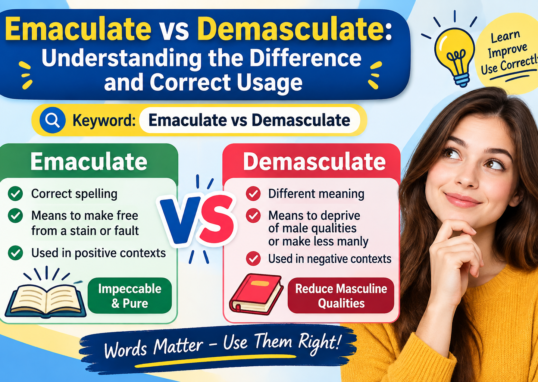
Emaculate vs Demasculate: Understanding the Difference and Correct Usage
- 0
- 2,156 words
Introduction: Emaculate vs Demasculate Have you ever come across the words emasculate and demasculate and wondered whether they mean the same thing?...
Read out all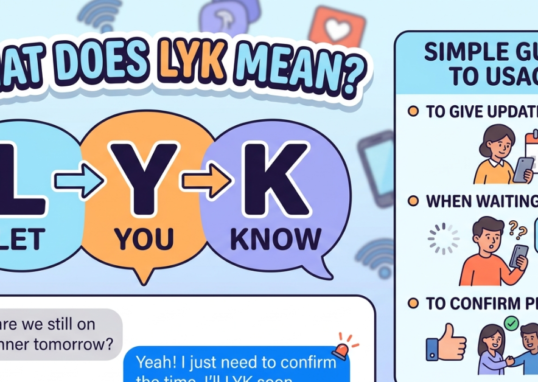
What Does LYK Mean in Text? Simple Guide
- 0
- 1,029 word
Ever received a message that says “LYK” and paused for a second? You are not alone. If you have been wondering what...
Read out all