
- 0
- 3,386 words
Maintaining a comfortable indoor environment is important for every home and commercial property, particularly when outdoor temperatures change throughout the year. Traditional heating and cooling systems often depend on extensive ductwork to distribute conditioned air throughout a building. However, not every property has the space, existing infrastructure, or layout required to accommodate a conventional ducted system. Older homes, renovated buildings, room additions, garages, and smaller commercial spaces may benefit from an alternative that provides reliable temperature control without requiring a network of air ducts. Ductless heating and cooling systems offer a practical solution by delivering conditioned air directly into individual rooms or designated indoor areas.
A ductless system typically consists of an outdoor compressor or condenser unit connected to one or more indoor air-handling units through refrigerant lines, electrical connections, and a condensate drainage arrangement. This design allows property owners to control temperatures in different spaces while avoiding the need for extensive duct installation. However, achieving reliable performance requires proper equipment selection, accurate load calculations, suitable placement, and professional installation. A properly completed ductless system installation can improve indoor comfort, provide flexible temperature control, and support energy-efficient operation when the equipment is appropriately selected and maintained. Understanding how these systems work, what the installation process involves, and which factors influence their performance can help property owners make informed decisions.
Understanding How Ductless Heating and Cooling Systems Work
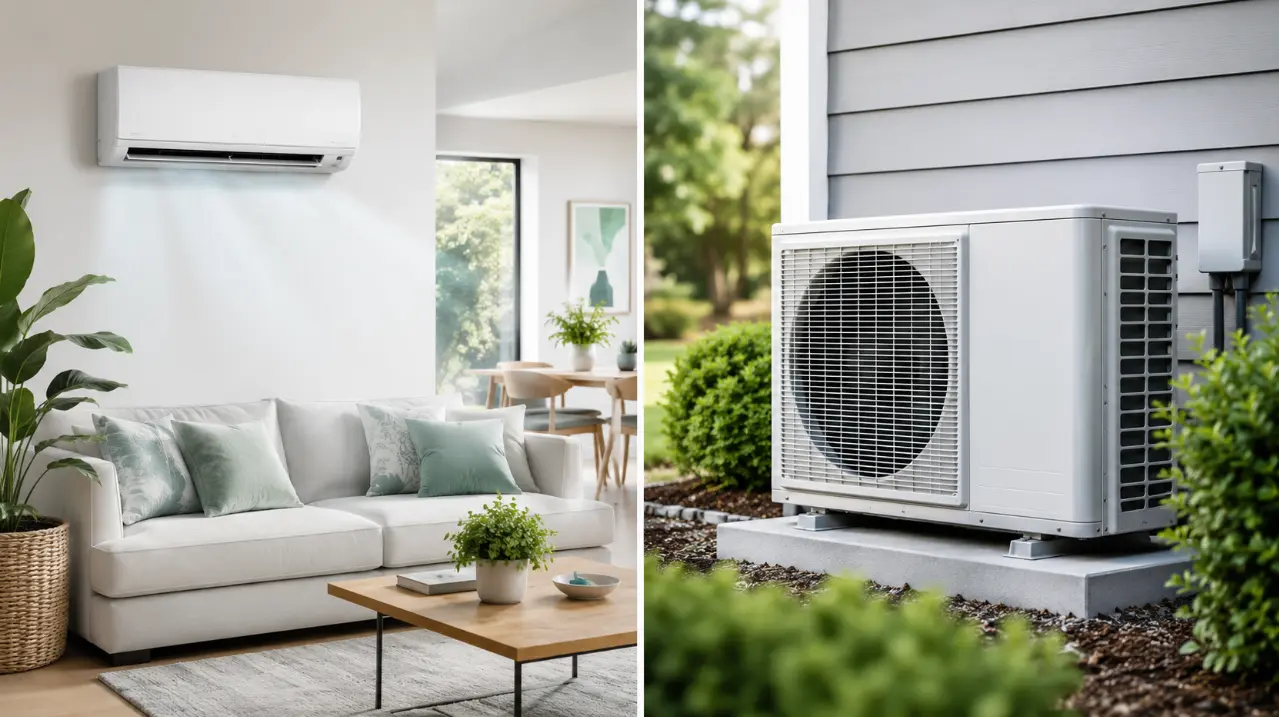
Ductless systems, commonly known as mini-split systems, use heat pump technology to transfer heat between indoor and outdoor environments. Unlike conventional central air conditioning systems that distribute conditioned air through ducts, ductless equipment delivers heating or cooling directly into the rooms where indoor units are installed.
The system generally includes an outdoor unit containing important components such as the compressor, condenser coil, and fan. One or more indoor units contain an evaporator coil, fan, and temperature controls. Refrigerant travels between the indoor and outdoor equipment through insulated copper lines, allowing heat to move in the required direction.
During cooling operation, the indoor unit absorbs heat from the room and transfers it to the outdoor unit. The outdoor equipment releases that heat into the surrounding air, helping lower the indoor temperature. During heating operation, a compatible heat pump reverses the refrigeration cycle and transfers heat from the outdoor environment into the building.
Many modern ductless systems use inverter-driven compressors that adjust operating speed according to heating or cooling demand. Rather than repeatedly switching between full operation and complete shutdown, these systems can vary their output to maintain more consistent indoor temperatures.
This technology provides flexibility for different building layouts and occupancy requirements. It can be particularly useful in properties where installing traditional ductwork would require extensive construction or renovation.
Benefits of Installing a Ductless Heating and Cooling System
One of the main advantages of ductless equipment is its ability to provide heating and cooling without requiring conventional air ducts. This makes it suitable for properties where duct installation would be expensive, impractical, or disruptive. Homeowners can often condition individual rooms without modifying large portions of the building.
Another important benefit is independent temperature control. Many multi-zone systems allow different indoor units to operate according to the requirements of their respective spaces. For example, a bedroom can maintain a comfortable temperature while an unused guest room operates at a different setting. This flexibility can help reduce unnecessary heating and cooling in areas that do not require constant conditioning.
Ductless systems can also reduce energy losses associated with poorly insulated or leaking ductwork. Traditional ducted systems may lose conditioned air as it travels through unconditioned spaces such as attics, crawl spaces, or garages. Because ductless systems deliver air directly into the room, they avoid many of these distribution losses.
Additional benefits may include:
- Flexible installation options for different room layouts.
- Individual temperature settings for separate indoor zones.
- Quiet operation with appropriately selected equipment.
- Heating and cooling capabilities in compatible models.
- Reduced dependence on extensive ductwork.
- Modern controls and programmable operating features.
- Potential energy savings when replacing inefficient equipment or poorly performing ducted systems.
Actual performance depends on equipment efficiency, climate conditions, installation quality, insulation, and household usage. Selecting the right system is therefore essential for achieving the expected benefits.
Choosing the Right Ductless System for Your Property
Selecting suitable equipment is one of the most important decisions before beginning an installation project. Ductless systems are available in different capacities, configurations, and efficiency ratings, making it necessary to evaluate the property’s specific requirements.
A single-zone system typically includes one outdoor unit connected to one indoor air handler. This configuration may be appropriate for a single room, home office, garage, or addition where independent temperature control is required.
A multi-zone system connects multiple indoor units to a compatible outdoor unit. This arrangement can support several rooms or designated areas while providing individual temperature settings. However, the outdoor unit must be appropriately sized for the connected indoor equipment and the building’s total heating and cooling demand.
System capacity is another important consideration. Equipment that is too small may struggle to maintain comfortable temperatures during extreme weather conditions. Oversized equipment may cycle or operate inefficiently, depending on its design and control capabilities.Professional load calculations consider several factors, including:
Total floor area and ceiling height.Number, size, and orientation of windows.Insulation quality and air leakage.Building construction materials.Sunlight exposure and shading.Number of occupants and typical room usage.Heat-producing appliances and electronic equipment.Local outdoor temperature conditions.
A qualified HVAC professional can evaluate these factors and recommend suitable equipment rather than relying only on general room-size estimates.
Preparing Your Property Before Installation
Proper preparation helps make the installation process more organized and reduces the likelihood of unnecessary complications. Before work begins, the installation area should be evaluated to determine where indoor and outdoor equipment can be positioned safely and conveniently.
Indoor units should be installed in locations that allow conditioned air to circulate effectively throughout the room. Their placement should avoid unnecessary obstructions, direct exposure to heat sources, and areas where furniture or curtains could interfere with airflow.
The outdoor unit requires a stable, appropriately supported location with adequate clearance for ventilation and servicing. It should be positioned according to manufacturer specifications and local requirements, with consideration given to drainage, weather exposure, noise, and accessibility.
The installation team should also inspect the building’s electrical supply. Ductless equipment may require a dedicated electrical circuit and correctly sized protective devices, depending on its specifications. Electrical capacity should be confirmed before installation to avoid overloading existing circuits.
Other preparation tasks may include identifying suitable wall openings for refrigerant lines, planning condensate drainage, checking wall construction, and protecting nearby furniture or flooring.
Taking time to evaluate these details helps prevent installation delays and supports reliable system operation after completion.
Step-by-Step Ductless System Installation Process
Professional installation involves several stages, each of which contributes to the system’s performance, efficiency, and reliability. Although the exact process depends on the equipment and building layout, most projects follow a similar sequence.
The first stage is a site assessment. The technician examines the building, evaluates heating and cooling requirements, identifies suitable mounting locations, and confirms the availability of appropriate electrical and drainage arrangements. This assessment also helps determine whether a single-zone or multi-zone configuration is suitable.
After equipment selection, the indoor air handler is mounted in the approved location using the manufacturer’s mounting hardware. The mounting surface must be sufficiently strong and positioned to support the unit while allowing appropriate airflow and maintenance access.
The outdoor unit is then placed on a suitable mounting base or support system. Its location should provide the required clearance and allow air to circulate freely around the equipment. Proper positioning also helps simplify future servicing.
Refrigerant piping, communication wiring, and condensate drainage are then installed according to the equipment manufacturer’s instructions. These connections must be completed by qualified technicians using suitable materials and approved procedures.
Once the system connections are complete, the installation team performs the required pressure and leak checks, evacuation, refrigerant-related procedures, and electrical verification. Commissioning follows, during which the system is operated and evaluated to confirm that it is functioning within the manufacturer’s specified parameters.
The final stage involves checking operating modes, temperature controls, drainage, airflow, and other important functions. The homeowner should also receive guidance about using the remote control, cleaning filters, and arranging future maintenance.
Understanding Indoor Unit Placement and Airflow
The position of indoor air handlers has a significant influence on comfort and system performance. Even high-quality equipment may not deliver satisfactory results if installed in an unsuitable location.
Wall-mounted units are commonly positioned high on a wall because this arrangement can support effective air distribution. However, the precise location depends on the room layout, ceiling height, furniture arrangement, and manufacturer requirements.
The unit should have enough surrounding space to draw in and discharge air without obstruction. Installing it directly behind curtains, close to large furniture, or in a confined corner may reduce airflow and create uneven temperatures.
Air distribution should also be considered in larger rooms. A single indoor unit may not provide consistent comfort throughout an irregularly shaped space, especially when walls, partitions, or other obstacles restrict circulation.
For multi-zone installations, each indoor unit should be positioned according to the requirements of its designated room. The goal is to provide comfortable conditions without unnecessary temperature differences between connected spaces.
A professional installer can evaluate the layout and recommend placement that supports effective circulation, convenient controls, and straightforward maintenance access.
Outdoor Unit Placement and Installation Requirements
The outdoor unit plays an essential role in transferring heat between the building and the surrounding environment. Its placement should therefore be carefully planned rather than selected only according to available space.
The equipment requires sufficient airflow to release or absorb heat efficiently. If the outdoor unit is surrounded by obstructions or installed in an excessively confined area, its performance may be affected. Manufacturer-specified clearance requirements should always be followed.
A stable mounting surface is also important because vibration can contribute to unwanted noise and mechanical stress. Depending on the property, the outdoor unit may be installed on an appropriate ground-level support, wall bracket, or other approved mounting arrangement.
Drainage should be considered, particularly for systems operating in heating mode. Depending on the design and weather conditions, water may collect beneath the outdoor equipment during normal operation and defrost cycles. The installation should account for proper drainage and prevent water from creating hazards or damage.
Technicians should also consider accessibility for cleaning and servicing. An outdoor unit that is difficult to reach may make routine maintenance more complicated and expensive.
Electrical Requirements and Installation Safety
Electrical safety is a critical part of any HVAC installation. Ductless systems contain electrical components that must receive the correct power supply to operate safely and reliably.
The electrical requirements vary according to equipment capacity, model, and manufacturer specifications. Some systems require dedicated circuits, while others may have different connection requirements. A qualified electrician or appropriately licensed HVAC professional should verify that the building’s electrical supply is suitable.
Correct circuit protection, grounding, wiring size, and disconnect arrangements are important for safe operation. Improper electrical connections can result in equipment malfunction, overheating, or fire hazards.
Communication wiring between indoor and outdoor units must also be installed according to the manufacturer’s instructions. Incorrect connections can interfere with system operation and produce error codes or communication failures.
Homeowners should avoid attempting electrical connections or opening energized equipment without the required training and qualifications. Professional installation helps ensure that the electrical work complies with applicable codes and safety requirements.
Refrigerant Lines and Condensate Drainage
Refrigerant lines connect the indoor and outdoor units and allow heat to move through the system. Their condition and installation quality are essential for maintaining reliable heating and cooling performance.
The refrigerant piping must be suitable for the specific equipment and installed according to the manufacturer’s requirements. Connections must be properly completed, and the system must undergo appropriate testing before being placed into operation.
A refrigerant leak can reduce system capacity and interfere with normal operation. Warning signs may include reduced heating or cooling performance, unusual operating behavior, or recurring equipment faults. Refrigerant-related diagnosis and repairs should be handled by appropriately certified professionals.
Condensate drainage is another important consideration. During cooling operation, moisture removed from indoor air collects in the indoor unit’s drain pan and must be directed safely away from the equipment. A poorly installed or blocked drain can cause water leakage, wall damage, unpleasant odors, or moisture-related problems.
Proper drain routing, suitable connections, and appropriate testing help ensure that condensate can flow away as intended. These details should be checked during installation and included in routine maintenance.
Energy Efficiency and Long-Term Operating Costs
Energy efficiency is one of the main reasons property owners consider ductless heating and cooling systems. However, the actual savings depend on several factors, including equipment efficiency, system capacity, building insulation, operating habits, and the performance of the equipment being replaced.
Many modern ductless heat pumps use inverter technology to adjust compressor output according to the heating or cooling demand. This allows the system to operate at variable capacities instead of relying entirely on repeated full-capacity cycles.
Individual room controls can also help reduce energy consumption when used appropriately. For example, homeowners may choose different settings for occupied and unoccupied spaces rather than maintaining identical temperatures throughout the property.
However, efficiency is not determined by equipment specifications alone. Poor installation, incorrect sizing, dirty filters, blocked outdoor coils, and insufficient insulation can all reduce performance.
To manage operating costs, homeowners should choose equipment with suitable efficiency ratings, maintain recommended temperature settings, and arrange regular inspections. Sealing major air leaks and improving insulation can also reduce the amount of heating and cooling required.
Why Professional Installation Is Better Than Improvised Installation
Ductless equipment may appear relatively simple because it does not require extensive ductwork, but installing it correctly involves several technical processes. Refrigerant connections, electrical wiring, drainage, mounting, and system commissioning must all be completed according to specific requirements.
Improper installation can lead to refrigerant leaks, poor drainage, inadequate airflow, excessive vibration, electrical problems, and reduced system efficiency. These issues may not become immediately noticeable but can contribute to expensive repairs over time.
Professional installers have the equipment and training required to evaluate the site and complete the technical work safely. They also understand the importance of following manufacturer specifications and applicable building regulations.
A qualified technician can identify unsuitable installation locations, verify electrical requirements, perform required system testing, and confirm that the equipment is operating correctly before handing it over to the homeowner.
For these reasons, ductless system installation should be treated as a specialized HVAC project rather than an ordinary household improvement task. Professional workmanship helps protect the equipment, support efficient operation, and reduce the risk of installation-related problems.
Common Installation Mistakes Property Owners Should Avoid
Even a high-quality ductless system may perform poorly when important installation details are overlooked. Understanding common mistakes can help homeowners evaluate contractors and recognize the importance of proper planning.
One frequent mistake is selecting equipment based only on the room’s floor area. Although square footage is useful, it does not account for insulation, windows, ceiling height, sunlight, or other factors that influence heating and cooling demand.
Another mistake is placing indoor units where airflow is obstructed. Furniture, curtains, and poorly selected mounting positions can prevent conditioned air from circulating effectively.
Outdoor unit placement also deserves attention. Installing the equipment in a cramped area without adequate clearance can interfere with heat transfer and make maintenance more difficult.
Other problems may include:Using unsuitable electrical connections or inadequate circuit protection.Failing to check refrigerant connections properly.Installing condensate drainage without sufficient attention to water flow.Ignoring manufacturer clearance and mounting requirements.Leaving insufficient access for future servicing.Skipping commissioning and operating checks.Choosing equipment without considering the building’s heating requirements.
Avoiding these issues begins with selecting an experienced contractor and ensuring that the installation is properly assessed before work starts.
Maintaining Your Ductless System After Installation
Regular maintenance is essential for keeping ductless equipment operating efficiently. Although these systems do not use conventional duct networks, their filters, coils, fans, drains, and outdoor components still require attention.
Indoor air filters should be checked and cleaned according to the manufacturer’s instructions. Dust accumulation can restrict airflow and reduce the system’s ability to condition indoor spaces effectively. Homes with pets, frequent occupancy, or higher dust levels may require more frequent filter attention.
The outdoor unit should also be kept free from leaves, dirt, vegetation, and other obstructions. Maintaining adequate clearance around the equipment helps support proper airflow.
Homeowners should monitor the system for unusual noises, water leakage, unpleasant odors, and changes in heating or cooling performance. These signs may indicate a problem that requires professional inspection.
Periodic professional servicing may include checking electrical connections, inspecting refrigerant-related components, cleaning coils where necessary, evaluating drainage, and confirming overall system operation.
Following the manufacturer’s maintenance recommendations helps protect the equipment and can reduce the likelihood of unexpected breakdowns.
How to Choose the Right HVAC Installation Contractor
Choosing a qualified contractor is one of the most important steps in planning a ductless HVAC project. Installation quality has a direct influence on comfort, efficiency, and equipment reliability, so property owners should evaluate contractors carefully.
Start by checking whether the contractor has experience with the specific type and brand of ductless equipment being considered. Different manufacturers may have particular installation requirements, communication protocols, and commissioning procedures.
Ask whether the company performs a proper load calculation before recommending equipment. A professional assessment should consider the building’s layout, insulation, windows, occupancy, and other factors rather than relying exclusively on general estimates.
It is also important to request a detailed written quotation. This should explain the proposed equipment, number of indoor units, installation materials, electrical requirements, drainage arrangements, and any additional work that may be necessary.
Before making a final decision, consider the following:Verify relevant HVAC qualifications and certifications.Review customer feedback and examples of previous installations.Confirm whether the contractor carries appropriate insurance.Ask about equipment warranties and workmanship guarantees.Discuss installation timelines and expected project requirements.Confirm whether testing and commissioning are included.Request guidance about operation and ongoing maintenance.
A reliable contractor should communicate clearly, answer technical questions, and explain the reasoning behind equipment and placement recommendations.
Residential and Commercial Applications of Ductless Systems
Ductless heating and cooling equipment can be used in a wide range of residential and commercial environments. In homes, these systems may be installed in bedrooms, living rooms, home offices, converted garages, additions, and renovated spaces.
Older properties can particularly benefit when installing conventional ductwork would require major changes to walls, ceilings, or floors. Ductless equipment can provide temperature control without the same level of construction work associated with extending a central air distribution system.
Commercial applications include offices, retail spaces, small restaurants, meeting rooms, studios, and other areas that require independent temperature management. Multi-zone configurations may be suitable when different rooms have varying heating and cooling requirements.
However, commercial installations often require additional consideration of occupancy, equipment loads, operating schedules, ventilation requirements, and applicable building codes. Ductless equipment provides temperature conditioning but does not automatically replace the need for suitable outdoor air ventilation.
A professional assessment helps determine whether the proposed system can meet the property’s requirements and whether additional HVAC equipment is needed.
Conclusion
Ductless heating and cooling systems offer a flexible solution for properties that need efficient temperature control without relying on traditional ductwork. Their ability to condition individual rooms, support independent temperature settings, and accommodate different building layouts makes them a practical option for many residential and commercial applications. However, achieving dependable performance requires more than purchasing suitable equipment.
Proper system sizing, indoor and outdoor unit placement, electrical connections, refrigerant piping, condensate drainage, and commissioning all play important roles in the installation process. Homeowners should also understand the importance of routine filter cleaning, outdoor unit maintenance, and periodic professional inspections to keep the equipment operating effectively.
Investing in professional ductless system installation helps ensure that the equipment is selected and installed according to the property’s requirements and manufacturer specifications. By working with qualified HVAC professionals, choosing suitable equipment, and following recommended maintenance practices, property owners can enjoy comfortable indoor temperatures, reliable operation, and long-term value from their heating and cooling systems.
Author

thedailygurdian@gmail.com
Related Posts
Commercial Roof Replacement: A Protecting Your Property and Improving Building Performance
- 0
- 3,701 words
Introduction Maintaining a commercial property requires regular attention to structural conditions, building materials, and essential maintenance systems. Among these responsibilities, the roof...
Read out all
Trenchless Sewer Line Repair: A Modern Solution for Efficient and Long-Lasting Pipe Restoration
- 0
- 3,280 words
Maintaining a properly functioning sewer system is essential for residential, commercial, and industrial properties. Sewer lines transport wastewater away from buildings and...
Read out all
Franchise Resale: A Complete Guide to Buying, Selling, and Maximizing the Value of an Established Franchise Business
- 0
- 3,381 words
Introduction Starting a business from the ground up can be an exciting opportunity, but it also involves considerable planning, financial investment, uncertainty,...
Read out all
Stone Veneer: Enhance Your Property with Elegant, Durable, and Versatile Wall Finishes
- 0
- 3,540 words
Introduction Creating an attractive and welcoming property involves choosing materials that combine visual appeal, durability, and long-term functionality. Exterior and interior walls...
Read out all
Driveway Gate Installation: Enhancing Property Security, Privacy, and Curb Appeal
- 0
- 2,934 words
A driveway gate is an important addition to any residential or commercial property because it provides controlled access, improves security, and creates...
Read out all
Drain Cleaning: Essential Solutions for Maintaining a Clean and Efficient Plumbing System
- 0
- 3,313 words
Introduction A properly functioning drainage system is essential for maintaining a clean, comfortable, and hygienic property. Whether in a residential home, commercial...
Read out all