
- 0
- 3,113 words
An outdoor deck is an important part of a property’s overall appearance and functionality. It provides a comfortable space for relaxation, family gatherings, outdoor dining, and entertainment. However, because decks are constantly exposed to sunlight, rain, moisture, dust, and changing temperatures, their surfaces can gradually lose their original appearance and structural protection. Wooden boards may fade, paint can peel, and exposed surfaces may develop cracks or signs of deterioration. Without proper care, these issues can reduce the lifespan of the deck and make the outdoor area look neglected. Regular cleaning, surface preparation, and protective coatings are therefore essential for maintaining an attractive and durable outdoor space.
Professional deck painting is an effective way to refresh an outdoor deck while helping protect its surface against environmental damage. A suitable coating creates a protective layer that can reduce moisture penetration, limit damage caused by sunlight, and improve the overall appearance of the wood. However, achieving a long-lasting result requires more than simply applying paint to an existing surface. The condition of the deck, type of material, cleaning process, weather conditions, and choice of coating all influence the final outcome. Understanding these factors allows property owners to make better decisions and maintain their outdoor spaces more effectively. Whether someone wants to restore an older deck or improve the appearance of a newly constructed outdoor area, following the correct preparation and painting methods can make a significant difference.
Understanding the Importance of Maintaining an Outdoor Deck
Outdoor decks experience more environmental exposure than many other parts of a property. Unlike interior flooring, which is generally protected from direct sunlight and rain, deck surfaces must withstand changing weather conditions throughout the year. Continuous exposure can gradually weaken protective finishes, affect the natural color of wood, and create conditions that encourage surface deterioration. Regular maintenance helps prevent these problems and keeps the deck functional and visually appealing.
Moisture is one of the biggest concerns for wooden decks. When water repeatedly enters unprotected wood, it can contribute to swelling, cracking, warping, and eventually decay. Areas that remain damp for extended periods may also become vulnerable to mold and mildew. Sunlight creates another challenge because ultraviolet radiation can break down surface coatings and cause wood to fade or develop a weathered appearance. Temperature changes may further contribute to expansion and contraction, placing stress on boards, fasteners, and existing finishes.
Maintaining the deck surface with suitable protective products helps reduce these effects. A properly selected coating can provide a barrier against moisture and improve resistance to everyday wear. Regular maintenance also allows property owners to identify loose boards, damaged railings, and other problems before they become more serious. By taking care of the deck consistently, homeowners can preserve its appearance and extend the useful life of the outdoor structure.
Choosing the Right Paint for Your Deck
Selecting the correct paint is one of the most important decisions in any deck improvement project. Different coatings offer different levels of protection, appearance, durability, and maintenance requirements. The best option depends on the material of the deck, its current condition, the amount of foot traffic it receives, and the type of finish the property owner wants to achieve.
Exterior deck paints are specifically designed for outdoor surfaces and generally provide a durable protective layer. They are available in different colors and finishes, allowing homeowners to coordinate the deck with the property’s exterior design. Some products are formulated to resist moisture and sunlight, while others offer improved resistance to scratches and everyday wear.
Solid-color deck stains are another option. Unlike traditional paint, many solid stains allow some of the natural wood texture to remain visible while providing substantial color coverage. Semi-transparent stains offer a more natural appearance by allowing the grain of the wood to show through. Transparent stains provide a lighter finish and are generally selected when preserving the original appearance of the timber is a priority.
Before purchasing any product, it is important to check whether it is suitable for horizontal walking surfaces. Ordinary exterior wall paint is not necessarily designed to withstand regular foot traffic and may peel or wear prematurely when used on a deck. Homeowners should always follow the manufacturer’s recommendations regarding surface compatibility, application methods, drying periods, and maintenance requirements.
Preparing the Deck Surface Before Painting
Proper preparation is essential for achieving an attractive and durable finish. Even high-quality paint may fail when applied over dirt, grease, loose coatings, or deteriorated wood. Preparation allows the new product to adhere more effectively and reduces the likelihood of peeling, bubbling, and uneven coverage.
The first step is to remove outdoor furniture, planters, decorations, and other objects from the deck. This provides clear access to the entire surface and prevents accidental paint splashes. Any loose debris, leaves, dust, and dirt should then be swept away using a suitable outdoor broom.
The surface should also be inspected for damaged boards, protruding nails, loose screws, and splintered areas. Minor issues should be addressed before painting because they can affect both safety and the final appearance. Rotten or severely damaged boards may require replacement rather than simply being covered with paint.
If the deck has an existing coating, its condition should be evaluated carefully. Loose or peeling paint must be removed, and incompatible finishes may require additional preparation. Sanding can help smooth rough areas and create a suitable surface for the new coating. After sanding, all remaining dust should be removed thoroughly.
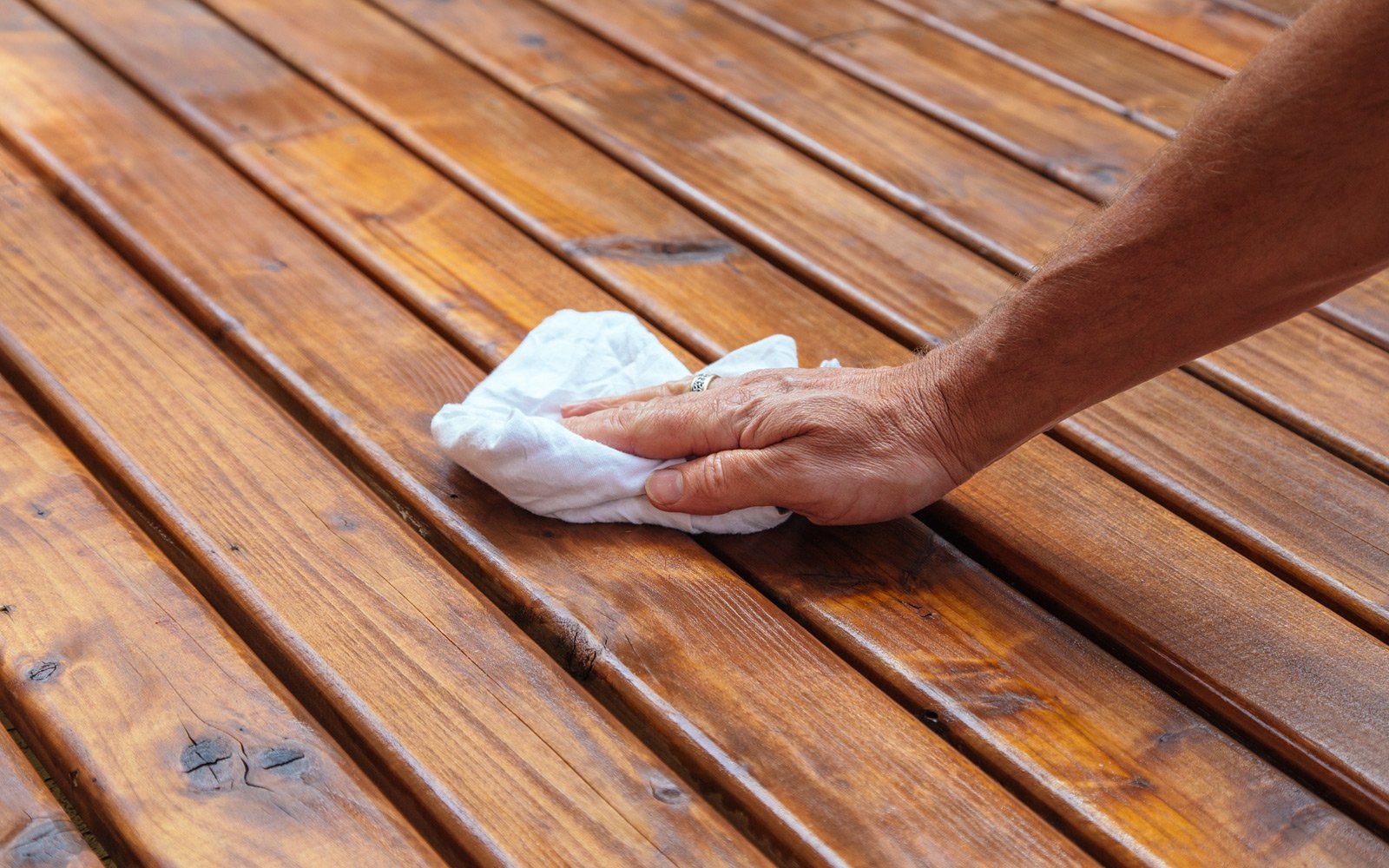
Cleaning is another important step because outdoor decks often collect grease, mildew, algae, and stubborn dirt. A suitable deck cleaner can help remove these contaminants. Once cleaning is complete, the surface must be allowed to dry sufficiently before any coating is applied. Skipping preparation may save time initially, but it often leads to poor results and additional maintenance costs later.
Cleaning and Washing the Deck Properly
A clean surface is essential for proper coating adhesion. Outdoor decks collect a variety of contaminants, including dust, pollen, food stains, mud, leaves, and organic growth. These materials can interfere with paint application and prevent the coating from bonding properly with the underlying surface.
Start by removing loose debris with a broom or leaf blower. Pay particular attention to spaces between deck boards, corners, stairs, and areas around railings, where dirt tends to accumulate. A suitable cleaning solution can then be used to remove stubborn stains and surface contamination. Different wood types and existing finishes may require different cleaning products, so product instructions should be followed carefully.
Pressure washing can be helpful in certain situations, but it must be performed with caution. Excessive pressure or an unsuitable nozzle can damage wood fibers, create rough patches, and force water deep into the boards. A lower-pressure setting and appropriate cleaning technique are generally preferable when pressure washing is suitable for the deck material.
After cleaning, the deck should be rinsed thoroughly to remove cleaning residues. It must then dry completely or for the period recommended by the coating manufacturer. Applying paint to damp wood can trap moisture and contribute to poor adhesion, bubbling, or premature coating failure. Taking enough time to clean and dry the surface is an important part of achieving a professional-looking finish.
Repairing Cracks, Splinters, and Damaged Wooden Boards
Surface repairs should be completed before applying any protective coating. Damaged boards can affect the appearance of the finished deck and may create safety hazards for anyone walking across the surface. Small cracks, rough patches, loose fasteners, and splintered edges should therefore be inspected carefully during preparation.
Minor splinters can often be removed through careful sanding. The goal is to create a smooth surface without removing unnecessary amounts of wood. Cracks may require a suitable exterior wood filler, provided that the product is compatible with the deck material and intended coating. However, filler is not an appropriate solution for every type of damage, particularly when boards are extensively deteriorated or structurally weak.
Loose or raised nails should be addressed using suitable fasteners and installation methods. In some cases, replacing nails with appropriate exterior-grade screws may provide better holding strength. Severely damaged, rotten, or warped boards should be replaced before painting because coatings cannot restore structural strength.
Railings, stairs, and support components should also be checked. A deck may look attractive after painting, but its safety depends on the condition of the underlying structure. Any concerns involving unstable railings, weakened supports, or significant structural deterioration should be evaluated by a qualified professional.
Selecting Colors That Complement Your Outdoor Space
Color selection has a major influence on the overall appearance of an outdoor deck. The right shade can make the area look more welcoming, create visual harmony with the property, and complement surrounding landscaping. Since a deck often connects indoor and outdoor living spaces, its color should work well with exterior walls, doors, windows, furniture, and garden features.
Natural brown shades are popular because they create a warm and traditional appearance. Lighter wood-inspired colors can make smaller outdoor spaces feel more open, while darker shades may provide a sophisticated and contemporary finish. Gray tones are another common choice because they complement modern architectural designs and a variety of outdoor furniture styles.
When choosing a color, homeowners should consider how much sunlight the deck receives. Darker coatings may absorb more heat, potentially making the walking surface uncomfortable during hot weather. Lighter colors may reflect more sunlight but can show dirt and stains more easily, depending on the product and finish.
It is also useful to test a small section before coating the entire deck. Colors can look different depending on lighting conditions, wood texture, and surrounding surfaces. Reviewing a sample in both bright sunlight and shaded conditions can help avoid disappointment. Selecting a suitable color creates a balanced appearance while allowing the deck to remain a natural extension of the property’s overall design.
Understanding the Best Weather Conditions for Deck Painting
Weather conditions have a direct effect on the success of an outdoor painting project. Temperature, humidity, sunlight, and rainfall can influence how coatings spread, adhere, and dry. Even a carefully prepared surface may produce disappointing results if the coating is applied under unsuitable environmental conditions.
Most exterior coatings have recommended temperature and humidity ranges that should be followed during application. Extremely hot conditions can cause paint to dry too quickly, making it difficult to maintain an even finish. Very cold temperatures may slow drying and interfere with proper film formation. High humidity can also extend drying times and increase the risk of moisture-related coating problems.
Rain is another important consideration. If rain occurs before the coating has dried or cured sufficiently, it may damage the finish, create marks, or reduce adhesion. Direct sunlight can also cause uneven drying, particularly when different sections of the deck receive varying levels of heat.
Before beginning the project, homeowners should check the weather forecast and review the manufacturer’s instructions. It is generally better to choose a period with stable, dry conditions and enough time for the coating to dry properly. Planning around the weather helps improve application quality and reduces the likelihood of having to repeat the work.
Applying Primer and Protective Coatings Correctly
Primer may be necessary depending on the type of wood, existing surface condition, and selected coating system. Its purpose is to create a suitable foundation for the finishing product and improve adhesion where recommended. Certain bare wood surfaces, repaired areas, or previously coated decks may require a specific primer before the final application.
The primer should be compatible with the selected deck paint or stain. Applying an unsuitable product can lead to adhesion problems or an inconsistent finish. It should be spread evenly using the recommended brush, roller, or application equipment, with particular attention given to edges and areas around fasteners.
Once the primer has dried according to the product instructions, the finishing coating can be applied. A suitable brush may be useful for edges, gaps, and detailed areas, while a roller can help cover larger flat surfaces more efficiently. The coating should be distributed evenly to avoid excessive buildup, visible roller marks, and missed sections.
Working systematically across the deck helps maintain a consistent appearance. It is important not to apply a coating too thickly simply to reduce the number of applications. Following the manufacturer’s recommended coverage and recoat intervals generally provides better results. Some products require multiple coats, while others are designed for a specific single-coat application. Allowing each layer to dry properly helps create a more durable finish.
Protecting the Deck From Moisture, Sunlight, and Everyday Wear
Once the coating has been applied, maintaining its protective qualities becomes the next priority. Outdoor decks are exposed to several conditions that can gradually affect their appearance and durability. Moisture, ultraviolet radiation, furniture movement, foot traffic, and spilled substances can all contribute to surface wear.
Water protection is particularly important for wooden decks. When moisture repeatedly enters exposed wood, it can contribute to swelling, cracking, and deterioration. Suitable exterior coatings help reduce water absorption, although no finish should be treated as a substitute for proper drainage and structural maintenance.
Sunlight can gradually break down certain coatings and cause colors to fade. Products formulated with suitable UV-resistant properties can help reduce this effect. However, the level of protection varies between products, and regular inspections are still necessary to identify signs of fading or deterioration.
Furniture should be fitted with protective pads where appropriate to reduce scratches and surface damage. Spills should be cleaned promptly, and planters should be positioned carefully to avoid trapping moisture beneath them. Maintaining adequate airflow around the deck surface can also help prevent damp conditions. Small preventive steps can make a noticeable difference in preserving the finish.
Common Deck Painting Mistakes to Avoid
Many coating problems occur because important preparation or application steps are overlooked. One common mistake is painting over a dirty surface. Dust, grease, mildew, and loose debris can prevent proper adhesion and cause the coating to peel or blister. Thorough cleaning should always be completed before application.
Another mistake is failing to allow the wood to dry sufficiently after washing. Moisture trapped beneath the coating can interfere with adhesion and contribute to premature failure. Homeowners should follow the recommended drying requirements rather than relying only on the appearance of the surface.
Using the wrong product is another frequent problem. Interior paint, ordinary wall paint, and unsuitable exterior coatings may not withstand the demands of a walking surface. Selecting products specifically designed for decks is important because these surfaces experience regular foot traffic and environmental exposure.
Applying excessive amounts of paint can also create an uneven finish. Thick layers may take longer to dry and can develop visible imperfections. Working with the recommended application thickness and recoat intervals generally produces a better result.
Finally, ignoring damaged boards and loose fasteners can reduce the safety and durability of the finished deck. Surface coatings improve appearance and provide protection, but they cannot correct structural problems. Repairs should always be completed before the finishing process begins.
Maintaining Your Painted Deck for Long-Term Results
Regular maintenance helps preserve the appearance of a newly coated deck and reduces the need for major restoration projects. Even high-quality coatings gradually experience wear due to sunlight, moisture, and daily use. Periodic cleaning and inspection allow homeowners to identify problems while they are still manageable.
Sweeping the deck regularly prevents leaves, dirt, and other debris from accumulating. Organic material can hold moisture against the surface and encourage staining or mildew development. Occasional washing with a suitable cleaning solution helps remove stubborn dirt and maintain a fresh appearance.
The coating should also be inspected for peeling, fading, cracking, and worn areas. High-traffic sections, stairs, entry points, and areas exposed to standing water may require attention sooner than other parts of the deck. Addressing localized damage promptly can prevent larger sections from deteriorating.
Furniture placement should be reviewed periodically to ensure that water is not being trapped beneath heavy objects or planters. Gutters and nearby drainage systems should also be maintained so that rainwater does not regularly flow onto the deck or collect around its structure.
Recoating requirements depend on the product used, surface condition, environmental exposure, and level of foot traffic. Rather than following an arbitrary schedule, homeowners should inspect the deck and follow the manufacturer’s recommendations. Consistent maintenance can help extend the life of the finish and keep the outdoor area attractive.
Why Hiring Professional Deck Painting Contractors Is Beneficial
Although some homeowners prefer completing outdoor improvement projects themselves, professional assistance can be valuable when the deck is large, heavily weathered, or requires extensive preparation. Experienced contractors understand how different wood types and existing finishes respond to cleaning, sanding, priming, and coating products.
Professionals can evaluate the deck’s condition and identify areas that need repair before the painting process begins. They also have access to suitable tools and application equipment, allowing them to complete preparation and coating work more efficiently. Their experience can help prevent common problems involving moisture, poor adhesion, uneven coverage, and incompatible materials.
Another advantage is the ability to receive recommendations based on the deck’s specific requirements. A contractor can explain whether paint, solid stain, or another protective product is most appropriate. They can also advise on suitable colors, finishes, and maintenance procedures.
Before hiring a contractor, property owners should review previous projects, check customer feedback, and request a written estimate. The estimate should clearly explain surface preparation, repair work, product selection, application methods, and expected completion time. It is also useful to confirm whether cleanup and disposal of old coating materials are included.
Choosing a contractor based on experience and workmanship rather than price alone can provide better long-term value. Proper preparation and professional application may reduce the likelihood of premature coating failure and repeated maintenance expenses.
Conclusion
Maintaining an outdoor deck requires regular attention, suitable materials, and a clear understanding of surface preparation and protective coating techniques. From cleaning and repairing damaged boards to selecting the right paint and applying it under appropriate weather conditions, every stage contributes to the final appearance and durability of the project. Skipping important steps can lead to peeling, uneven coverage, moisture problems, and unnecessary maintenance costs.
Professional deck painting provides an effective way to refresh outdoor spaces while helping protect wooden surfaces against sunlight, moisture, and everyday wear. Property owners should choose coatings specifically designed for exterior deck surfaces, prepare the material carefully, and follow the manufacturer’s application and drying instructions. Regular cleaning and periodic inspections can further extend the life of the finish.
Ultimately, a well-maintained deck improves the appearance and functionality of an outdoor living area. With proper preparation, quality products, and reliable workmanship, homeowners can create an attractive and comfortable space that remains enjoyable and protected for years to come.
Author

thedailygurdian@gmail.com
Related Posts

Startup Booted Fundraising Strategy: A Complete Guide to Building and Growing a Business Without External Investment
- 0
- 2,701 words
Starting a business is an exciting journey, but finding enough money to turn an idea into a successful company can be challenging....
Read out all
Manga District: Exploring the World of Manga, Online Reading, and Japanese Comics
- 0
- 2,182 words
Introduction Manga has become one of the most popular forms of entertainment worldwide. What started as a distinctive Japanese storytelling tradition has...
Read out all
Malaysian Assurance Alliance: History, Growth, Insurance Services, and Its Connection to Zurich
- 0
- 2,699 words
The Malaysian insurance industry has experienced significant growth and transformation over the years. Several companies have contributed to this development by introducing...
Read out all
Colegia: Understanding Its Meaning, Features, Benefits, and Growing Importance in the Digital World
- 0
- 2,232 words
Introduction The internet has introduced countless new words, platforms, services, and concepts that influence how people communicate, learn, and access information. One...
Read out all
Playground Equipment: Creating Safe, Engaging, and Fun Outdoor Play Spaces for Children
- 0
- 2,914 words
Outdoor play is an essential part of childhood development, providing children with opportunities to explore, learn, socialize, and develop important physical and...
Read out all
Professional Fire and Water Damage Restoration: Bringing Damaged Properties Back to Life
- 0
- 3,350 words
Unexpected property damage can create serious challenges for homeowners, business owners, and property managers. Fires, plumbing failures, flooding, storms, and appliance malfunctions...
Read out all