
- 0
- 2,337 words
Introduction to Soccer Player Development
Soccer is more than a popular sport; it is an opportunity for young athletes to develop physical fitness, confidence, discipline, and valuable social skills. Children and teenagers who participate in regular soccer activities can learn how to control the ball, communicate with teammates, and make decisions under pressure. Structured training provides a clear path for improvement by combining technical exercises, tactical learning, physical conditioning, and practical match experience in an organized environment that supports long-term development. Developing talented soccer players requires patience, consistent practice, and guidance from experienced coaches who understand the needs of different age groups. Young athletes benefit from learning fundamental techniques before progressing to more advanced movements and competitive situations. A positive learning environment encourages players to explore their abilities, recognize their strengths, and work on areas that need improvement. Through a soccer training academy, athletes can receive organized instruction that helps them build a strong foundation while discovering the enjoyment of learning and playing the game.
The Importance of Structured Soccer Training
Structured training helps players understand what they need to practice and how different skills contribute to overall performance. Instead of relying exclusively on informal games, athletes participate in carefully planned sessions that focus on specific objectives. These may include improving first-touch control, developing accurate passing, strengthening movement patterns, and understanding basic tactical principles. A clear training structure allows players to build their abilities gradually while receiving feedback that helps them recognize progress and correct mistakes. Consistency is equally important because soccer skills develop through repetition and practical application. Players who regularly practice familiar movements often become more comfortable performing them during matches. A soccer training academy can organize sessions that combine individual exercises, partner drills, group activities, and small-sided games to reinforce learning. By following a balanced routine, athletes can develop better coordination, improve their understanding of the sport, and gain the confidence needed to apply their skills in different playing situations.
Developing Essential Technical Skills
Technical ability forms the foundation of effective soccer performance. Players need to learn how to dribble, pass, receive, shoot, and maintain possession while responding to opponents. These techniques require coordination, balance, timing, and repeated practice to become reliable under pressure. Coaches can introduce each skill through simple demonstrations and controlled exercises before gradually increasing the difficulty as players become more comfortable with the movements. As athletes improve, they should learn how to combine individual techniques instead of practicing every movement in isolation. For example, a player might receive a pass, turn toward open space, dribble past an obstacle, and deliver the ball accurately to a teammate. This sequence encourages players to connect technical skills with decision-making and awareness. A soccer training academy can use these progressive exercises to help athletes develop dependable fundamentals that support more advanced learning and effective performance during competitive matches.
Improving Ball Control and Dribbling Ability
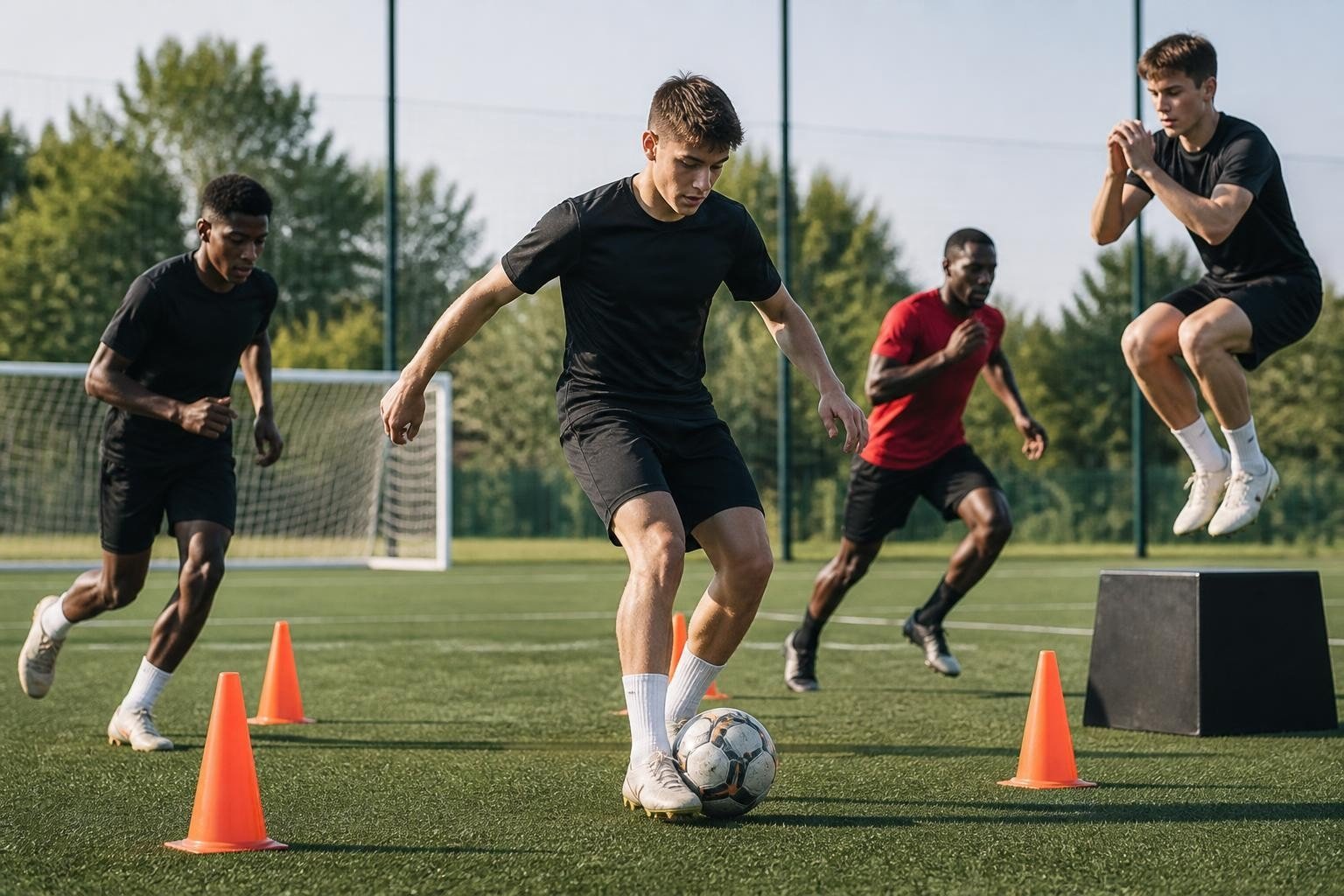
Ball control allows players to maintain possession and respond effectively when the game changes quickly. Young athletes need to learn how to adjust the strength of their touches, use different parts of their feet, and keep the ball within a manageable distance. Beginner exercises may include moving through cones, changing direction on command, and controlling the ball while walking or running. These activities improve coordination and help players become more comfortable handling the ball in different situations. Dribbling development also involves understanding when to accelerate, slow down, protect possession, or move into open space. Players should practice looking up regularly so they can observe teammates, opponents, and available passing options rather than focusing entirely on the ball. A soccer training academy can introduce one-on-one challenges and small-sided games that encourage athletes to use their dribbling skills against active defenders. With regular practice, players can improve agility, creativity, and confidence while learning how to make effective decisions under pressure.
Building Accurate Passing and Receiving Skills
Passing is essential because soccer depends on cooperation and the ability to move the ball effectively between teammates. Players must learn to control the direction and strength of their passes while recognizing when another player is available. Beginners can start with short passes between partners before progressing to moving targets, passing combinations, and possession games. These exercises help develop accuracy and teach athletes how to communicate clearly while maintaining control of the ball. Receiving the ball requires concentration, body positioning, and an understanding of what to do next. A well-controlled first touch can create additional time and space, allowing a player to pass, dribble, or shoot more effectively. Coaches can encourage athletes to scan their surroundings before receiving a pass and direct their first touch toward a useful area. Through a soccer training academy, players can practice these techniques in increasingly realistic situations, improving their ability to maintain possession and support teammates during fast-moving matches.
Enhancing Shooting Techniques and Finishing
Scoring goals is one of the most exciting parts of soccer, but effective finishing requires more than kicking the ball with maximum power. Players need to develop accuracy, balance, timing, and an understanding of how to approach different shooting opportunities. Training can begin with stationary shots toward specific targets before progressing to moving shots, first-time finishes, and attempts following passes. These exercises help athletes understand how body positioning and foot placement influence the direction and quality of a shot. More advanced finishing activities can include defenders, limited time, and different angles near the goal. Players learn to observe the goalkeeper’s position, recognize open spaces, and decide whether to shoot immediately or take another touch. A soccer training academy can create realistic exercises that allow athletes to practice these decisions while receiving constructive feedback. Coaches should encourage players to remain persistent after missed attempts, helping them understand that confidence and consistent practice are important parts of becoming a more effective goal scorer.
Developing Tactical Awareness and Game Intelligence
Tactical awareness helps players understand how to position themselves, create space, and respond to the movements of teammates and opponents. Technical skills are important, but athletes must also recognize when to pass, when to dribble, and how to support an attack or defend effectively. Training sessions can introduce basic concepts such as maintaining team shape, moving into open areas, covering teammates, and transitioning quickly between attacking and defensive responsibilities. Game intelligence also depends on observation and anticipation. Players who regularly scan the field can identify passing options earlier and respond more effectively when possession changes. Coaches can develop these abilities through small-sided games, positional exercises, and activities that require athletes to make decisions within limited time or space. A soccer training academy can help players understand tactical concepts by explaining their purpose and allowing athletes to apply them during practical exercises. As their awareness improves, players can become more adaptable and contribute more effectively to team performance.
Improving Physical Fitness and Athletic Performance
Physical fitness plays a major role in soccer because players need to run, accelerate, slow down, jump, turn, and change direction throughout a match. Effective conditioning can improve cardiovascular endurance, agility, coordination, balance, and overall movement efficiency. Training may include running activities, movement drills, bodyweight exercises, and age-appropriate strength development. These activities should be designed around each player’s experience and physical development rather than using the same workload for every participant. Recovery is an essential part of athletic development because the body needs sufficient time to adapt to physical demands. Young players should receive appropriate rest, drink enough water, eat balanced meals, and maintain healthy sleeping habits. A soccer training academy should balance conditioning with technical practice and avoid excessive workloads that increase fatigue or injury risk. By combining suitable physical preparation with consistent training, athletes can improve their endurance, maintain concentration during matches, and develop habits that support long-term participation in sport.
Building Confidence and a Positive Mindset
Confidence helps players approach challenges, experiment with new techniques, and respond constructively when mistakes occur. Young athletes may initially feel nervous when learning unfamiliar skills or participating in competitive matches. Supportive coaching can reduce this pressure by providing clear instructions, realistic goals, and encouragement that recognizes individual progress. When players understand that improvement takes time, they become more willing to practice difficult movements and learn from their experiences. A positive mindset also helps athletes manage disappointment after missed opportunities or unsuccessful performances. Coaches can explain what happened, demonstrate practical ways to improve, and encourage players to try again without feeling embarrassed. A soccer training academy should create an environment where athletes feel comfortable asking questions and receiving feedback. Recognizing effort, persistence, and progress can help players develop resilience, stronger self-belief, and a healthier approach to competition that benefits them beyond the soccer field.
Learning Discipline, Leadership, and Responsibility
Discipline is developed through consistent habits such as arriving on time, following instructions, preparing equipment, and remaining focused during training. Players gradually learn that meaningful improvement depends on regular effort and a willingness to practice even when a skill feels difficult. Coaches can reinforce these habits by establishing clear expectations and explaining why preparation, commitment, and respect are important for individual and team development. Leadership is not limited to captains or the most talented athletes. Players can demonstrate leadership by encouraging teammates, communicating clearly, helping others understand exercises, and remaining positive during challenging situations. A soccer training academy can provide opportunities for athletes to take responsibility for group activities, support less experienced players, and contribute to shared goals. These experiences teach young athletes that effective leadership involves listening, cooperation, accountability, and the ability to make decisions that benefit the entire team.
The Role of Teamwork in Soccer Development
Teamwork is essential because individual talent alone cannot guarantee success in a sport that requires coordinated movement and shared decision-making. Players must understand how to support one another, create passing options, cover defensive spaces, and communicate during different phases of a match. Training activities that encourage cooperation help athletes recognize how their decisions influence teammates and why every player has an important role within the group. Small-sided games are particularly useful for developing teamwork because they give players frequent opportunities to pass, defend, communicate, and solve problems together. Coaches can introduce challenges that require several successful passes before a team can attempt to score. Through a soccer training academy, athletes can practice sharing possession, respecting different playing styles, and working toward common objectives. These experiences strengthen communication, improve coordination, and help players understand that collective effort often creates better opportunities than individual actions alone.
Choosing the Right Training Environment
Selecting a suitable training environment is an important decision for athletes and their families. Factors to consider include coaching experience, training schedules, group sizes, safety procedures, and the balance between technical practice and match experience. Players should have enough opportunities to participate actively, receive feedback, and work on skills that match their current abilities. Parents can also ask how coaches assess progress and whether training sessions are adapted for different ages and experience levels. A reliable soccer training academy should communicate clearly about its coaching philosophy, expectations, fees, and development opportunities. Coaches should provide honest feedback and avoid making unrealistic promises about scholarships, professional careers, or rapid improvement. The training environment should encourage effort, respect, and enjoyment while maintaining appropriate standards of behavior. Choosing a program that supports both athletic development and personal growth can help players remain motivated and build a strong foundation for future opportunities in soccer.
Preparing for Effective Training Sessions
Preparation allows athletes to use their training time productively and reduces unnecessary distractions. Players should arrive on time, wear suitable clothing and footwear, bring drinking water, and use any protective equipment required by the program. Eating balanced meals and getting adequate sleep can also support concentration and physical performance. Before beginning an activity, athletes should listen carefully to instructions and understand the main objectives of the session. Mental preparation can be equally useful because a focused approach helps players learn more effectively. Athletes may set one or two realistic goals before practice, such as improving first-touch control, making more accurate passes, or communicating more frequently with teammates. A soccer training academy can encourage this habit by helping players review their progress and identify areas for improvement. Reflecting on each session allows athletes to recognize achievements, understand mistakes, and approach future training with greater purpose and motivation.
Supporting Young Players Beyond Training
Parents and family members can have a positive influence on how children experience soccer. Encouragement, patience, and realistic expectations help young athletes enjoy the sport without feeling that every session must produce immediate results. Parents can ask about new skills, recognize improvements in effort, and celebrate progress in confidence, coordination, and teamwork. Focusing exclusively on match results may overlook the many valuable lessons children learn during practice and group activities. A soccer training academy can provide more meaningful development when families and coaches communicate openly about a player’s needs and goals. Children should be allowed to express their interests and decide how much they want to pursue competitive opportunities. Some athletes may aim to join advanced teams, while others may prefer recreational participation and the social benefits of the sport. Supporting individual ambitions without unnecessary pressure helps young players maintain motivation, develop independence, and build a healthy relationship with physical activity.
Conclusion
Developing future soccer players requires a combination of structured instruction, consistent practice, physical preparation, and a willingness to learn from experience. Athletes benefit from training that strengthens technical fundamentals, improves tactical awareness, and encourages teamwork, discipline, and confidence. When coaches create a positive environment and provide appropriate challenges, players can steadily improve their abilities while learning valuable lessons that extend beyond competitive sport. Ultimately, a soccer training academy can help athletes develop the skills, habits, and mindset needed to enjoy soccer and pursue their personal goals. Through effective coaching, realistic practice activities, and regular feedback, players can improve ball control, passing, shooting, fitness, and decision-making. Families can contribute by providing encouragement and recognizing progress at every stage of development. With patience, commitment, and teamwork, young athletes can build a strong foundation for future success while developing a lasting appreciation for the game.
Author

thedailygurdian@gmail.com