
- 0
- 1,162 word
Calendars are a blunt tool for pool care. Water temperature, sunlight, cover type, and site conditions determine whether your pool opens clean and safe or emerges green and equipment-stressed. A week or two of good timing can prevent algae blooms, simplify chemistry, and protect lines and fittings from freeze damage. This article outlines a temperature-driven approach that folds in practical choices about covers, chemistry, and equipment steps. It also shows how to navigate shoulder seasons without guessing. The goal is not a checklist, but a plan you can adapt to your pool’s materials, your local weather, and how much off-season monitoring you want to do.
- Use Water Temperature, Not the Calendar
Algae metabolism slows below about 60 degrees Fahrenheit. That is why many techs close once water stays under 60 and open as it rises through 60 in spring. Below that range, chlorine holds longer, and sunlight does less harm under a cover. Above it, algae can take off in a few warm days. If you prefer a service visit rather than a DIY approach, you can review professional Pool Opening & Closing options and still use this temperature framework to decide when to schedule.
Balance the water before closing so cold months do not amplify problems. Aim for pH near the mid-7s and stable total alkalinity so pH does not drift. Set calcium hardness to avoid both etching and scale formation over winter. Many owners lower cyanuric acid modestly so spring chlorination is more predictable. An oxidizing shock at closing and a quality algaecide help hold the line as temperatures fall. Cool water slows chemical consumption, so starting balanced reduces spring cleanup.
- Mesh vs. Solid Covers: How Your Cover Changes the Timing
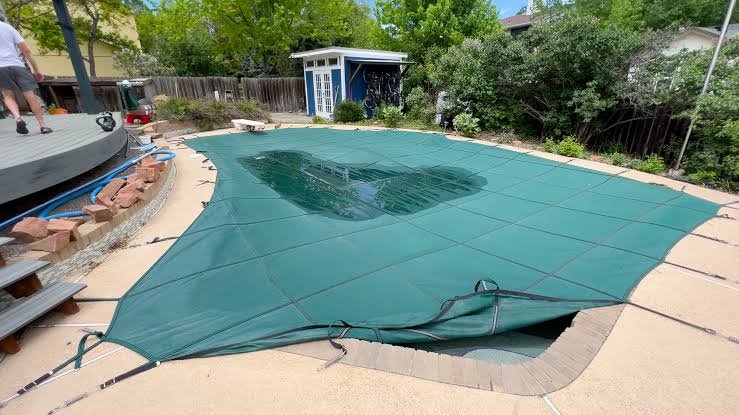
Mesh safety covers let rain and fine debris pass. That means your pool may dilute over winter and can drift out of balance. With mesh, closing a little later and opening a little earlier reduces warm-water time under the cover. Plan mid-winter checks if thaws are common. For example, after a January rain, test the water at the steps, top up chlorine if needed, and confirm the water level remains below the coping so the cover stays properly tensioned.
Solid covers block sunlight and keep out rain, which helps limit algae. They also collect water, so a reliable cover pump matters. Lower the water to the manufacturer’s recommended winter level before securing a solid cover so runoff will not contact the skimmer mouth. Do not drop the water too far. Over-lowering can over-stress anchors and coping when snow loads arrive. Keep strap tension even so the safety cover shares loads and continues to shade the water, which slows algae even during mid-winter warm spells.
- Closing Sequence That Protects Equipment
Sequence protects hardware. Vacuum thoroughly, brush, and backwash or clean filters so debris does not sit all winter. For solid covers, lower water below the skimmer; for mesh, follow the cover maker’s level guidance. Circulate an oxidizer and algaecide, then shut down the pump. Blow out lines gently, starting at the equipment pad and working toward each return and the skimmer; low pressure with a blower or shop vac is safer than high compressor PSI. Install return plugs, thread in a skimmer gizmo to absorb expansion, and add non-toxic pool antifreeze to lines where appropriate. Open drain plugs on the pump and filter, remove pressure gauges, set a multiport valve to the winter setting, and leave unions slightly loose so trapped water can escape.
Common pitfalls are predictable. Leaving water in a heater or heat pump can crack an exchanger during an early hard freeze. Forgetting to lubricate pump lid O-rings can lead to spring air leaks that make priming difficult. Leaving time clocks energized can try to start a dry pump if someone flips a breaker mid-winter. Salt chlorine generators and flow sensors should be removed or protected per the manufacturer to prevent trapped water damage. A simple label on each disconnected union helps you reverse the steps quickly in spring.
- Opening Sequence That Shortens Cleanup
Start on top of the cover, not under it. Sweep off leaves, then pump away standing water so contaminated runoff does not dump into the pool when you pull the cover. Work with a helper to remove a safety cover evenly, rinse it, and let it dry before storage. Reinstall drain plugs and unions at the pump, filter, and heater, lubricating O-rings as you go. Fill the pool to mid-skimmer, prime the pump with a bucket of water, and begin circulation. Using “recirculate” on a multiport valve for the first hour moves water without forcing fine debris into a clean filter. Check for drips at unions and pack fittings before switching to “filter.”
Opening chemistry goes faster in the right order. Test pH, total alkalinity, and cyanuric acid first. Correct pH and alkalinity, then raise free chlorine to meet demand based on your CYA level. Run the pump continuously for the first day or two, backwashing a sand or DE filter when the pressure rises, or hosing cartridges as they load. When heavy algae is present, vacuum to waste to remove biomass without fouling media. Early pollen bursts can clog cartridges quickly, so plan extra cleanings in peak weeks. Wait to fire a heater until the water is clear and balanced to avoid scale inside a hot exchanger.
- Transitional-Climate Trade-offs and Real-World Scenarios
Warm shoulder-season weeks create trade-offs. Opening early suppresses algae but uses more electricity and chlorine while the water is still too cold to swim. If a March heat wave hits and you keep the pool closed under a mesh cover, consider adding a maintenance algaecide through the skimmer and plan to open promptly once temperatures stabilize. Some owners add a phosphate remover ahead of spring to reduce algae pressure, understanding it is an adjunct, not a substitute for sanitizer and shade.
Leaf timing can pull you in the other direction. Waiting for every last leaf to fall may push you into freezing nights. A compromise is to close on time by temperature and use a leaf net over the safety cover to catch late drops. During the first cool weeks, pop the skimmer lid and confirm water level and chemistry after storms. Dark surfaces and black-bottom finishes warm faster under sun, and even a dark cover can warm the top inch or two, so check water temperature under the cover, not just air temperature. Small observations like these keep a clean opening within reach.
A thermometer and a plan do more for your pool than any date on a calendar. Use the 60-degree marker to decide when to act, then let cover type, chemistry balance, and equipment protection guide the details. If spring warms quickly, open earlier rather than fight algae later. If fall lingers, keep monitoring and close when temperatures trend down for good. With deliberate timing and a consistent sequence, the water stays cleaner, the gear stays safer, and opening day feels like a restart, not a rescue.
Author

linguaezone.com@gmail.com
Related Posts

Startup Booted Fundraising Strategy: A Complete Guide to Building and Growing a Business Without External Investment
- 0
- 2,701 words
Starting a business is an exciting journey, but finding enough money to turn an idea into a successful company can be challenging....
Read out all
Manga District: Exploring the World of Manga, Online Reading, and Japanese Comics
- 0
- 2,182 words
Introduction Manga has become one of the most popular forms of entertainment worldwide. What started as a distinctive Japanese storytelling tradition has...
Read out all
Malaysian Assurance Alliance: History, Growth, Insurance Services, and Its Connection to Zurich
- 0
- 2,699 words
The Malaysian insurance industry has experienced significant growth and transformation over the years. Several companies have contributed to this development by introducing...
Read out all
Colegia: Understanding Its Meaning, Features, Benefits, and Growing Importance in the Digital World
- 0
- 2,232 words
Introduction The internet has introduced countless new words, platforms, services, and concepts that influence how people communicate, learn, and access information. One...
Read out all
Playground Equipment: Creating Safe, Engaging, and Fun Outdoor Play Spaces for Children
- 0
- 2,914 words
Outdoor play is an essential part of childhood development, providing children with opportunities to explore, learn, socialize, and develop important physical and...
Read out all
Professional Fire and Water Damage Restoration: Bringing Damaged Properties Back to Life
- 0
- 3,350 words
Unexpected property damage can create serious challenges for homeowners, business owners, and property managers. Fires, plumbing failures, flooding, storms, and appliance malfunctions...
Read out all